Your Passport as a Financial Asset
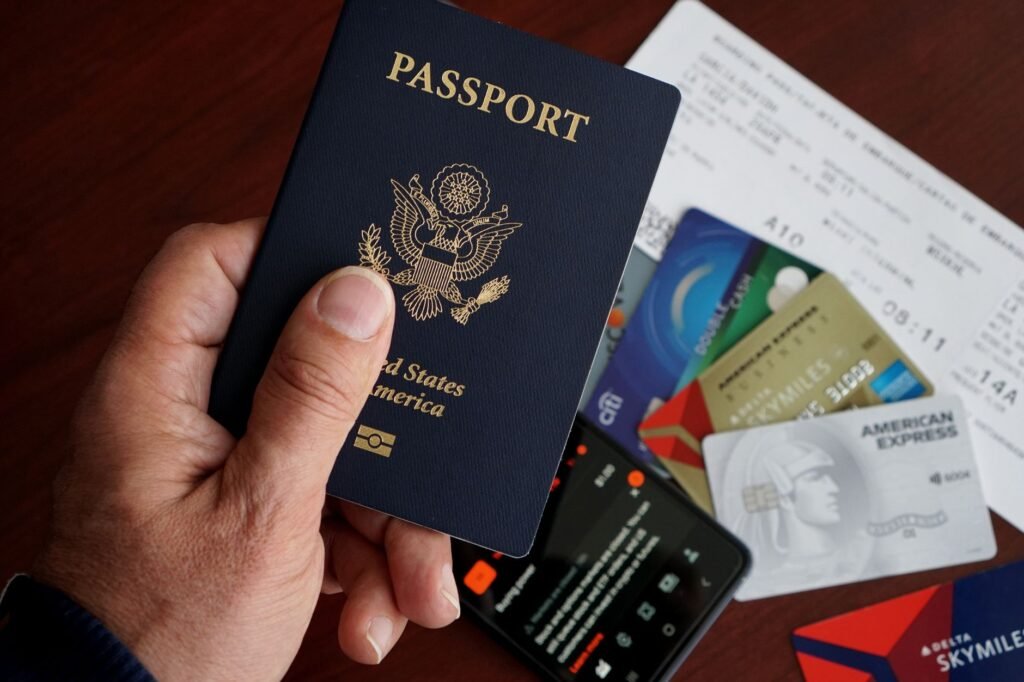
Your US passport isn’t just a travel document. It’s a financial tool worth more than you realize, and most Americans leave money on the table by not using it strategically. The combination of American citizenship, the passport it generates, and the income that comes with it creates a specific set of options available to very few people globally. Other countries have weaker passports. Other countries have lower incomes. America has both a strong passport and the world’s income advantage. That combination is powerful and worth understanding before you move.
Understanding what your passport unlocks, what it costs you, and how to optimize it is a core part of planning your exit. You’ll use your passport to enter your destination country. You’ll use it to apply for visas. You’ll use your citizenship status to access financial services. But there are critical decisions to make about visa strategy, dual citizenship, tax implications, and what leverage your American identity gives you in difficult situations.
This article covers the strategic financial aspects of your US passport that matter when planning to move abroad permanently. This is not a general “how visas work” guide. This is about how your passport specifically enables or constrains your financial planning and move strategy.
Why the US Passport Matters Financially: The Specific Advantages
Visa-Free and Visa-Easy Access: What This Actually Means
The US passport ranks among the world’s strongest. As of 2024, US citizens can enter 188 countries and territories without a visa or with visa-on-arrival. This isn’t semantics. This difference translates directly to time and money saved on your move.
Consider the mechanics. You want to test whether Portugal is actually the right place. As a US citizen, you can book a flight, arrive, enter without a visa, and spend 90 days figuring it out. If it feels wrong, you leave. If it feels right, you stay and arrange longer-term residency. You learn the actual texture of daily life before you commit.
As a citizen of most other countries, you apply for a visa months in advance. You pay application fees ($50-300+). You provide documentation, financial proof, employment letters. You wait weeks or months. If approved, you arrive committed to a specific timeline. If the place turns out to be wrong, you’ve spent thousands and months for nothing.
Your US passport lets you move fast. Test first, commit second. This is a massive advantage that most people don’t translate into their planning.
The visa-on-arrival option matters too. Maybe you want to spend three months in Thailand, then two months in Vietnam, then a month in Cambodia before settling in Thailand long-term. As a US citizen, you can do this. You enter Thailand, get a 60-day tourist visa stamped on arrival, leave before it expires, go to Vietnam and get 90 days visa-free, then Cambodia 30 days visa-free. Your passport gives you this flexibility without pre-planning.
Compare this to citizens of weaker passport countries. If you’re from the Philippines, you need visas for most developed countries and many developing ones. You face strict income requirements, housing deposits, background checks, and processing costs. If you’re from Nigeria, your options shrink further. Poland gets more options than Mexico. Your passport determines your options more than your income does. The US passport is a significant privilege.
Access to the Strongest Global Banking and Financial System

Your US citizenship opens doors in global banking that citizenship from almost any other country doesn’t. Yes, your citizenship also carries FATCA (Foreign Account Tax Compliance Act) obligations that make banks cautious about working with Americans. But it also gives you credibility that matters.
Banks that won’t touch accounts from citizens of certain developing countries accept Americans regularly. Your US bank account history carries weight. Your Social Security number, your US credit history, your US address history before moving, these all create a credibility profile that banks understand.
A US citizen can open accounts with Wise, Revolut, Charles Schwab, Stripe, or traditional international banks more easily than citizens from many other countries. You can establish business accounts if you’re self-employed. You can access international credit cards. You can invest through certain platforms. You have options.
Part of this is simple reputation: the US has strong legal protections, transparent markets, and enforcement of contracts. Part of this is scale: there are enough Americans abroad that international banks have developed entire systems to serve them. Wise exists partly because millions of Americans move abroad and need money transfer. Your citizenship created that infrastructure.
The actual impact: you can move money internationally at 0.7 percent fees through Wise instead of paying 2-4 percent through traditional banks. You can maintain US bank accounts easily through Charles Schwab. You can open accounts in your destination country faster because your background can be verified through US institutions. Over a lifetime abroad, this saves thousands in fees and hours in bureaucracy.
Protection and Legal Recourse Through the US Government
Your US passport comes with consular protection. If something goes very wrong in your destination country, the US embassy or consulate is obligated to assist you. If you’re detained, arrested, or in legal trouble, you have the right to contact your consulate and request assistance. If you’re a victim of crime, the consulate can connect you to resources. If there’s a civil conflict or natural disaster, the US government works to evacuate or assist citizens.
This protection isn’t infinite or absolute. The consulate cannot bail you out of jail for serious crimes. It cannot override your destination country’s legal system. It cannot make problems disappear. But it can provide legal referrals, can notify family members, can monitor your situation, and can advocate for fair treatment.
This has mattered in real situations. Americans detained in authoritarian countries have had embassy assistance. Americans caught in civil conflicts have been evacuated. Americans who suffered crimes have had consular support. You have a backstop that many people don’t.
Financially, this matters in edge cases. If something catastrophic happens and you need to leave your destination country quickly, the US has resources and obligations to assist. If a business deal goes wrong and you need legal help, US consulates can recommend lawyers who understand American business practices. If a relationship breaks down and things turn hostile, you have a government agency that cares about your safety.
For Americans moving to stable Western countries, this is theoretical. For Americans moving to countries with more political or economic uncertainty, this is real insurance.
The Real Financial Cost of US Citizenship: FATCA, FBAR, Taxes, and Banking Friction

FBAR and Form 8938: The Mandatory Account Reporting You Cannot Ignore
Your US passport comes with a financial price: you must report your foreign financial accounts to the IRS. If you have more than $10,000 in foreign accounts at any point during the calendar year, you file Form 114 (FBAR) with FinCEN. If your total foreign financial assets exceed $200,000 (or $300,000 for married filing jointly), you file Form 8938 with your tax return.
These aren’t optional recommendations. They’re mandatory legal obligations. The penalties for non-compliance are severe enough to get your attention. Non-willful violation of FBAR: up to $10,000 per account per year. Willful violation: up to 50 percent of the account balance per year. For someone with $50,000 in a foreign account, a willful FBAR violation could result in $25,000 per year in penalties, plus interest, plus possible criminal prosecution.
These are not theoretical penalties applied to one person ever. The IRS has collected hundreds of thousands of dollars in FBAR penalties in recent years. Some cases involved people who genuinely forgot about the filing. Some involved people who didn’t know about the requirement. The IRS doesn’t care about intent. The filing is mandatory.
The good news: filing is free and relatively straightforward. Form 114 takes 20 minutes on FinCEN.gov. Form 8938 goes on your tax return and takes another 20 minutes. Your tax professional handles both if you have them. The cost to hire a tax professional for expat filing is $500-1,500 per year. The cost of getting it wrong is thousands in penalties.
When you move abroad and establish a foreign emergency fund, a foreign operating account, and various financial accounts in your destination country, you’ll cross the $10,000 threshold within months. This means FBAR filing becomes permanent infrastructure for you. It’s not a special circumstance. It’s normal for anyone living abroad with financial accounts. Budget for it, plan for it, and treat it as a non-negotiable annual task.
Taxation on Worldwide Income and the FEIE Exclusion

The US taxes its citizens on worldwide income regardless of where they live or work. If you’re a German citizen living in Thailand, Germany doesn’t tax your foreign income (Germany uses residential tax residency). If you’re a US citizen living in Thailand, the US taxes your worldwide income.
This sounds terrible until you understand FEIE (Foreign Earned Income Exclusion). This provision, Section 911 of the Internal Revenue Code, allows you to exclude the first $120,000 of foreign earned income from US federal taxation (2024 threshold). If you earn $100,000 remotely while living abroad, you owe federal income tax on zero dollars. If you earn $150,000, you owe federal income tax on $30,000.
But FEIE has requirements. You must claim it by filing Form 2555 with your tax return every year. You must establish tax home in a foreign country, which means you genuinely live there, not that you visit for three weeks and claim FEIE for the rest of the year. The IRS tests this through the Physical Presence Test (330 days outside the US in a 12-month rolling period) or the Bona Fide Residence Test (legitimately living in another country with genuine intent to stay).
Most people satisfy this by actually living abroad. If you move to Portugal in January and stay there for the rest of the year, spending less than 35 days in the US total, you pass the Physical Presence Test. You claim FEIE. You owe zero federal income tax on your first $120,000 of earned income. This is legitimate and happens millions of times annually.
What disqualifies you: running a US-based business that serves US clients primarily, working for a US government agency, earning income from US real estate, or maintaining your tax home in the US despite being physically abroad. These situations require a CPA to untangle. But if you’re a typical remote worker, FEIE solves your federal income tax problem.
You still owe self-employment tax if you’re self-employed (15.3 percent on 92.35 percent of net earnings). You still must file every year. You still might owe taxes to your destination country. But FEIE means US federal income tax often becomes zero for remote workers earning under $120,000.
The Hidden Cost: Complicated Relationships with Non-US Banks

Ironically, while your US passport opens some banking doors, it also closes others. FATCA (Foreign Account Tax Compliance Act) requires foreign banks to report American account holders to the IRS or face severe penalties. This compliance burden costs banks money and creates liability. Some banks simply won’t accept American customers.
You might move to a country and discover that the local bank won’t accept you as a customer. They’ll reject your application because you’re American. You’ll need to find a bank that specifically accepts expats, or use international banks like Wise, Revolut, or OFX. This complicates your banking setup and might cost more than what locals pay.
In some countries, the local banking situation has shifted in recent years. Banks that accepted Americans five years ago have stopped doing so. You’ll discover this when you arrive and try to open an account. It’s manageable but frustrating.
The solution is planning before you move. Research banks in your destination country before arriving. Find one that accepts US expats. Open an account if possible from the US before leaving (many banks now allow this online). Or, plan to use international banks like Wise as your primary account. Know your banking situation before your move, not after.
Strategic Decisions About Your Passport
Should You Renounce US Citizenship? (Spoiler: Probably Not)

A small but growing number of Americans renounce citizenship to escape the FBAR filing requirements, the worldwide tax obligations, and the complications with foreign banks. The number of renunciations increased from fewer than 250 per year in 2008 to over 5,000 per year by 2020. These people calculated that the cost of maintaining US citizenship exceeded the value they received.
Here’s what renouncing means: you give up your US passport. You never file FBAR again. You’re done with the IRS. You become a foreigner in the US. If you want to live in the US again, you need a visa like anyone else from your new country. If you want US residency, you need to go through immigration, waiting lists, and the full process. It’s nearly irreversible.
Once you renounce, you cannot easily become a US citizen again. You’d need to go through immigration like someone from your new country, with all the time and cost that implies. If the US and your new country have a conflict, you lose consular protection. If you want to visit the US regularly, you now need a visa.
Most people, even those frustrated with US tax obligations, don’t renounce. The answer for 95 percent of people is: keep your citizenship and passport. Yes, you’ll file FBAR every year. Yes, the IRS wants to know about your accounts. But you maintain optionality: you can return to the US if your move doesn’t work out, you have the strongest passport globally, and you have consular protection abroad.
The 5 percent who renounce are usually people who: have established themselves in another country with permanent residency or dual citizenship, have completely disconnected from the US emotionally and financially, have enough money that tax optimization exceeds the value of having a backup country, or have ideological objections to US policy so strong that maintaining citizenship feels complicit.
Unless you fall into one of these categories, keep your US passport. The cost of hiring a tax professional to file FBAR and claim FEIE ($500-1,500 per year) is much cheaper than the cost of renouncing (legal fees plus the complexity of renouncing internationally) and far cheaper than the cost of losing your passport’s value and losing optionality to return to the US.
Should You Get a Second Passport Through Ancestry?

Many Americans are eligible for second citizenship through ancestry. If you have a grandparent or parent from Ireland, Italy, Portugal, Spain, Germany, Poland, Romania, Greece, or several other countries, you might qualify for dual citizenship. This is different from naturalizing in your destination country, which takes years and often requires renouncing US citizenship. Ancestry-based citizenship is granted more quickly and usually without renouncing anything.
The financial case for pursuing this depends on your situation. If you qualify for Portuguese citizenship through your Portuguese grandparent, getting it costs $1,000-3,000 in legal fees and processing time (6-12 months). Once you have it, you have a second-strongest passport and a backup citizenship. This provides insurance: if something goes wrong with your US citizenship or visa status, you have another card to play. If the US and your destination country have tensions, you have a way to maintain presence in your destination country without US citizenship.
It also opens specific benefits in your ancestry country. Portuguese citizenship gives you access to Portuguese healthcare and EU residency rights (which includes living and working anywhere in the EU). Italian citizenship is similar, plus access to Italian property ownership and Italian business formation. Irish citizenship gives you EU rights. German citizenship gives you EU rights. Spanish citizenship gives you EU rights. These second passports unlock things that purely US citizenship doesn’t.
The case against pursuing this: it costs money and time when you’re trying to move. If your destination country is Portugal and you have Portuguese ancestry, get Portuguese citizenship before or shortly after moving. It’s valuable. If your destination country is Thailand and getting Polish citizenship would take six months while you’re trying to leave, skip it for now. Get settled first, then research later.
Our recommendation: if you have easy access to a second citizenship through one or both parents being from an EU country, pursue it before or shortly after moving. It’s valuable insurance and opens options. If it requires digging into genealogy records and you’re moving soon, skip it for now and revisit once you’re settled.
Your Passport as Collateral: How It Affects Your Financial Flexibility
Border Control and Movement Rights
Your passport controls your movement across borders. This is both good and bad financially. Good, because US passport strength means you can move around to other countries for flexibility or opportunity. Bad, because your passport can be taken from you in certain situations.
If you have an outstanding tax debt to the US government exceeding the annual threshold (currently $192,000, adjusted annually for inflation), the IRS can request that the State Department revoke your passport. This doesn’t require you to be charged with a crime. It’s purely financial. Your tax debt crosses the threshold, the IRS notifies the State Department, and your passport becomes invalid. This strands you in whatever country you’re in and prevents exit.
This is catastrophic and rare. It requires owing a massive tax debt that you’ve ignored long enough for the government to notice, calculate, and act. The solution is straightforward: file your taxes, claim FEIE if you qualify, and keep your tax debt manageable. If you’re filing correctly and claiming available exclusions, your federal income tax liability often becomes zero. The IRS knows your income. You’re in compliance. This is never a concern for people who file.
Similarly, if you have an outstanding felony warrant, unpaid child support exceeding a certain threshold, or certain immigration violations, your passport can be revoked. Again, rare and avoidable by not committing felonies, skipping court-ordered support, or violating immigration law. But these are edge cases where your passport can be taken away.
Proving Your Right to Stay in Your Destination Country
Your passport is your primary proof of identity and legal status to stay in your destination country. If your passport is stolen, lost, or expires, you lose your right to be in that country. Most countries require travelers to carry valid passport documentation. If you’re stopped by police without it, you can face detention and deportation.
Renew your passport regularly. Don’t let it expire while you’re abroad. If it expires, getting a renewed passport requires either traveling to the US (expensive and time-consuming) or going to the US embassy in your destination country (slow, requires appointments, and takes weeks). Many people maintain a photocopy of their passport separately from the physical document for this reason. Some countries allow you to register the copy with immigration as backup proof if your passport is lost.
If your passport is lost or stolen while abroad, contact the US embassy immediately. Report it. Provide information. They’ll begin processing a replacement. Depending on the embassy’s workload and your location, you might get an Emergency Travel Document (valid for one trip to the US only) within days, or a temporary passport within a week or two.
The cost is around $200-400 for emergency processing. You’ll need to have this money available. This is why maintaining emergency savings in multiple forms is important. Have cash, have access to a credit card, have money in Wise. If your passport is lost on Thursday, the embassy might be closed until Monday, and you need to survive the weekend without access to your main identification.
Your Passport and Your Visa Strategy
Visa Categories and What Your US Passport Qualifies You For

Your US passport doesn’t guarantee you can live anywhere long-term. Most countries require you to qualify for a specific visa category to stay longer than a tourist visit. But your passport, combined with your income, qualifies you for many visa programs that don’t exist for lower-income countries.
Digital nomad visas are the clearest example. Portugal, Thailand, Mexico, Spain, Estonia, and dozens of others have these programs specifically because they want to attract people with foreign income. A digital nomad visa usually requires proof of foreign income of $1,000-3,000 monthly, plus a clean background. You have the income. You can prove it. Your US passport makes you appear credible.
Some countries have “investor” visas: put down $100,000-500,000 in the country and you get residency. Some have “retirement” visas: prove you have $1,000-2,000 monthly income and you can stay indefinitely. Some have “business owner” visas: start a local company and you can stay. Your US passport and US income make you eligible for programs that locals cannot access.
This isn’t unfair favoritism; it’s intentional policy. These countries want your US dollars flowing through their economy. They’ve structured visas to attract people exactly like you: American citizens with remote income. Understanding which visa categories are available in your destination country is a core part of planning your move. It’s not something to figure out after you arrive.
Visa Processing and Your Passport as Credibility Signal
When you apply for a visa in your destination country, your passport is the first thing the immigration officer sees. A US passport carries implicit credibility. It suggests you have income (Americans are presumed to have means), a legitimate reason for your application, and you’re not trying to work illegally or overstay.
Consulates and immigration offices process millions of visas. They develop shortcuts for assessing risk. A US passport applicant is statistically lower-risk than applicants from countries with higher fraud rates or Visa abuse rates. This matters when you’re at the margins of approval.
You’re applying for a digital nomad visa, and the immigration officer is deciding whether your income documentation is sufficient. You’re borderline. A US passport makes you appear more legitimate. The officer approves. You’re applying for a tourist visa extension to stay longer. You’re borderline. A US passport shifts the decision favorably. You’re approved.
This is biased, but it’s real. American passports carry an implicit assumption of legitimacy that improves your odds of visa approval in many countries. Use this to your advantage. When you apply for visas, lead with your passport’s strength.
What Happens to Your Passport When You Move
Updating Your Address and Registering with STEP
When you move abroad, you’ll eventually update your passport address with the State Department. This happens automatically when you renew your passport (every 10 years for standard passports, every 5 years if you obtained it as a minor), but you can request an address change without renewal if needed.
More importantly, register your location with the Smart Traveler Enrollment Program (STEP). This is free, takes five minutes online at step.state.gov, and should be your first action after arriving in your destination country. You provide your foreign address, your destination country, and your contact information. If an emergency occurs in your destination country, or the US government needs to contact you, STEP has your information.
This isn’t surveillance. It’s emergency coordination. If an earthquake hits Portugal and Americans are missing, STEP data helps the embassy reach out. If a civil conflict breaks out and the US is evacuating citizens, STEP tells them how to find you. If a family member in the US has a death in the family and needs to reach you urgently, STEP facilitates that. Register immediately.
Passport Renewal While Abroad: Timing and Process
Your passport expires every 10 years (or 5 years if you got it as a minor and it was limited-validity). When it expires, you need to renew. You can do this at a US embassy or consulate in your destination country. Processing times vary, but typically expect 4-6 weeks for routine renewal or 2-3 weeks for expedited processing. Cost is around $130-165 depending on document type and expedited fees.
Don’t wait until your passport is about to expire to renew. Apply when you have 6-12 months of validity remaining. This prevents the disaster of your passport expiring without a valid replacement. Some countries won’t renew your residency or visa if your passport expires, so you need the renewal done while you still have a valid passport to work with.
The embassy process varies dramatically by country and embassy. Some embassies are modern, efficient, and allow online appointments. Some are slow, require walk-ins on specific days only, have minimal staffing, and take months. Research the specific embassy in your destination country before your passport expires. Know what you’re getting into.
Budget $300-500 per passport renewal (including expedited fees if needed). Budget two to three months for the actual process. Plan your passport renewal like you plan a visa application: early, carefully, and with buffer time. Don’t let it be a last-minute crisis.
Your Passport and Tax Residency

How Your Passport Affects Tax Residency in Your Destination Country
Many countries determine tax residency based on physical presence or residency status, not citizenship. This is good news: your US passport doesn’t automatically make you a tax resident of your destination country. If you’re a US citizen living in Thailand on a tourist visa, Thailand doesn’t tax you unless you’ve established tax residency there (usually triggered by spending 183+ days in the country).
However, this varies significantly by country. Some countries’ tax authorities consider anyone physically present for an extended period to be a tax resident, regardless of visa type. Some tax by residence status, not presence. Some have specific rules for foreigners versus citizens. Some have exemptions for recent arrivals.
This matters because you might owe taxes to your destination country in addition to the US. You need to understand the tax situation in your specific country before moving. Does Thailand tax non-resident foreigners on foreign-source income? Does Portugal? Does Mexico? The answer varies, and it affects your financial planning.
The good news: many countries with digital nomad visas specifically exempt visa holders from local taxation for a period (usually 1-2 years). Portugal’s Digital Nomad Visa, for example, exempts visa holders from Portuguese taxation on foreign-source income for 10 years. This is structured to attract remote workers. If your destination country offers this, your passport status matters less than your visa status in determining tax obligations.
Risk Mitigation: What If Your Passport Gets Lost or Stolen?
Creating Backup Documentation
Make two backup documents now, before you move: a color photocopy of your passport’s data page (the page with your photo and personal information) and a high-resolution digital scan. Keep the photocopy in a separate location from your actual passport (maybe in a safe deposit box in the US, or with a trusted family member). Keep the digital scan in an encrypted cloud service like iCloud, Google Drive, or OneDrive.
This backup documentation isn’t valid for border crossing. But it’s accepted as proof of US citizenship for many purposes. If you need to prove identity, register with your embassy, access an online bank account, or deal with a lost passport, you have documentation that accelerates the replacement process. It simplifies the recovery process considerably.
What to Do If Your Passport Is Lost or Stolen Abroad
Contact your nearest US embassy or consulate immediately. Report it as lost or stolen. Provide information about it. They’ll begin processing a replacement. Depending on the embassy’s workload and your location, processing times vary wildly. Some embassies issue Emergency Travel Documents within 24 hours. Some take weeks.
An Emergency Travel Document is valid for one trip only (usually to the US). It doesn’t work for entering other countries. It’s purely for getting home to the US. If you need to stay in your destination country while you get a new passport, you’ll need a temporary passport instead, which takes longer but is valid for up to two years.
The cost is around $200-400 for emergency processing. Budget this as part of your emergency fund. Once you have the temporary or emergency passport, you can return home or continue abroad depending on your needs.
Prevent this by not carrying your actual passport everywhere. Most countries (but not all) allow you to keep your passport in a safe place and carry a certified photocopy for daily activities. Check what your destination country allows. In some places, you legally must carry the actual passport. In others, a photocopy suffices. Know the rule for your location.
Using Your Passport Strategically: The Bigger Picture
Passport as Insurance Against Problems in Your Destination Country
One reason to maintain your US passport even after moving abroad: it remains your insurance against catastrophic problems in your destination country. If your adopted country experiences political instability, civil conflict, economic collapse, or authoritarian transition, you have optionality. You can leave. You can return to the US. You can restart there if needed. You have a backup country.
This matters less for moves to stable countries like Portugal or Canada. It matters more if you’re moving to countries with more political or economic uncertainty. Thailand has experienced military coups (2014). Mexico has drug violence in some regions. Turkey has had political transitions. Colombia has historically challenging security situations. Vietnam is an authoritarian state. In any of these countries, having a US passport is insurance. If things go wrong, you’re not stuck.
Most people who move to developing countries never need this insurance. But keeping your US citizenship specifically provides it. The option to leave, to return to the US, to restart there, is worth keeping. Renouncing citizenship eliminates this option permanently.
Your Passport as Financial Credibility
You might move to a country and later need a loan, want to start a business, or need to establish financial credibility. A US passport helps. It suggests you have regulatory oversight (the IRS knows your income), it suggests legitimate activity (US citizens are associated with rule-following), and it suggests you have options (you could leave, so defaulting would damage your other optionality).
This isn’t universal, but in many countries, the American passport you carry is a financial credential. It’s an asset. It’s worth understanding and protecting.
Final Perspective: Your Passport Is Your Anchor to Optionality
Your US passport is your anchor to optionality. It’s the thing that makes your move possible at all: you can go to most countries without a visa, you can access banking systems designed for Americans, you can prove identity and citizenship. It also comes with obligations: you file taxes every year, you report accounts above $10,000, you deal with FATCA compliance, sometimes you pay higher banking fees.
But overall, having a strong US passport while moving abroad is winning the financial lottery. Most of the world has weaker passports and would trade places with you instantly. Use yours strategically. Understand what it costs and what it provides. Plan your move and your visa strategy around the passport you hold. Protect it carefully. Keep it current. Register with STEP. File your taxes so it never gets revoked.
Your passport is not just a document to carry. It’s a financial tool to leverage.