
James was a 34-year-old UX designer in Chicago paying $2,100/month in rent, $800 in student loan payments, and $420/month for a car he barely used. When he did the math on moving to Lisbon, he realized his entire monthly budget there would cost less than his rent alone in Chicago.
He spent six months telling himself he’d plan the move “next year.” He wasn’t waiting for a promotion. He wasn’t waiting to pay off debt. He was waiting for some undefined sense of readiness that never arrived. When he finally committed and actually left, he discovered he’d been ready for at least two years.
Most Americans in your position operate under a hidden assumption: you need to be more financially prepared than you actually do. You’re waiting for six months of savings. You’re waiting to pay off your car. You’re waiting to feel confident. This checklist cuts through that noise. It separates what actually matters from what doesn’t.
The Real Readiness Question Isn’t “Do I Have Enough Money?”
It’s “Can I sustain income remotely, or can I afford to earn less?” Everything else scales from there.
If you earn money from the US while living abroad, you’ve fundamentally shifted your financial position. Your American income becomes a superpower when your expenses drop 50-70%. You don’t need the six-month emergency fund. You don’t need to be debt-free. You need remote income stability.
💡 Quick stat: A freelancer earning $3,000/month from US clients and spending $1,200/month in Medellín saves $1,800/month. That’s a 60% savings rate without cutting quality of life.
This is the primary filter. If you earn remote income in dollars while your expenses are in pesos or baht, the arbitrage works entirely in your favor.
If you’re employed by a US company and they allow remote work, you’re in an even stronger position. You keep your salary and benefits unchanged, but your monthly obligations shrink. Maria left Austin for Oaxaca and kept her $65,000/year remote job. Her rent dropped from $1,400/month to $600/month. In pure dollar terms, she suddenly had $9,600 more per year to spend, save, or invest.
The Readiness Checklist
1. Remote Income (Non-Negotiable)
You need at least one of these:
- Employed remotely: Your US employer allows work-from-anywhere. You keep your salary, benefits, and all associated advantages. This is the gold standard.
- Freelance or contract work: You earn from US clients directly through Upwork, direct contracts, or retainer relationships. You control workload and can scale.
- Digital product or service: You sell online courses, software, coaching, or other digital offerings. Revenue scales independent of your location.
- Significant savings to bridge: You have liquid assets worth 2+ years of living expenses abroad. This enables a gap year or gives you time to establish income after arriving.
If none of these apply, you’re not ready yet. Stay in the US, build one of these income streams, then reassess. Trying to find remote work after you’ve moved abroad is harder than finding it before you leave.
✅ Pro tip: If you’re employed and want to ask about remote work, do it strategically. Frame the request around productivity and time zone coverage benefits, not about moving abroad. Most companies that permit remote work don’t care where you are physically.
2. 2-3 Months of Expenses Saved (Not Six Months)
Most guides demand six months of expenses. Abroad, that’s excessive. You need enough cash to cover unexpected costs in your first month and a buffer for mistakes. Two to three months is realistic and achievable.
This number depends on your destination. Moving to Chiang Mai and renting a furnished apartment requires less cushion than moving to Porto and signing an unseen lease. Calculate your actual target destination expenses using Numbeo or Nomad List, then multiply by 2.5. That’s your cushion number.
Devon was a 28-year-old software developer from Atlanta moving to Tbilisi, Georgia. His monthly budget calculated to $1,800 (apartment, food, internet, transport, entertainment included). He saved $5,400 and left. That’s three months of expenses. In month two, he negotiated a yearly lease and got a discount, dropping his actual cost to $1,600/month. His “extra” savings protect him for travel or emergencies.
3. No Extreme Debt Obligations
You can move abroad with student loans, credit card debt, and car payments. But you need to understand payment logistics first.
Student loans: You can defer them, move abroad, and manage through income-driven repayment or forbearance. Set this up before you leave and know your options. You’re not escaping them, but they don’t prevent your move.
Credit card debt: High-interest debt burns fast. If you’re carrying a $15,000 balance at 22% APR, you pay $3,300/year in interest alone. Moving abroad doesn’t solve that. Pay it down first if possible, or establish a clear payoff plan that works from abroad.
Car payments: If you’re paying $350/month for a vehicle you won’t own abroad, sell it before leaving. That money becomes part of your moving fund. If you owe more than it’s worth, pay down the difference or trade it in. Don’t drag a car loan to another country.
Mortgage: You can manage a US mortgage abroad. Many expats do. Rent out the property, manage it remotely, or hire a property manager. If you’re moving for 2+ years, keeping the property is often cleaner than selling.
⚠️ Heads up: Don’t move abroad to escape debt. You remain liable, and ignoring it affects your ability to return to the US or refinance later. Create a plan, execute it, then move.
4. A Clear Tax Strategy (Discussed With an Accountant)
You don’t need taxes completely figured out before moving, but you need to know the framework. Moving abroad doesn’t make you tax-exempt. It changes which taxes you pay and how much.
If you’re a US citizen earning money abroad, you typically qualify for the Foreign Earned Income Exclusion (FEIE). This excludes the first $120,000 of foreign earned income from federal income tax (amount adjusts annually). You still pay self-employment tax if self-employed, and you still file taxes. But your tax bill drops dramatically.
A freelancer earning $60,000/year from US clients while living in Mexico pays zero federal income tax on that amount. She still files Form 2555 and Form 1040. She still pays self-employment tax at 15.3% on net income. But there’s no income tax portion.
An employee earning $75,000/year working abroad also gets the exclusion. The first $120,000 is excluded, so her taxable income is zero. She still pays state income tax if her home state requires it—check your state’s rules on expatriates.
This math changes at higher income levels. If you earn $200,000/year abroad, only the first $120,000 is excluded. The remaining $80,000 becomes taxable federal income. You owe taxes on that portion.
The readiness requirement here isn’t having everything figured out. It’s knowing this framework exists and talking to an accountant who specializes in expat taxes. Expect to pay $200-500 for a consultation. You need this before you move.
💡 Quick stat: The Foreign Earned Income Exclusion saves a typical remote worker earning $50,000-80,000 abroad roughly $7,000-12,000 per year in federal income taxes. It’s foundational knowledge.
5. Your First Country Actually Chosen
Not researched. Chosen. These are different.
Researching means collecting data. Reading a hundred blog posts. Making spreadsheets of costs. Never actually going. Chosen means you’ve spent at least a few weeks there in person, you know roughly where you’ll live, and you’re committed to moving despite uncertainty.
Move to the country, not the research. You’ll make mistakes. You’ll pick the wrong neighborhood or miscalculate expenses. That’s not failure. That’s how you actually learn.
Kristine from Denver spent eight months “researching” Chiang Mai. She read every expat blog, joined every Facebook group, watched hundreds of YouTube videos. She was still comparing spreadsheets a year later. Finally, she booked a one-way ticket. Two months in, she found an apartment for $350/month instead of the $500/month she’d budgeted. She discovered a coworking community she never would have found from spreadsheet research. She moved to a different neighborhood after six weeks because she preferred it. None of these discoveries would have happened from her desk.
Your first country doesn’t need to be perfect. It needs to exist and be chosen.
6. A Bank Account That Supports International Use
You need a US checking account without foreign ATM fees. This is foundational.
Charles Schwab High-Yield Checking offers zero ATM fees worldwide. Use any ATM abroad and Schwab refunds the fee. You also get a debit card with zero foreign transaction fees. This alone saves thousands if you’re abroad for a year or longer. Most people don’t know this option exists and waste money on international fees.
You’ll also want a multi-currency account to hold non-USD money. Wise (formerly TransferWise) is the standard. You can hold dozens of currencies, send money between accounts at mid-market rates, and spend from a Wise debit card with near-zero markup.
Set these up before you leave. Test them in the US. Know they work. Then you’re not troubleshooting banking infrastructure in your first week abroad.
✅ Pro tip: Open a Schwab account at least two months before you leave. They mail the debit card to you in the US. You need time to receive it, test it, and confirm it works.
7. Travel Documents Refreshed and Valid
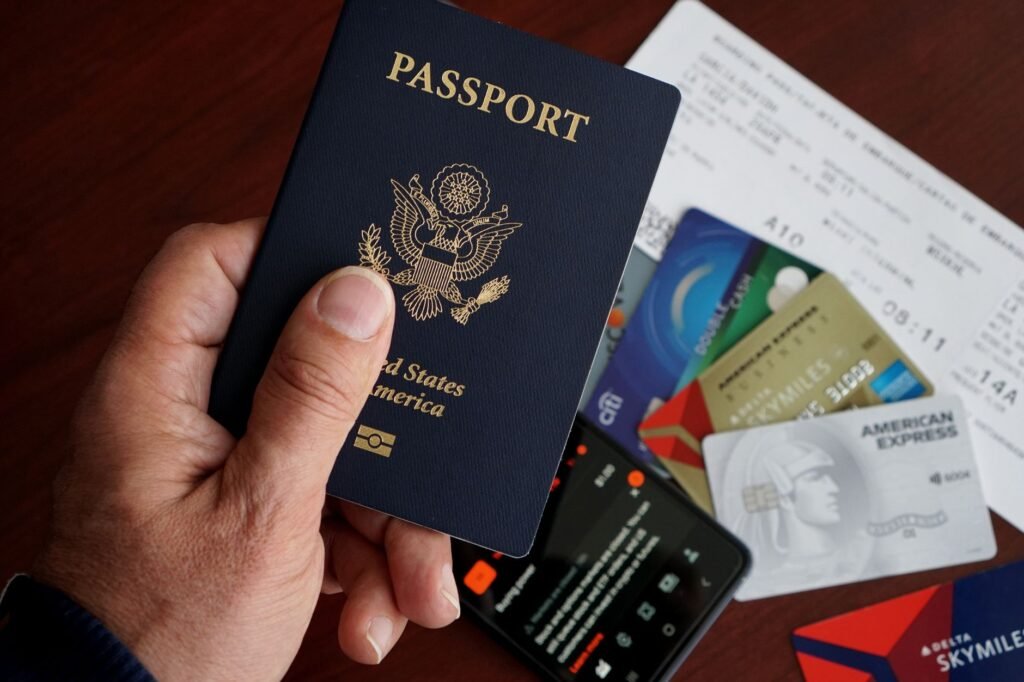
Your passport needs to be valid for the duration of your plan. Don’t move to a country and discover your passport expires in eight months.
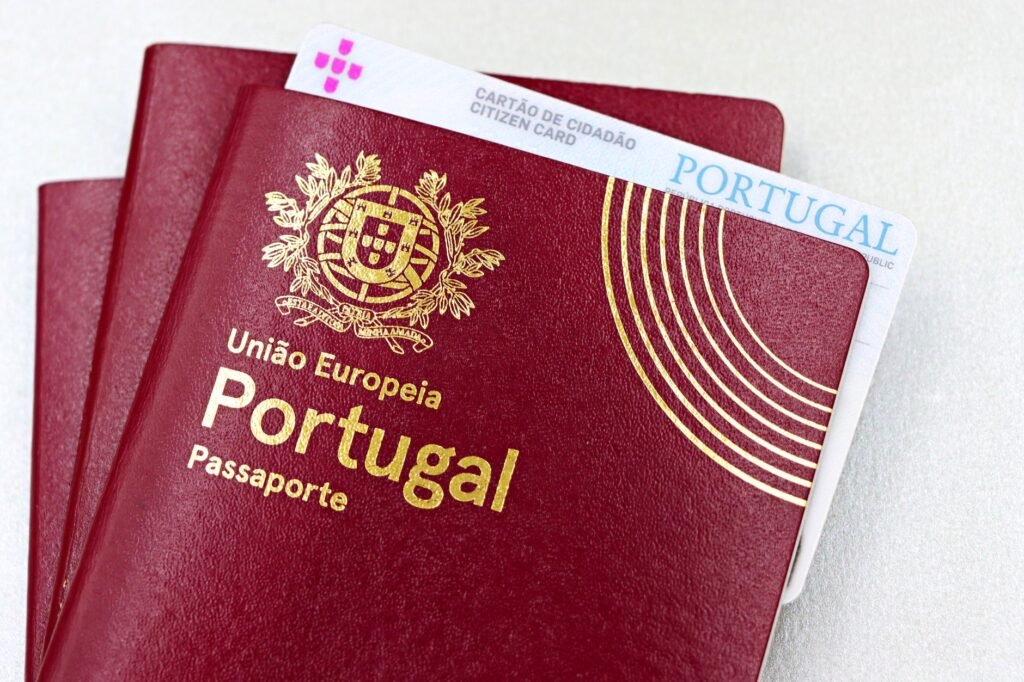
Check entry requirements for your destination. Most countries require six months of passport validity beyond your intended stay. If you’re moving to Portugal on a D7 visa, that process takes months and your passport needs validity beyond that window.
If you need a visa, understand the requirements before you leave. Some visas require proof of income, health insurance, or a security deposit. If you’re moving to Thailand on a visa exemption and then converting to a longer-term visa, understand that process. Know the rules before arriving.
8. Health Insurance Sorted
This is where many people stumble.
Your US health insurance won’t work abroad. You need travel health insurance or local insurance in your destination country. Options vary significantly.
Global health insurance (companies like Allianz, World Nomads, or Cigna) costs $100-300/month depending on age and coverage. This covers emergency medical care abroad and evacuation if needed.
Alternatively, some countries offer local health insurance. Thailand provides 30-day tourist health insurance for about $5-10. Mexico offers local plans. Portugal, as an EU country, has reciprocal healthcare for legal residents. Costs vary by location.
You don’t need everything figured out perfectly. You need a credible first-month plan and knowledge of your destination’s system. Don’t move abroad uninsured.
The Decision Framework
You’re ready to move if you check off items 1, 3, 4, 5, and 7. Items 2, 6, and 8 are important but you can still move if slightly weak there. Item 1 (remote income) is non-negotiable.
If you have remote income, no crushing debt, a chosen destination, valid travel documents, and you’ve talked to a tax professional, you have permission to move. The savings buffer is nice but not mandatory if your income is stable and your destination is genuinely affordable.
James could have left Chicago 18 months earlier. He was waiting for an undefined state of readiness. The financial math said he was ready years before he acted. Don’t be James. Use this checklist to confirm what you probably already know: you’re ready sooner than you think.
💡 Quick stat: 73% of Americans who move abroad report the waiting period lasted longer than expected. The second most common regret: waiting so long before leaving.
Next Steps
This week: Go through the eight items above. Identify what’s missing and what you can realistically accomplish in 60-90 days. Don’t aim for perfection. Aim for “ready enough.”
Next week: If you’re not remote yet, pick one of those income streams and start building. If you already are remote, book a one-way ticket to your chosen destination. Tell someone about it. Make it real.
The move happens when you stop asking if you’re ready and start acting as if you are.