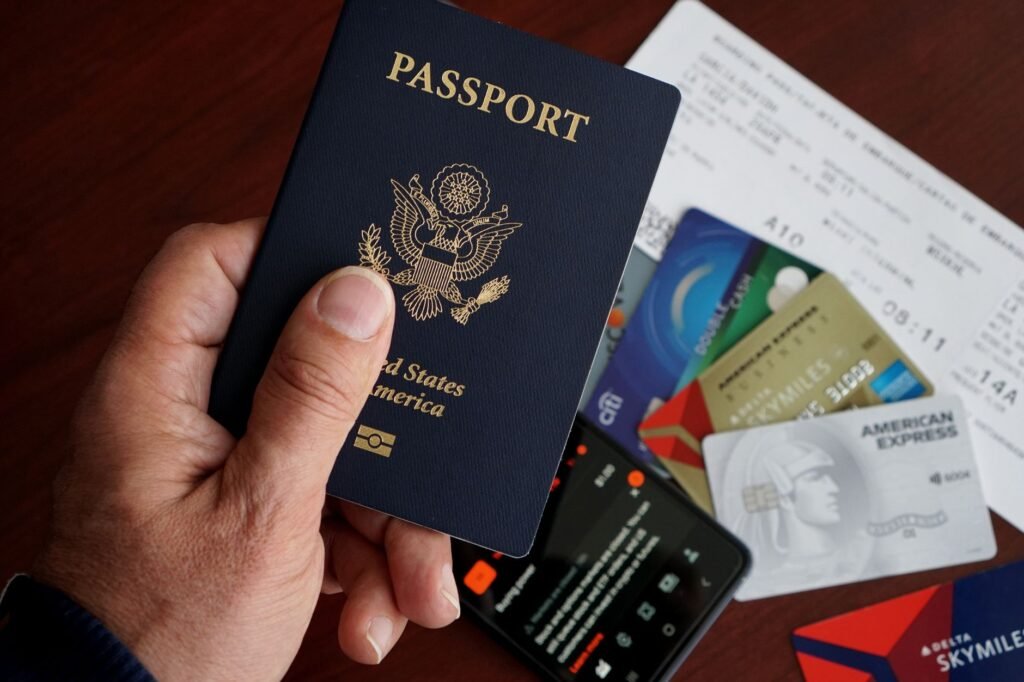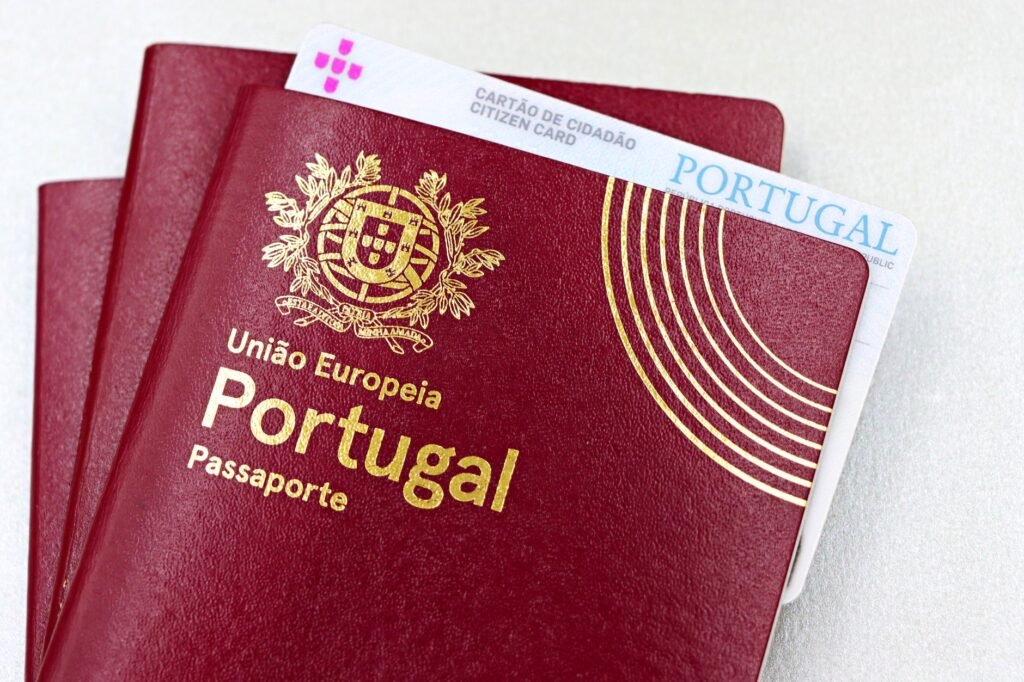
If you’ve tried to figure out how to open a bank account abroad as an American, you’ve probably run into a wall: the branch manager gets uncomfortable, the account application stalls, or you receive a politely worded rejection with no real explanation. You’re not imagining it, and it’s not a coincidence. A 2010 U.S. law called FATCA has restructured global banking so that Americans are the least desirable customers a foreign bank can take on. This guide explains the mechanics of that rejection — and lays out the exact three-account stack that thousands of American expats are running in 2026 to get around it.

What FATCA Actually Is (and Why Banks Hate It)
The Foreign Account Tax Compliance Act — FATCA — was signed into law in 2010 as part of the HIRE Act. Its stated purpose was to catch wealthy Americans hiding money in offshore accounts. Its practical effect was to make every American on earth an enormous compliance liability for every foreign bank on earth.
Here is how it works: FATCA requires foreign financial institutions (FFIs) to identify any account holders who are U.S. persons, collect their information, and report it annually to the IRS. Banks that refuse to comply — or that cannot demonstrate adequate due diligence — face a 30% withholding penalty on all U.S.-source income flowing through their institution. That includes dividends from U.S. stocks, interest from U.S. bonds, and certain other payments touching the U.S. financial system. For a small regional bank in Portugal or Thailand, one non-compliant American account is not worth that existential risk.
The compliance infrastructure alone is expensive. Banks must implement screening systems to detect U.S. indicia — a U.S. birthplace listed in account records, a U.S. phone number, a standing transfer instruction to a U.S. account, even a U.S. power of attorney on the file. They must train staff, engage compliance counsel, register on the IRS’s Foreign Financial Institution list, and file annual reports. According to Greenback Expat Tax Services, the cost of serving even one American customer can outweigh the revenue from that account at smaller institutions.
The math is simple: if you’re a 200-branch bank in Chiang Mai and you’ve never dealt with FATCA, taking on a single American depositor means building an entirely new compliance program. Most banks in that position say no. It is not personal. It is arithmetic.
Over 110 countries have signed Intergovernmental Agreements (IGAs) with the U.S. requiring their domestic banks to report. That means FATCA foreign bank rejection is not a problem specific to one country — it is a global condition for American expats.
The 3-Account Stack That Solves It
The solution is not to find one magic foreign bank that loves Americans. The solution is a layered system: a permanent U.S. anchor, a multi-currency fintech bridge, and a local account in your destination country. Each layer serves a distinct function. Together, they cover every banking need you’ll have abroad — from IRS tax refunds to ATM withdrawals to local rent payments.
Account 1: The U.S. Anchor (Never Close This)
Your U.S. account is your financial anchor. It receives your IRS tax refund (the IRS will not deposit refunds into foreign bank accounts, per Greenback Expat Tax Services), maintains your U.S. credit history, and gives you a U.S. routing number for any service that requires one. Do not close it when you move.
Charles Schwab High Yield Investor Checking is consistently ranked among the best banks for American expats in 2026. It reimburses 100% of ATM fees worldwide at the end of each month, charges zero foreign transaction fees, and converts currency at the mid-market rate. Schwab explicitly serves customers in 52 countries through its international program at international.schwab.com. As of 2026, there is no minimum deposit requirement, per EarlyRetireAbroad.com. If you open the account before you leave the U.S., the process is straightforward. If you’re already abroad, apply through the international portal with your passport and proof of foreign residence.
Fidelity Cash Management Account is a strong alternative with similar ATM reimbursement and no foreign transaction fees. Both Schwab and Fidelity are, per WhereNext’s 2026 expat banking guide, the only two major U.S. banks that will open and maintain accounts for customers with a foreign address.
Round out Account 1 with one major U.S. travel credit card. The Chase Sapphire Preferred or similar premium travel card gives you purchase protection, trip cancellation insurance, and points that make your international travel more financially sustainable. Keep this card active with regular use — a dormant card is a card Chase may close.
Account 2: The Multi-Currency Fintech Bridge
Fintech platforms — specifically Wise and Revolut — are not banks in the traditional sense, but they function as the connective tissue of the expat banking stack. They hold balances in 40+ currencies, provide local bank details in the U.S., EU, UK, Singapore, and elsewhere, and send money internationally at the real mid-market exchange rate.
Wise is the recommended primary option. You get a multi-currency account with local account numbers in major markets, which means you can receive payments as if you had a local bank account in those countries — without actually having one. Transfers between currencies happen at the interbank rate with a small transparent fee, which is dramatically cheaper than any traditional bank wire. Wise is fully FATCA-compliant and does not reject U.S. persons.
Revolut is a solid backup. It offers similar multi-currency functionality plus cryptocurrency features if relevant to your financial setup. Revolut’s free tier has some exchange rate limitations on weekends, so power users typically upgrade to a paid plan.
A critical note: Wise and Revolut accounts held outside the U.S. count toward your FBAR threshold. Track balances accordingly — more on that below.
Account 3: A Local Bank in Your Destination Country
This is where most Americans run into FATCA foreign bank rejection. The key is targeting banks large enough to have FATCA compliance infrastructure already in place — and knowing what documents to bring. Country-specific guidance follows.

How to Open a Bank Account Abroad as an American: Country-by-Country Guide
The destination country matters enormously when learning how to open a bank account abroad as an American. Below is a breakdown of which institutions are known to accept U.S. persons with the right documentation, per WhereNext’s FATCA compliance guide for 2026.
| Country | Recommended Banks | Key Requirement |
|---|---|---|
| Mexico | HSBC Mexico, Banorte, Santander Mexico | Temporary Resident card (FM2/FM3) |
| Colombia | Bancolombia | Cedula de extranjeria (foreign ID card) |
| Portugal | Millennium BCP, Novo Banco, ActivoBank | NIF (tax ID number) — get this first |
| Thailand | Bangkok Bank, Kasikorn Bank (KBank) | Non-B visa or retirement visa |
| Georgia | TBC Bank, Bank of Georgia | Passport only — easiest process globally |
| Germany | N26 | EU residency proof; expat-friendly online |
Mexico
HSBC Mexico, Banorte, and Santander Mexico all have FATCA compliance programs and will open accounts for Americans who hold a Temporary Resident card (Residente Temporal). This is the immigration status most Americans living in Mexico hold during their first four years. Walk into a branch with your passport, your residency card, your U.S. Social Security Number, and proof of your Mexican address. Bring a W-9 form if you have one — it signals that you understand the compliance requirements, which sometimes accelerates the process.
Colombia
Bancolombia is the most accessible option for Americans in Colombia. The requirement is a cedula de extranjeria — the foreign resident ID card issued by Colombia’s migration authority (Migracion Colombia) once you hold a valid long-stay visa. You cannot open an account with a tourist stamp. Once you have the cedula, the account opening process at Bancolombia is fairly standard.
Portugal
Portugal requires a NIF (Numero de Identificacao Fiscal) — a tax identification number — before any bank will open an account for a non-resident. Get the NIF at a local tax office (Financas) or through a fiscal representative service before you approach a bank. Once you have the NIF, Millennium BCP, Novo Banco, and the digital bank ActivoBank are all known to serve Americans. The WhereNext guide also notes that Caixa Geral de Depositos, the state-owned bank, has FATCA infrastructure given its 543 branches and scale.
Thailand
Bangkok Bank and Kasikorn Bank (KBank) both accept U.S. citizens, but the requirement is a visa that grants long-term stay: a Non-Immigrant B (work) visa or a retirement visa (Non-OA/Non-OX). Tourist visas are typically not sufficient. Bring your passport, visa documentation, proof of Thai address, and your SSN. Some branches will ask for an employment letter or proof of pension income for the retirement visa route.
Georgia (the Country)
Georgia is the global outlier. TBC Bank and Bank of Georgia will open accounts for Americans on the strength of a passport alone — no local tax ID, no long-term visa, no residency permit required. Georgia’s favorable banking laws and light compliance requirements make it the easiest banking jurisdiction on the planet for U.S. persons. This is why the country has become a hub for location-independent Americans and digital nomads.
Germany
N26 is an online bank with an expat-friendly application process that requires proof of EU residency and a valid ID. Traditional German banks like Deutsche Bank and Commerzbank also have FATCA compliance infrastructure given their size, but the bureaucracy is more substantial. N26 is the path of least resistance for most Americans settling in Germany.
What Documents You’ll Need (and Why)
Regardless of country, prepare this document package before you walk into any foreign bank branch:
- Valid U.S. passport — the primary identity document; bring both the original and a photocopy
- Local visa or residency permit — proves you have a legitimate reason to bank locally
- Proof of local address — a lease agreement, utility bill, or letter from a landlord; some banks accept a hotel reservation for the initial application if you’re newly arrived
- U.S. Social Security Number — required for FATCA reporting; the bank will ask you to complete a W-9 form
- Local tax ID — NIF in Portugal, RUT in Chile, RFC in Mexico, NIT in Colombia; in most countries, you must obtain this before the bank will finalize your account
- Employment letter or proof of income — not always required, but useful for demonstrating economic purpose, especially in Asia and Latin America
How to Get Your Local Tax ID
The local tax identification number is often the single biggest blocker for Americans trying to open a local bank account. Each country calls it something different and issues it through a different process:
- Portugal (NIF): Apply at any Financas office or through a licensed fiscal representative if you are not yet in-country. Takes 24 to 48 hours.
- Mexico (RFC): Registered with the SAT (tax authority) once you have a residency card. Required for formal employment or local business banking.
- Colombia (NIT): Issued by DIAN (the tax authority) to foreigners with a valid visa. Generally required for Bancolombia accounts beyond a basic savings account.
- Thailand (Tax ID): Issued by the Revenue Department; required mainly if you earn income in Thailand. Not always required for a basic bank account with the right visa.
- Germany (Steuer-ID): Automatically issued when you register your address (Anmeldung). Do the Anmeldung first — it unlocks most bureaucratic processes in Germany.
- Georgia: No local tax ID required to open a bank account. This is the exception.
What to Do If You’re Rejected

Getting rejected is common, especially at smaller branches where front-line staff are unfamiliar with FATCA procedures. Do not accept a rejection at the teller window as final. Try these steps in order:
- Escalate to a branch manager. Explain that you understand FATCA, that you have your SSN and W-9 ready, and that you are prepared to complete any required U.S.-person documentation. Many front-line rejections are resolved at the manager level.
- Verify the bank is on the IRS FFI list. Go to the IRS FFI search tool and confirm the bank is registered as a FATCA-compliant institution. If it is, it has agreed to report U.S. account holders — it cannot claim it is unable to serve American clients.
- Try a smaller local credit union or cooperative bank. Counterintuitively, very small institutions sometimes have simpler processes than mid-size banks that have not built FATCA infrastructure. A local cooperativa in Colombia or a community bank in rural Portugal may be more pragmatic.
- Fall back to Wise. If local banking is proving impossible in the short term, Wise’s local account details in dozens of countries will handle most functions of a local bank account until you solve the permanent banking problem.
- In the EU, invoke the Payment Account Directive. EU residents — including non-EU nationals who are legally resident — have the right to a basic payment account regardless of nationality. If a bank in an EU country rejects you and you have valid residency, this directive gives you legal standing to demand access.
FBAR and FATCA Reporting: What You Owe the IRS
Once you’ve built your banking stack, you have reporting obligations. Getting these wrong carries severe penalties — and the IRS receives automatic reports from foreign banks whether you file or not.
FBAR — FinCEN Form 114
The Foreign Bank Account Report (FBAR) is required if the aggregate value of all your foreign financial accounts exceeds $10,000 at any point during the calendar year. That is the combined total across all accounts — not each account individually. Three accounts with $4,000 each push you over the threshold.
The form is FinCEN Form 114, filed electronically through the BSA E-Filing System at the Financial Crimes Enforcement Network. The deadline is April 15, with an automatic extension to October 15 — no extension form required. The FBAR is filed separately from your tax return and goes to the Treasury Department, not the IRS. Per the IRS FBAR page, what counts as a foreign account includes foreign checking, savings, brokerage, and mutual fund accounts — and accounts over which you have signature authority even if the money is not yours.
The penalties for non-willful violations are up to $12,921 per account per year (inflation-adjusted as of 2026, per WhereNext’s FBAR guide). Willful violations carry a penalty of the greater of $165,353 or 50% of the account balance at the time of the violation, plus potential criminal prosecution. Americans living abroad are among the IRS’s highest-priority enforcement populations precisely because foreign bank data now flows to the IRS automatically under FATCA.
FATCA Form 8938
Form 8938 is a separate requirement filed with your tax return (not separately) and only applies at higher thresholds. For U.S. taxpayers living abroad, the threshold is $200,000 in foreign assets at year-end or $300,000 at any point during the year (double for married filing jointly). If you’re running the three-account stack described here, you likely will not hit the Form 8938 threshold unless you hold significant investment assets abroad. The FBAR is the one to watch.
Critical point: FBAR and Form 8938 are separate requirements filed with separate agencies. If you exceed both thresholds, you file both. An expat who clears $250,000 in a foreign account must file the FBAR with FinCEN and Form 8938 with the IRS. Filing one does not satisfy the other.
The Bottom Line on Offshore Banking for U.S. Citizens
The framework for offshore banking as a U.S. citizen is not mysterious — it just requires knowing which institutions have built the compliance infrastructure to serve Americans and which have not. The three-account stack gives you coverage across every use case: a U.S. anchor for tax refunds and credit history, a fintech bridge for multi-currency flexibility and international transfers, and a local account for rent, utilities, and daily life in your destination country.
The most important move is to open the Schwab account before you leave the U.S. if at all possible. Everything else can be built after you land. Wise can function as a near-complete banking solution in the interim, and the local account is a solvable problem once you have the right residency documents in hand.
File your FBAR every April 15 if your aggregate foreign balances ever cross $10,000 — even once. The cost of filing is zero. The cost of not filing is potentially catastrophic.
Quick Reference: The 3-Account Stack
| Layer | Account | Primary Function |
|---|---|---|
| 1 — U.S. Anchor | Charles Schwab International Checking + Fidelity CMA + Chase Sapphire | Tax refunds, U.S. credit history, worldwide ATM access, travel rewards |
| 2 — Fintech Bridge | Wise (primary) + Revolut (backup) | Multi-currency balances, local account details abroad, cheap international transfers |
| 3 — Local Account | Country-specific (see table above) | Local rent, utilities, payroll, and businesses that require a local account |
This post is informational only and does not constitute tax or legal advice. Consult a qualified expat tax professional before making banking or reporting decisions.