
Two months before their Portugal D7 visa appointment, a couple in Arizona realized their birth certificates weren’t apostilled. They had been notarized — but notarization and apostille are not the same thing, and the Portuguese consulate doesn’t care about that distinction. Application rejected. Their move-in date pushed back three months. The whole painful story is a cautionary tale that’s become disturbingly common in expat Facebook groups, and it happens specifically because most Americans have never heard of an apostille until they desperately need one. This apostille documents checklist for moving abroad is what that couple wished they’d had before they started packing boxes.
Here’s the short version: the Hague Convention of 1961 created a standardized document authentication system called the apostille. If your destination country is one of the 124 member nations — and it almost certainly is — they require apostilled versions of your key official documents, not just notarized ones. The difference matters enormously, and the process for getting an apostille is completely separate from standard notarization. More on that in a moment. First, let’s talk about the single document that ruins more expat timelines than anything else.
What an Apostille Actually Is (and Why It’s Not the Same as Notarization)
A notary public verifies your identity and witnesses your signature. That’s it. A notary stamp tells the world: “This person is who they say they are, and they signed this document in front of me.” Useful, but limited. A notary has no authority over whether another country’s government will accept your paperwork.
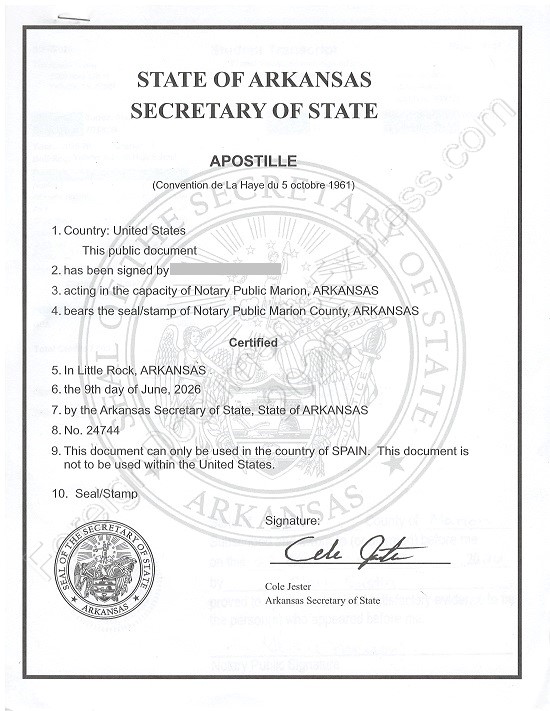
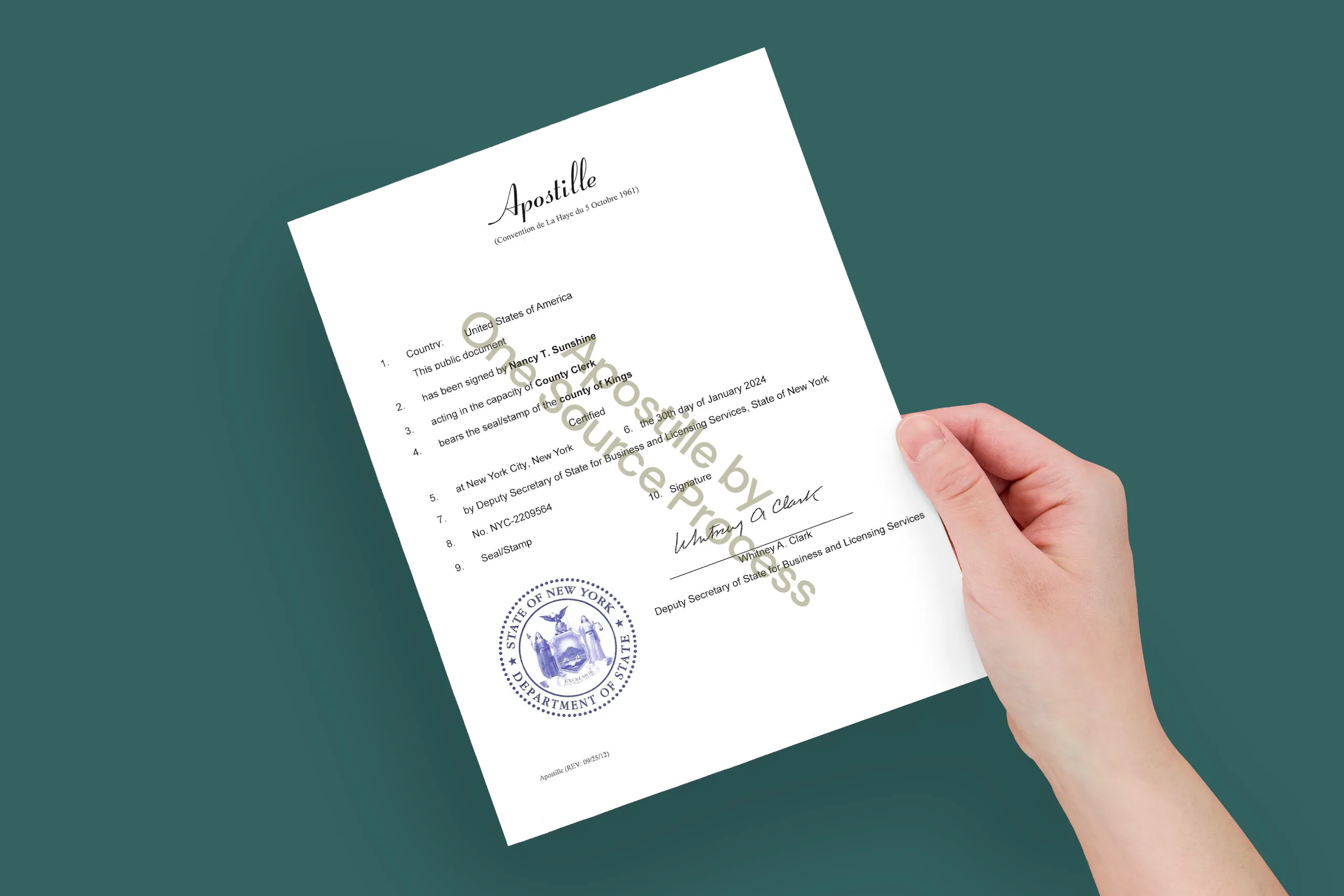
An apostille is something different. It’s an authentication certificate issued by a designated government authority — either your state’s Secretary of State office or the U.S. Department of State in Washington, D.C. — that verifies the legitimacy of a public document for international use. The apostille certifies that the signature, seal, or stamp on your document is genuine and that the person who signed it had the authority to do so. Under the Hague Convention, any member country is obligated to accept a document bearing a valid apostille without requiring further authentication.
So when Mexico’s immigration office, Portugal’s consulate, or Spain’s foreigner registry asks for an apostilled birth certificate, they’re not asking you to find a notary. They’re asking you to go through an entirely separate government process. The timeline is different. The cost is different. The agency involved is different. And if your destination country is not a Hague Convention member — think Saudi Arabia, UAE, or Vietnam — you need a full legalization chain instead, which is even more involved. This guide focuses on Hague Convention countries, which covers the vast majority of popular expat destinations.
The 7 Documents You Almost Certainly Need Apostilled
Your destination country will give you a specific list, but these seven documents show up on nearly every residency visa and long-stay permit application worldwide. Start all of them simultaneously — waiting until you know exactly what you need will cost you months.
| Document | Issuing Authority | Apostille Issued By | Processing Time (DIY) | Government Fee |
|---|---|---|---|---|
| FBI Background Check | FBI CJIS Division (federal) | U.S. Dept. of State, D.C. | 8–12 weeks total | $18 (FBI) + $20 (State Dept.) |
| Birth Certificate | State vital records office | Secretary of State (issuing state) | 1–4 weeks | $5–$20 per document |
| Marriage / Divorce Certificate | State vital records / county clerk | Secretary of State (issuing state) | 1–4 weeks | $5–$20 per document |
| Degree / Diploma | University registrar + notary | Secretary of State (state where school is) | 2–4 weeks | $5–$20 + notary fee |
| Driver’s License Record | State DMV | Secretary of State (issuing state) | 1–3 weeks | $5–$20 + DMV record fee |
| Social Security Benefit Letter | Social Security Administration (federal) | U.S. Dept. of State, D.C. | 6–10 weeks | $20 (State Dept.) |
| Medical Records / Vaccination History | Doctor’s office / hospital | Secretary of State (state where issued) | 1–3 weeks after notarization | $5–$20 + notary fee |
1. FBI Background Check — Required for nearly every long-term residency visa worldwide. This is the document that takes the longest to obtain, and it must be ordered first, before you can apostille it. More on this below.
2. Birth Certificate — A certified copy from your state’s vital records office, not a photocopy. Many countries require it to be issued within the last six months. Your state’s Secretary of State issues the apostille. Cost ranges from $5 in Alabama to $20 in California. Processing at the Secretary of State office is usually 1–3 weeks by mail, with same-day or next-day walk-in service available in many states including Texas, Georgia, and Massachusetts.
3. Marriage or Divorce Certificate — If you’re moving with a spouse or need to prove marital status, this one is mandatory. Divorce certificates are often overlooked by people in subsequent marriages. If your divorce was finalized in a different state than your current one, you need to go back to that state’s Secretary of State. The marriage certificate apostille process is identical to a birth certificate — certified copy, then Secretary of State.
4. Degree or Diploma — Many countries require proof of education for professional visas (Spain, Portugal, Germany, and others). Your university registrar will provide an official certified copy. That certified copy typically needs to be notarized by a notary public first, then submitted to the Secretary of State in the state where the university is located — not necessarily your home state.
5. Driver’s License Record — An official driving record (not your physical license) from your state DMV, certified and apostilled. Required for international driver’s license conversions in countries like Germany, Mexico, and Japan, and sometimes for vehicle import purposes. Order directly from your DMV, then apostille through the Secretary of State.
6. Social Security Benefit Letter — Required for income-based residency visas like Portugal’s D7, Spain’s Non-Lucrative Visa, and Mexico’s Temporary Resident category. Because the Social Security Administration is a federal agency, your benefit verification letter must be apostilled by the U.S. Department of State in Washington, D.C. — not your state office. This adds 6–10 weeks to the timeline via standard mail.
7. Medical Records and Vaccination History — Some countries (Panama, Ecuador, certain African and Southeast Asian nations) require apostilled proof of vaccinations or a medical clearance certificate. These documents must first be notarized by a notary public, then sent to the Secretary of State in your state. Your doctor’s office may charge an administrative fee to provide certified records, which is separate from the apostille cost.
Federal Documents vs. State Documents — Two Different Processes

This is where most people make a costly mistake. In the United States, the apostille process splits into two entirely separate tracks depending on who issued the underlying document.
State documents — birth certificates, marriage certificates, divorce decrees, driver’s license records, state court documents — go to your state’s Secretary of State office for apostille. Each state has its own fee, its own processing time, and its own submission method. California charges $20 per document. Georgia charges $3. Texas charges $15. Most states offer a walk-in service at the state capital office, which is the fastest option if you live nearby or are willing to drive.
Federal documents — FBI background checks, Social Security benefit letters, IRS tax transcripts, federal court documents, anything issued by a U.S. federal agency — must be apostilled exclusively by the U.S. Department of State Office of Authentications in Washington, D.C. There is no other option. You cannot take a federal document to your state Secretary of State and get a valid apostille. If you do, it will be rejected overseas.
The U.S. Department of State charges $20 per document for federal apostilles. You submit using Form DS-4194, include your payment by check or money order payable to “U.S. Department of State,” and include a prepaid return envelope. Standard processing by mail takes 5–8 weeks from receipt. Walk-in service is available by appointment at the D.C. office and typically resolves in 1–2 business days — but you have to be in Washington, D.C. Many expats hire hand-carry services based in D.C. that physically walk documents to the office, returning results in about 7–10 business days for a premium of $150–$300 per document.
The FBI Background Check: The One That Trips Everyone Up
The FBI Identity History Summary — officially called the FBI IHS — is the single document that causes more blown move dates, missed visa appointments, and last-minute flight changes than anything else in the expat paperwork world. Here’s why: it’s a two-stage process, and Stage 1 (getting the FBI document itself) takes weeks before you can even start Stage 2 (apostilling it).
Stage 1: Get the FBI IHS document. You have two options. The first is to go directly through the FBI’s CJIS Division: submit your fingerprints on an FD-258 card, pay the $18 FBI fee, and mail everything to Clarksburg, West Virginia. Standard processing once they receive your prints is 6–8 weeks. The second option is to use an FBI-approved channeler — a private company authorized to submit fingerprints electronically on your behalf. Channelers are significantly faster (5–15 business days is typical) but cost an additional $50–$75 on top of the FBI fee. If you’re not using a channeler, also factor in fingerprinting costs: USPS passport agencies and police stations typically charge $20–$30 for an FD-258 fingerprint card.
Stage 2: Apostille the document at the U.S. Department of State. Once you have the FBI IHS in hand — as a physical original paper document, not a PDF printout — you submit it to the U.S. Department of State with Form DS-4194, a $20 fee, and a prepaid return envelope. By standard mail, this step alone takes 5–8 weeks. Total timeline from fingerprints to apostilled FBI check via standard mail: 10–16 weeks. Add in shipping time if you’re already abroad, and you’re looking at 4 months minimum when you include any delays.
There’s one more critical detail: the FBI IHS is only valid for 90 days from the date of issuance in many countries. Portugal, Spain, and Mexico all have this 90-day validity window. That means you cannot get the apostilled FBI check too early, or it will expire before your visa appointment. The sweet spot is to have the apostille issued 30–45 days before your consulate appointment. Back-calculate from there: if your consulate appointment is in December, you want the FBI IHS issued no earlier than late September, which means starting the fingerprint process in late July at the absolute latest — earlier if you’re going the slow mail route.
Expedited Services — Worth It or Not?

The honest answer: for state documents, probably not. For federal documents, almost certainly yes.
For state-level apostilles, the DIY cost is $3–$20 per document and processing is typically 1–3 weeks. Many states offer walk-in service at the Secretary of State office. If you live in California, Texas, New York, Florida, or any other state with an accessible capital, just drive to the office and have it done in a day. Professional apostille services for state documents charge $75–$150 per document all-in — genuinely not worth the premium unless you’re in a rush and can’t visit the office yourself.
For federal apostilles (FBI background check, Social Security letters), the calculus flips completely. Standard mail to the U.S. Department of State takes 5–8 weeks. A D.C.-based hand-carry service turns it around in 7–10 business days for $150–$300 per document. Given that federal documents often have 90-day validity windows and that missing a visa appointment can cost you the appointment slot (sometimes by months), paying $200 to compress a 6-week process into 10 days is almost always the right financial decision. Compare that to the cost of rebooking international flights or losing a nonrefundable visa application fee.
True emergency services — same-week resolution — exist and run $700–$900 for an FBI apostille all-in. These services employ couriers who physically queue at the D.C. office and can sometimes resolve documents in 5–7 business days total. Reserve this for actual emergencies only. If you’ve planned properly, you’ll never need to pay this rate.
Country-Specific Requirements — How to Find Out Exactly What Your Destination Needs

Every country has slightly different requirements, and the primary source of truth is the consulate of your destination country located in the U.S. — not blog posts, not Facebook groups, not the destination country’s immigration website (which is often mistranslated or outdated). Call or email the consulate directly and ask for the current document checklist for the specific visa you’re applying for. Take notes. Get the name of the person you spoke with. Requirements change without notice, and consulate staff sometimes give conflicting information. Always verify with a second call if you get answers that seem unusual.
A few country-specific notes worth knowing upfront:
Portugal (D7, Digital Nomad Visa): Requires apostilled FBI background check, birth certificate, and proof of income. The FBI IHS must be valid within 90 days of application. All documents not in Portuguese must be translated by a certified translator after the apostille is attached — never before.
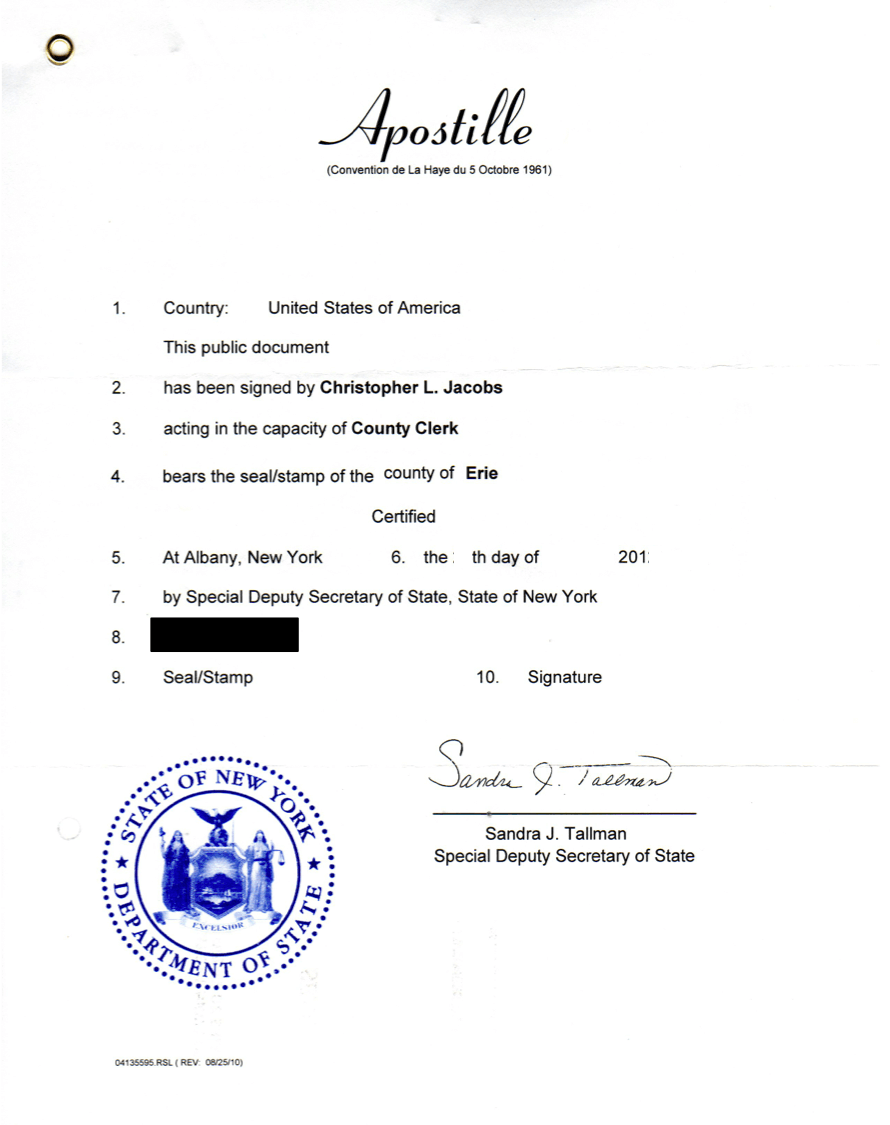
Spain (Non-Lucrative Visa): One of the strictest document requirements in the EU. Requires apostilled FBI background check, birth certificate, marriage certificate (if applicable), and medical certificate. Spain uses a sworn translator system called a traductor jurado. The translation must cover the entire apostilled document, including the apostille stamp itself — which has 10 standardized fields that must all be translated.
Mexico (Temporary/Permanent Resident Visa): Apostilled birth certificate and apostilled proof of income or financial solvency. Mexico generally does not require an FBI background check for financial-basis visas, but some immigration lawyers recommend including one anyway. Mexico is a Hague member, so standard apostilles are accepted without additional legalization.
Colombia, Panama, Ecuador: All Hague members with reasonably straightforward apostille requirements. Colombia’s Cancillería and Panama’s Ministry of Foreign Affairs both have digital apostille systems for domestically-issued documents, but your U.S. documents still require the U.S. authentication process before submission.
Non-Hague countries (UAE, Saudi Arabia, Vietnam, China): These countries are not party to the Hague Convention and do not accept apostilles. Instead, you need full consular legalization — a multi-step process that goes: notarization → state Secretary of State certification → U.S. Department of State authentication → destination country’s embassy stamp. This process takes longer and costs significantly more. Budget 12–16 weeks and factor in embassy appointment availability.
Your Action Plan: Start This Now
Here’s the timeline framework that works. Start this process at least 5–6 months before your intended move or visa appointment date, not 5–6 weeks.
Month 1: Get fingerprinted and submit your FBI IHS request immediately — either directly through CJIS or via an approved channeler. Simultaneously, order certified copies of your birth certificate, marriage certificate, and any other state documents from your state’s vital records office. Request at least two certified copies of each — one for the apostille, one as backup.
Month 2: While waiting for the FBI IHS, take your state documents to the Secretary of State office (or mail them in). Get your degree notarized and submitted to the Secretary of State in your school’s state. Request your official Social Security benefit letter via SSA.gov or by calling 1-800-772-1213 — the letter must bear an official SSA seal to qualify for federal apostille.
Month 2–3: State apostilles start returning. Review each one for accuracy — name spellings, dates, and apostille fields must match your passport exactly. Any discrepancy can cause a rejection overseas.
Month 3: FBI IHS arrives. Submit immediately to the U.S. Department of State with Form DS-4194. If your visa appointment is within 3 months, use a hand-carry service rather than standard mail. Do not gamble with mail times at this stage.
Month 4–5: Federal apostilles return. Verify the 90-day validity window against your consulate appointment date. If documents will expire before your appointment, contact the consulate immediately to discuss timing — some will work with you, some won’t.
One final note on translations: Do not translate your documents before they’re apostilled. The translation must be done after the apostille is attached, and it must cover the entire document — apostille stamp included. Doing it in the wrong order will cost you both time and money.
The couples and solo adventurers who have the smoothest international moves aren’t the ones with the biggest budgets. They’re the ones who started their paperwork absurdly early and treated the apostille process like the bureaucratic marathon it genuinely is. If you’re reading this and your move date is more than five months out, you’re in good shape. If it’s fewer than three months — start the FBI process today, not tomorrow.
Want the full country-by-country document requirements breakdown, or help figuring out which income documents you need apostilled for a specific visa? Browse the Exit Planning section of FundYourExit.com — we’ve covered the visa financial requirements for the most popular American expat destinations in detail.