
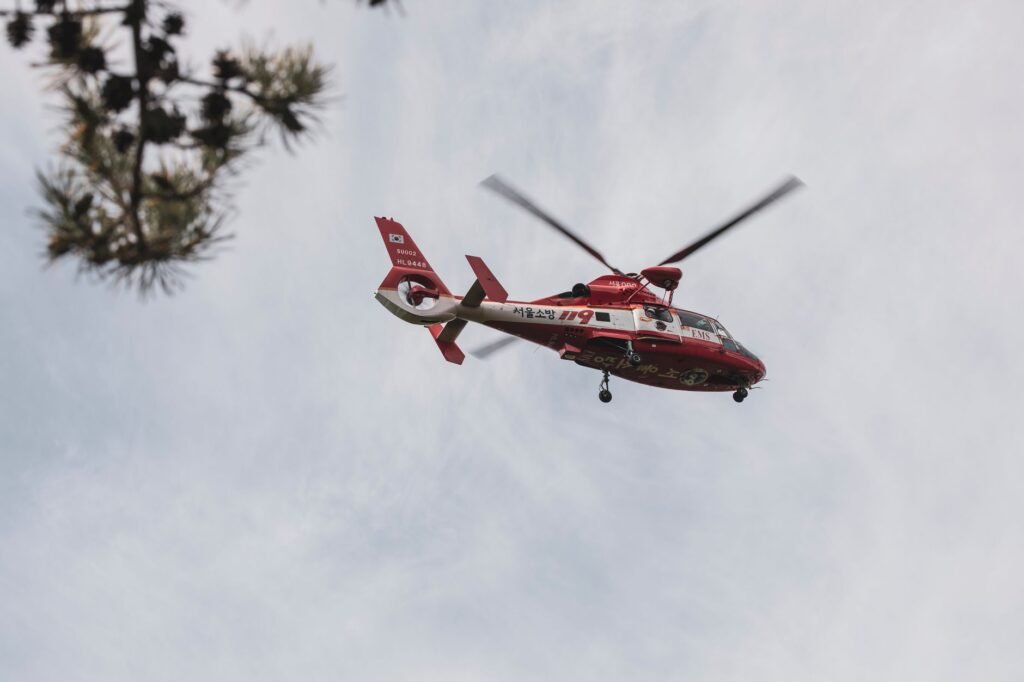
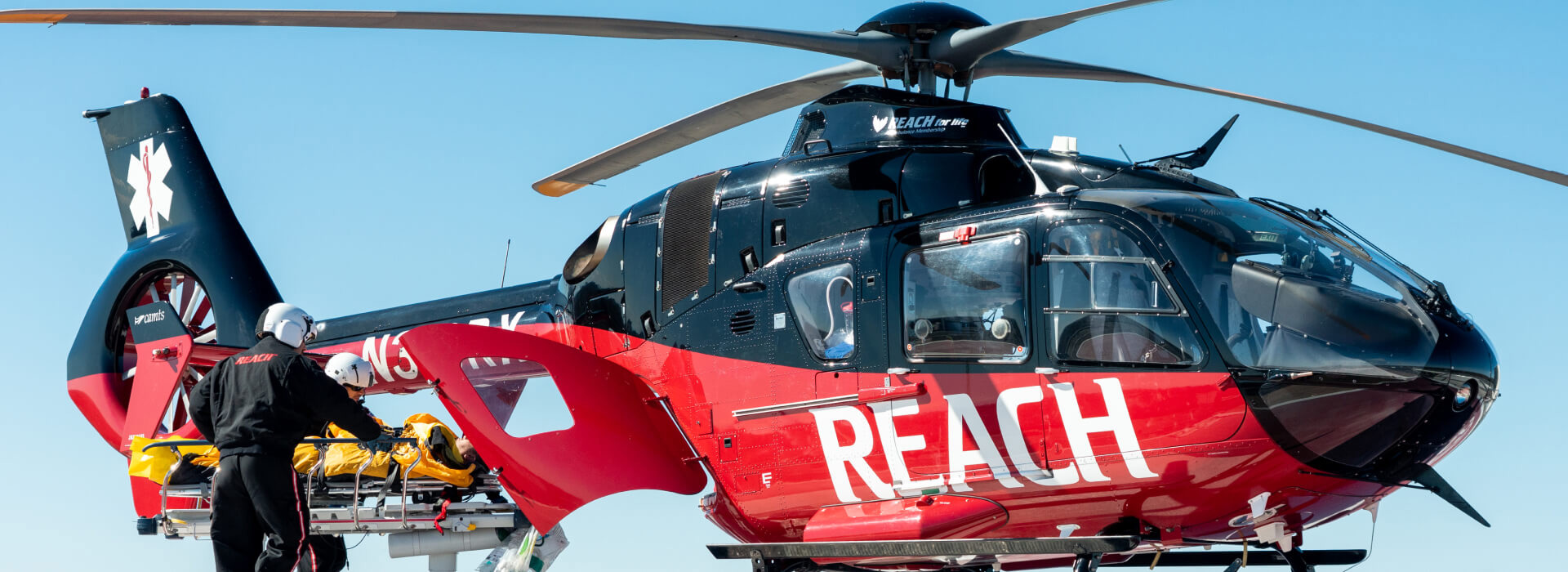
Mark was 54 years old when a stroke hit him in Chiang Mai, Thailand. He had done everything right — international health insurance, a savings cushion, years of careful exit planning. What he hadn’t done was plan for the one bill that makes everything else look affordable: the medevac medical evacuation flight back to the United States. The final invoice? $171,000. His insurance covered the hospital in Thailand. The air ambulance back home was another matter entirely. That flight — 8,700 miles, a pressurized medical jet, two flight nurses, a physician, and 22 hours in the air — was not covered. Not a dollar of it.
This is the expense that doesn’t show up in expat forums, relocation calculators, or most financial planning conversations. The cost of getting out when things go catastrophically wrong. And if you leave the country without understanding medevac medical evacuation insurance and what it costs expats, you are one bad day away from a six-figure bill that could obliterate everything you’ve built.
What a Medical Evacuation Actually Costs
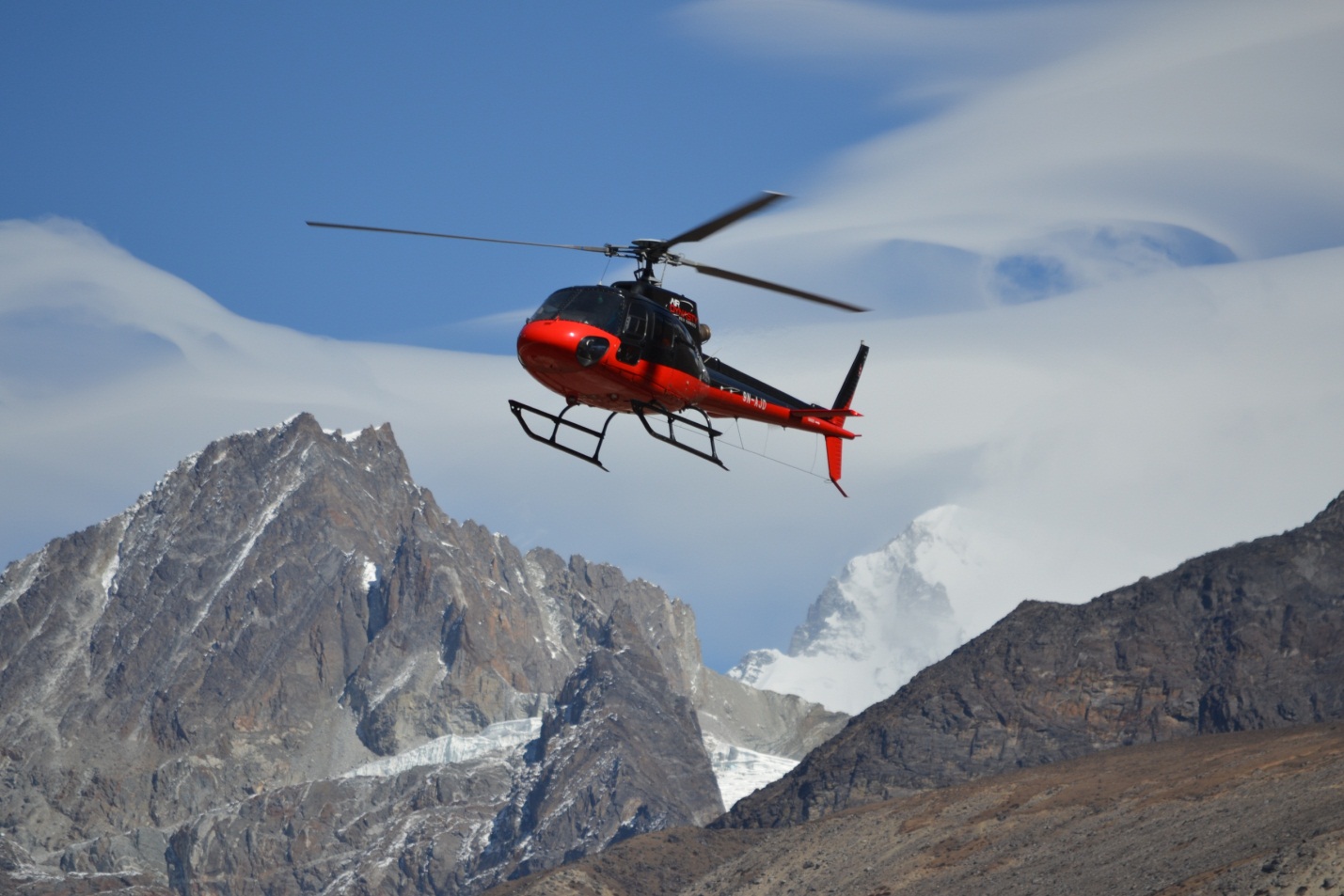
The numbers are not hypothetical. According to the CDC’s Yellow Book, medical evacuation costs range from $25,000 for transport within North America to over $250,000 for distant and remote locations. That’s just the transport — not a single night in a hospital bed, not a single IV bag, not the local ambulance that got you to the airport.
Here is what real evacuations cost by region, based on industry data from JetSet Protect and Global Rescue:
| Origin | Destination | Estimated Cost |
|---|---|---|
| Paris, France | New York, USA | $75,000 – $100,000 |
| Bangkok, Thailand | Los Angeles, USA | $150,000 – $200,000 |
| Kathmandu, Nepal | San Francisco, USA | $220,000 – $260,000 |
| Dar es Salaam, Tanzania | New York, USA | $250,000 – $285,000 |
| Remote Amazon, Peru | Miami, USA | $80,000 – $110,000 |
| Remote Greek island (heart attack, critical) | Miami, USA | $141,000 |
Air ambulance costs average $50 to $350 per mile depending on aircraft type, fuel, and required medical staffing. A Gulfstream-class medical jet — the kind used for intercontinental evacuations — runs $10,000 to $30,000 more than a light aircraft. Add ICU-level care during the flight, and you can tack on another $15,000 to $45,000 before wheels down at your home airport.
Global Rescue states plainly on their website: without a membership, medical evacuation can cost as much as $300,000 depending on where you are in the world. MedjetAssist puts the range at $30,000 to over $250,000. These are not edge-case numbers. They are the standard range for international air ambulance repatriation.
What Your Regular Travel Insurance Won’t Cover
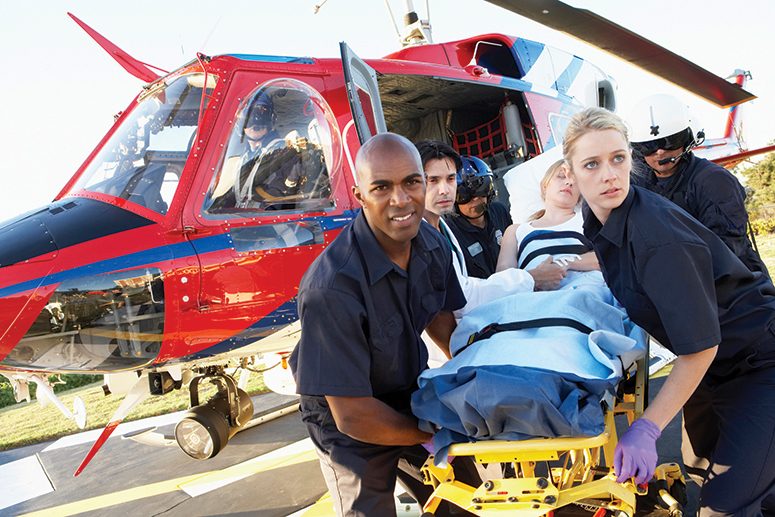
This is where most expats get blindsided. They read the brochure, see “emergency medical evacuation: $500,000” in the benefits summary, and assume they’re covered. They’re not — at least not in the way they think.
Standard travel insurance and international health plans like GeoBlue or IMG Global cover emergency medical evacuation only to the nearest adequate facility — not your home hospital of choice. If that nearest facility is a hospital in Manila, Singapore, or Bangkok that can treat your condition, your insurer considers the job done. Getting you from that facility back to Johns Hopkins, the Mayo Clinic, or the hospital where your cardiologist has your records? That’s a separate, often uncovered transport that you’ll arrange and fund yourself.
There are three other gaps that matter enormously for expats:
1. “Medically necessary” is a standard your insurer defines, not your doctor. Your physician can recommend evacuation. Your insurance company can override that recommendation if their in-house medical director disagrees. You pay the difference while you argue about it later.
2. Coverage limits are often dangerously low. A policy with a $50,000 or $100,000 evacuation benefit sounds substantial until you price an actual intercontinental air ambulance. A single flight from Southeast Asia to the U.S. can blow past $200,000. Squaremouth Travel Insurance recommends a minimum of $250,000 in evacuation coverage; for remote or adventure destinations, they recommend $500,000 or more.
3. Repatriation of remains is often a separate rider. Few people budget for this. If the worst happens, the cost to repatriate remains internationally ranges from $10,000 to $30,000. Standard travel policies either exclude it or bury it in fine print.
The Four Major Medevac Membership Programs Compared
Medevac memberships work differently from insurance. You pay an annual fee. In exchange, the provider handles and covers the entire cost of your medical evacuation — no claims, no reimbursement battles, no out-of-pocket exposure. Here are the four programs most expats should know:
| Provider | Annual Cost (Individual) | Coverage Area | Transport Destination | Key Feature |
|---|---|---|---|---|
| MASA Global | ~$324/yr (Platinum) | USA + International | Home hospital of choice | Covers air AND ground transport; no distance minimum; includes repatriation of remains |
| SkyMed | ~$265-$299/yr | North America + International | Home hospital or city | All flights pre-approved and arranged by SkyMed; expat plans available |
| MedjetAssist | $295-$315/yr | 150+ miles from home (international) | Home hospital of member’s choice | No “medically necessary” requirement for hospital-to-hospital transfer; up to age 74 |
| Global Rescue | $615/yr annual; $139/trip | Worldwide, including field rescue | Home hospital of choice | Includes field rescue before hospital admission; security evacuation add-on available |
A few distinctions worth understanding before you choose:
MedjetAssist ($295/yr individual) is the most popular choice for expats who are already hospitalized and want guaranteed transport to their home hospital — no medical necessity debate. Their Expat180 plan starts at $465 for members living abroad more than 180 days per year, and their Expat365 starts at $695.
Global Rescue is the only major provider that includes field rescue — meaning they’ll extract you from a remote location before you even reach a hospital. If you’re traveling in adventure destinations, rural Southeast Asia, or sub-Saharan Africa, that field rescue capability is the difference between a difficult situation and a fatal one. Annual plans start at $615, but their per-trip plans at $139 work for short-term travelers who want to test the coverage before committing annually.
MASA Global offers particularly strong ground-to-air coverage with no distance minimum, making it useful for domestic U.S. emergencies as well as international ones. Their plans also include repatriation of remains, which most competitors charge extra for or exclude entirely.
SkyMed is well-regarded among snowbirds and North American expats, particularly in Mexico and the Caribbean. Their expat plans accommodate extended stays abroad, and their pricing at $265 to $299 per year makes them competitive for budget-conscious families.
What “Medically Necessary” Actually Means (and the Loophole That Trips Everyone Up)

Here is the clause that has derailed more expat emergency plans than any other: “evacuation to the nearest appropriate medical facility, only if medically necessary.”
Every word in that phrase is a potential denial point. “Nearest” means your insurer, not your doctor, decides what’s close enough. “Appropriate” means your insurer, not your cardiologist, decides what level of care is adequate. “Medically necessary” means your insurer has hired a physician to review your case remotely and rule on whether you actually need to be moved.
The loophole that catches people: if there’s a hospital within 100 miles that can technically treat your condition — even if you don’t speak the language, can’t coordinate your existing care team, or have a complex medical history requiring continuity of care — your insurer may consider that “appropriate” and deny the transport home. You’re now stuck in a foreign hospital arguing with an insurance company while your family is 10,000 miles away.
This is exactly the gap MedjetAssist was designed to close. Their membership explicitly does not require medical necessity for the hospital-to-hospital transfer to your home facility. Once you’re admitted to a hospital anywhere more than 150 miles from home, you have the right to transfer — period. No physician approval. No insurance company veto. You call, they come.
The standard travel insurance and international health plans from IMG Global and GeoBlue are excellent products for covering medical expenses abroad. But neither eliminates the “medically necessary” gatekeeping for the transport leg. They’re insurance products. Medevac memberships are logistics products — and that distinction is everything in a crisis.
Who Needs This Most (and Who Can Probably Skip It)

Let’s be direct about who this is actually for, because not everyone needs a medevac membership at the same urgency level.
High priority — get this before you board the plane:
Expats over 45. Statistically, your odds of a cardiac event, stroke, or serious medical crisis increase meaningfully after 45. A medevac membership at $295 to $615 per year is not a luxury for this group — it’s a core line item in your expat budget alongside health insurance and emergency savings.
Anyone relocating to Southeast Asia, Sub-Saharan Africa, Central America, or South America. These regions have widely variable hospital quality. The gap between a local facility and the standard of care you’d receive at home is large enough to matter. The distance back to the U.S. puts the air ambulance bill firmly in six-figure territory without coverage.
Anyone with existing health conditions. Continuity of care is not a soft preference when you have a complex medical history. Getting transported to a facility where your doctors already have your records and treatment history is a genuine medical advantage — and a medevac membership is the only way to guarantee it happens on your terms.
Adventure travelers, digital nomads in rural areas, and anyone spending time more than 2 hours from a major hospital. For this group, field rescue capability — Global Rescue’s specialty — matters as much as air ambulance coverage. Getting from the remote location to the hospital is often the hardest and most expensive part.
Lower priority — but still worth considering:
Healthy expats under 35 living in Western Europe, where hospital quality is roughly equivalent to the U.S., may find that a high-limit travel insurance policy with strong evacuation coverage (at least $250,000) provides adequate protection at lower cost. In Germany, France, the Netherlands, or Scandinavia, the “nearest appropriate facility” is often genuinely excellent. That said, even young, healthy expats in Europe should run the numbers — at $295 per year, MedjetAssist costs less than most cell phone bills, and the risk you’re covering is permanent.
How to Buy It — Before You Board That Plane

The mechanics of buying a medevac membership are straightforward. None of these programs require a medical exam or underwriting. You pay the annual fee, you’re a member, and coverage typically activates within days. Here’s how to approach the decision:
Step 1: Match the provider to your destination. Southeast Asia or Africa means prioritizing Global Rescue’s field rescue capability or MedjetAssist’s no-questions-asked hospital transfer. Mexico, Central America, or the Caribbean? SkyMed’s regional focus may serve you well. MASA Global is worth a close look if you split time between the U.S. and abroad, since it covers domestic emergencies with no distance minimum.
Step 2: Check what your existing coverage already includes. Review your international health insurance or travel insurance policy carefully. Look for the specific evacuation benefit limit (not total medical limit), the “nearest adequate facility” language, and any “medically necessary” clauses. If your evacuation limit is under $250,000 and includes that nearest-facility language, a medevac membership fills the gap your insurance leaves open.
Step 3: Don’t wait for an emergency to be convenient. Medevac memberships have waiting periods — typically 15 to 30 days before coverage fully activates. If you buy coverage the day you have a heart attack, you may not be covered for pre-existing conditions. Buy it when you buy your flights. Buy it when you sign your lease abroad. Buy it today.
Step 4: Store your membership number where someone else can find it. Program it in your phone under “ICE — Medevac.” Write it on a card in your wallet. Give it to a trusted local contact. If you’re unconscious, you can’t make the call yourself — but someone else can, and that membership number is what authorizes the evacuation.
Step 5: Buy direct. MedjetAssist at medjetassist.com. Global Rescue at globalrescue.com. SkyMed at skymed.com. MASA Global at masaaccess.com. No broker needed, no upsell required. Annual MedjetAssist individual membership runs $295 to $315 per year. Global Rescue annual plans start at $615. Single-trip Global Rescue plans start at $139 if you want to test the coverage before committing to an annual membership.
The $295 Decision
You’ve done the hard part of planning your exit: the visa research, the tax planning, the housing search, the budget spreadsheet. You’ve thought carefully about what it costs to live abroad. What most people skip — until they’re staring at an invoice from an air ambulance company — is what it costs to come back when you have no choice.
The math is stark. A single intercontinental medical evacuation averages $150,000 to $300,000. A MedjetAssist annual membership costs $295. A Global Rescue per-trip plan costs $139. According to analysis from Instate Tuition Experts, the financial protection ratio for medevac memberships runs 300:1 to 1,300:1. There is no other line item in your expat budget that delivers this kind of asymmetric protection for this price.
Mark from Chiang Mai eventually settled his $171,000 bill through a combination of medical billing negotiation and a GoFundMe campaign that raised $43,000. He paid the rest out of retirement savings it had taken 25 years to build. He now holds a MedjetAssist membership. “It’s the first thing I renewed this year,” he said. “Before the lease. Before the flights.”
Don’t wait for your version of that story. Add the medevac membership line to your expat budget today — it belongs right next to rent and health insurance, because when you need it, it matters more than either one.
Sources: CDC Yellow Book 2024 (https://www.cdc.gov/yellow-book/hcp/health-care-abroad/travel-insurance.html) | JetSet Protect Medical Evacuation Cost Guide (https://www.jetsetprotect.com/guides/scenario/medical-evacuation-costs) | Global Rescue competitor comparison (https://www.globalrescue.com/common/blog/detail/global-rescue-competitors-comparison-guide/) | MedjetAssist rate sheet 2024 (https://medjetassist.com/docs/default-source/sales/medjet-travel-advisor-rate-sheet-press-pack-2024.pdf) | Emergency Assistance Plus air ambulance cost guide (https://www.emergencyassistanceplus.com/resources/air-ambulance-cost/) | Riviera Expat medevac guide (https://www.riviera-expat.com/medevac-travel-insurance/) | Squaremouth Travel Insurance (https://www.squaremouth.com/travel-insurance-benefits/medical-evacuation-and-repatriation) | Instate Tuition Experts medevac comparison (https://instatetuitionexperts.com/who-coordinates-medical-evacuation-for-students-abroad/)