You have seen the posts. Someone leaves their overpriced apartment in Austin or Brooklyn, moves to Medellin or Chiang Mai, and suddenly their cost of living drops by 60%. They are sipping cocktails on a rooftop, paying $800 a month all-in, and posting about it to 40,000 followers who are desperately doing the math on their own lease.
Here is what those posts do not show you: the Americans who tried the same thing and ended up spending more than they did at home. Not a little more — in some cases, significantly more. The strategy has a name — geoarbitrage — and it works. But it only works if you understand its failure modes. Most people do not, and they find out the hard way.
This is not a hit piece on living abroad. It is the honest briefing you deserved before you booked that one-way ticket. The geoarbitrage hidden costs are real, they are predictable, and almost all of them are avoidable — if you know where to look.
Trap #1: You Moved to a Tourist Neighborhood and Paid Tourist Prices

Tulum. Bali. Lisbon. These are the places that show up in every geoarbitrage success story — and they are also the places where the math breaks down fastest. When a destination becomes famous among digital nomads and remote workers, landlords, restaurants, and service providers do the rational thing. They charge what the market will bear. And the market showing up now has American salaries.
In Tulum’s beachside zones, a one-bedroom apartment that runs $400/month in local residential neighborhoods goes for $1,800–$2,500/month in areas popular with foreign remote workers. Bali’s Canggu neighborhood has seen rental prices increase over 200% in the last five years, with basic studios now running $700–$1,200/month — comparable to secondary U.S. cities. Lisbon’s historic neighborhoods like Alfama and Principe Real now command rents that rival parts of Chicago.
The fix is counterintuitive: go where other Americans are not. Move two neighborhoods away from the Instagram-famous strip. The locals living 20 minutes from Canggu are paying a fraction of what expats pay in the hotspot. You need local knowledge to find these places — which means you need to arrive and explore before you sign a lease, not after.
Trap #2: Emergency Flights Home Will Destroy Your Budget

Nobody budgets for the flights home. This is one of the most consistent geoarbitrage hidden costs that derails otherwise solid plans. People calculate their monthly burn rate in their new country, feel good about the numbers, and completely forget that they still have parents, siblings, weddings, funerals, and medical situations in the United States.
If you are flying back 2–4 times per year — which is realistic for most people who are not fully cutting ties — you are looking at $600–$1,800 per round trip depending on your destination and how much lead time you have. An emergency booking from Southeast Asia or Europe can run $2,500–$4,000 one-way on short notice. Spread four round trips across a year and you have added $300–$600 per month to your actual cost of living before you have bought a single plate of pad thai.
Budget for flights home as a fixed line item — not a variable or a thing you will figure out later. Build a dedicated travel fund of at least $3,000–$5,000 before you leave. If your geoarbitrage plan does not account for this, your budget is fiction.
Trap #3: Exchange Rate Volatility Can Wipe Out Your Savings Overnight

Geoarbitrage works because you earn in dollars and spend in a weaker local currency. That math is beautiful — until the currency stops cooperating. The Mexican peso swung roughly 15–20% against the dollar in 2023–2024 alone. Someone living in Mexico City on $2,000/month suddenly needed $2,300–$2,400/month to maintain the same lifestyle — a $300–$400/month increase that appeared with zero warning and required zero lifestyle change on their part.
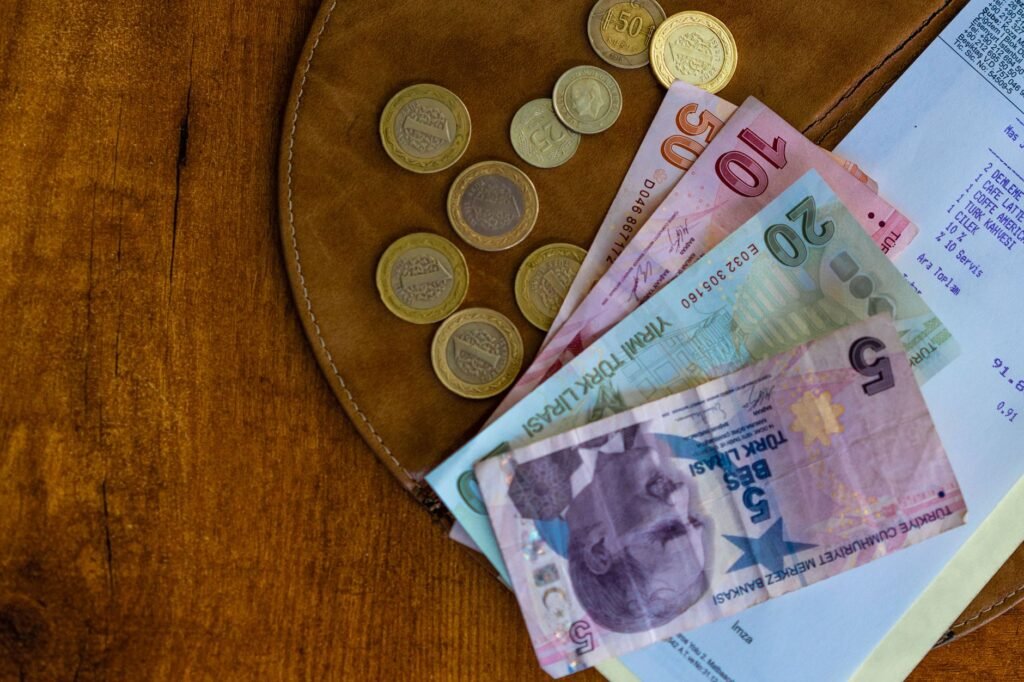
This is not a Mexico-specific issue. The Turkish lira lost over 40% of its value in a single year. The Argentine peso is a running example of currency collapse. Even the euro and British pound move enough to meaningfully affect expat budgets. If you are living in a country with a volatile currency, you need a buffer — not just a monthly budget that assumes today’s exchange rate holds forever.
The practical move: budget at an exchange rate that is 10–15% worse than the current rate. If you can live comfortably at that reduced number, you have real margin. If you cannot, you are operating without a safety net.
Trap #4: The Expat Tax — Landlords Know Exactly What You Earn

In many popular expat destinations, there are effectively two rental markets: one for locals and one for foreigners. Landlords in these markets have years of experience reading the signals — your accent, your clothing, the laptop bag. Foreigners are routinely quoted 2–3x what locals pay for identical units in the same building.
Beyond overcharging, rental scams targeting foreigners are common in nearly every popular geoarbitrage destination. The patterns are consistent: fake listings, large deposit requests before you have seen the property in person, lease agreements in a language you cannot fully read, and landlords who disappear after move-in when repairs are needed. One bad rental situation in Bali or Mexico City can cost $2,000–$5,000 in lost deposits and emergency re-housing costs.
The countermeasure: spend your first 1–3 months in a furnished short-term rental while you build local contacts. The best apartments do not show up on international listing sites — they are found through local Facebook groups, coworking community boards, and word of mouth from people who have been in the city for a year or more. Never pay more than one month’s deposit, and never wire money internationally before you have seen the unit in person.
Trap #5: Visas, Renewals, Border Runs, and Legal Fees Add Up

The geoarbitrage fantasy assumes you just land in a country and start living there cheaply. Reality involves visa-on-arrival limits, tourist visa maximums, residency applications, renewal fees, and — in destinations like Thailand and some Latin American countries — periodic border runs that cost $100–$300 per trip in transportation, accommodation, and time.
Even in countries with straightforward digital nomad visas, the costs add up. Portugal’s D8 visa application involves document notarization, apostilles, translation fees, and consulate fees — plus another $500–$1,500 in legal fees if you use an immigration attorney. Mexico’s temporary residency process through a consulate runs $150–$400 in fees alone, and many people pay a facilitator ($300–$800) to navigate the paperwork. Thailand’s Elite Visa — one of the cleanest long-stay options — costs $15,000 upfront for a five-year stay.
Factor immigration costs into your first-year budget as a separate line item. A realistic estimate for visa applications, legal help, and related travel ranges from $500–$2,500 in year one, depending on the country. Do not let this catch you off guard in month three.
Trap #6: International Health Insurance Costs $200–$600 a Month

This is the cost that surprises people the most, because the pitch of geoarbitrage often includes the claim that healthcare is so cheap abroad. That is true for routine care — a doctor’s visit in Mexico City runs $20–$40, and a dental cleaning that costs $350 in the U.S. might run $50 in Thailand. What is not cheap is comprehensive international health insurance that covers serious illness, surgery, medical evacuation, and repatriation.
Plans from providers like Cigna Global, Allianz Care, or SafetyWing’s Remote Health product range from $150/month for bare-bones coverage to $600+/month for comprehensive plans that include the U.S. in their coverage network. If you want to be able to return to the U.S. for treatment — which most Americans do for anything serious — you need a plan that covers it, and that means paying for it.
People who move abroad and skip insurance entirely are gambling with five-figure or six-figure potential losses. A single hospitalization, a medical evacuation flight, or a serious accident can financially erase years of geoarbitrage savings. This is not a cost to skip — it is a line item to plan for from day one.
Trap #7: Lifestyle Creep — “It’s So Cheap” Is a Dangerous Phrase

Research on spending behavior consistently shows that when people perceive something as cheap relative to their reference point, they buy more of it. Geoarbitrage creates a powerful version of this effect. When a nice dinner costs $12 instead of $60, people go out five nights a week instead of one. When a private villa costs $600/month instead of $2,500, people upgrade from a studio apartment. When a massage costs $15, it becomes a daily habit.
This is lifestyle creep at its most insidious, because it feels earned. You moved abroad. You did the hard thing. You deserve to enjoy it. And individually, each of those spending decisions is rational — $12 for dinner is cheap. The problem is that it compounds. Someone who was spending $3,500/month in the U.S. can easily end up spending $3,200/month abroad by replacing modest American habits with high-volume cheap-country ones. That is not geoarbitrage — that is paying for a change of scenery.
The discipline required here is the same as at home: budget based on goals, not based on what you can technically afford. Set a monthly number before you arrive and hold to it. The people who successfully use geoarbitrage to build savings are not the ones who spend freely because it is cheap — they are the ones who keep spending low and bank the difference.
Trap #8: Setup Costs Are a One-Time Gut Punch

Breaking a U.S. lease early costs 1–2 months of rent in penalties — often $2,000–$4,000. Putting belongings into storage runs $100–$300/month indefinitely. Shipping anything internationally is expensive: a standard air freight box runs $500–$1,500, and full-container shipping for household goods ranges from $3,000–$8,000 depending on the destination.
Then there are the startup costs on the other end: a security deposit on your new place (often 2–3 months’ rent), furnishing an apartment, buying local SIM cards, setting up utilities, and covering the inevitable first-month-in-a-new-city friction costs — the extra rides while you learn the transit system, restaurant meals because you do not yet know how to shop the local markets, small hardware runs to make a new place functional.
A realistic total setup cost for an international move ranges from $5,000–$15,000 when you add it all up — and most people discover this number after they have already committed. Build this into your pre-move savings target. Moving abroad on a thin financial cushion is how people end up in a worse financial position than when they started.
How to Actually Do Geoarbitrage Right

None of the traps above are fatal. Every single one of them is avoidable with preparation. Here is the framework that actually works:
Build a full-cost budget, not a wishful one. Your budget must include: base living costs, international health insurance, a prorated share of annual flights home, a visa and legal fee reserve, and a 10–15% exchange rate buffer. If you can live within that number comfortably, geoarbitrage is genuinely viable for you. If you cannot, the destination is not the right fit yet.
Arrive as a tourist, commit as a resident. Spend 4–6 weeks in your target city before signing any lease. Use that time to learn the local rental market, find the non-expat neighborhoods, connect with people who have been there long enough to have real opinions, and reality-check every assumption. The cost of a short-term rental for a month is cheap insurance against a bad 12-month lease.
Save the spread — do not spend it. The entire point of geoarbitrage is to create a gap between what you earn and what you spend. That gap only matters if it goes somewhere — into investments, into debt payoff, into a runway fund. Geoarbitrage that results in a more comfortable lifestyle at the same savings rate as home is not a financial strategy. It is a preference.
Keep your U.S. financial infrastructure intact. Maintain your U.S. bank accounts, keep a credit card with no foreign transaction fees, and do not close your U.S. address without a plan for mail forwarding, tax filings, and state residency. The administrative cost of dismantling and rebuilding your U.S. financial life is enormous — do not create that problem unless you are certain.
Know your exit number. Geoarbitrage works best as a deliberate phase — a 1–3 year sprint to accelerate savings, pay off debt, or build a business runway — not as a permanent escape from financial planning. Know what you are trying to achieve, set a milestone, and measure against it. The people who get the most out of living abroad treated it as a tool, not a lifestyle solution.
The geoarbitrage hidden costs are real. The savings potential is also real. The difference between Americans who come back broke and those who come back with a funded future is almost entirely in the planning done before the flight. Do that work, and the math works in your favor.