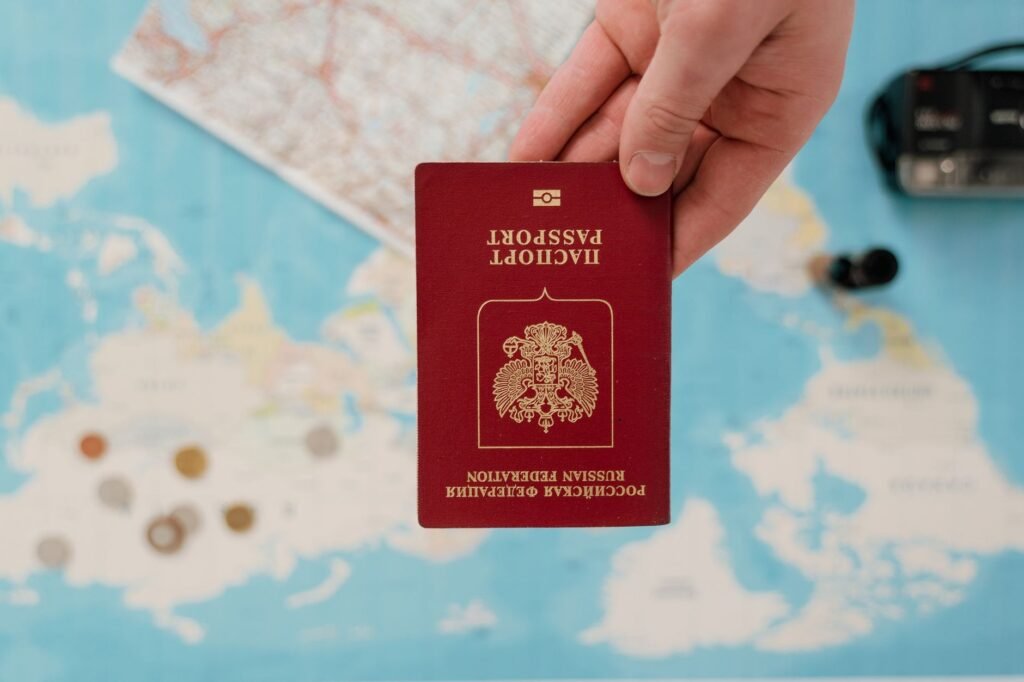

Thousands of Americans decide every year to buy property abroad to get residency — and in 2026, most of them are operating on rules that no longer exist. Spain’s Golden Visa is gone. Portugal stripped the real estate option. Greece doubled its threshold. The assumption that a deed equals the right to stay is costing people $200,000 or more, and it’s happening in broad daylight because the information circulating online is three years out of date. This is the current reality check you need before you wire a single dollar overseas.

The Core Trap: A Deed Is Not a Visa
Here is the sentence that would save most people from a very expensive lesson: property ownership and the legal right to reside in a country are two completely separate things. In almost every country on earth, a foreigner who buys real estate is still subject to the same visitor entry rules as a tourist. In Europe, that means the Schengen 90-day limit. You can own a €400,000 apartment in Athens, fly in, and legally be required to leave after 90 days — just like anyone else on a tourist entry.
The Golden Visa programs that once linked property purchase directly to residency were always the exception, not the rule. Several of the most popular ones have now closed or been significantly restructured. Many Americans bought property under the assumption that those programs were still open, or will open again soon, or that an exception applies to them. None of those assumptions hold up in 2026.
Country-by-Country 2026 Reality Check: Buy Property Abroad and Get Residency — or Not
Let’s go country by country. No vague statements — just the current status of property residency vs. visa requirements in each market.
Spain: Golden Visa Closed — Full Stop
Spain officially closed its Golden Visa program to new applicants in April 2024. There are no new applications, no grandfathering of pending purchases, and no announced reopening. If you buy Spanish property today, you receive exactly what any property owner receives: the right to pay Spanish property taxes and the same 90-day Schengen allowance as every other tourist. Existing Golden Visa holders who obtained residency before the closure retain their status and can renew, but that pipeline is closed to new entrants. Anyone selling you Spanish real estate as a path to residency right now is either uninformed or dishonest.
Portugal: Real Estate Option Removed October 2023
Portugal’s Golden Visa program still exists, but the real estate investment option was removed in October 2023 under the government’s Mais Habitacao (More Housing) housing reform. As of 2026, property purchase in Portugal does not qualify for the Golden Visa under any circumstances — not €500K, not renovation projects, not anything real estate-related. The qualifying path that remains is a minimum €500,000 investment in a non-real-estate-related fund. Buying a €350,000 apartment in Lisbon gives you no residency rights beyond the 90-day Schengen window. The D7 Passive Income Visa remains a separate, viable option for Americans with provable passive income (more on that below), but it is not triggered by property ownership.
Greece: Golden Visa Survives, But the €250K Era Is Over
Greece is one of the few European countries where property purchase still links directly to residency — but the program was significantly restructured in 2024. The old €250,000 threshold that made it the most accessible Golden Visa in Europe is gone. The new thresholds, effective from August 2024, are: €400,000 minimum in most mainland areas, and €800,000 minimum in Attica (Greater Athens), Thessaloniki, Mykonos, and Santorini. For high-net-worth Americans who want EU residency and are comfortable committing €800K in a prime area, Greece remains a legitimate path. For anyone who budgeted for the old €250K entry point, the math no longer works.
Italy: Elective Residency Often Beats the Investment Visa
Italy has a €500,000 Investor Visa, but it sees relatively low uptake from Americans because a simpler and cheaper path exists: the Italian Elective Residency Visa. This visa requires demonstrating passive income of roughly €31,000 per year (about €2,600/month), proof of accommodation in Italy, and basic documentation. Property ownership can serve as the accommodation proof — but it is supporting documentation, not the visa trigger. Buying Italian property does not grant residency; meeting the income threshold does.
Turkey: Property Still Grants Citizenship — With a Trade-Off
Turkey is one of the few remaining countries where purchasing real estate — minimum €400,000 — grants a direct path to citizenship (not just residency). This is a legitimate program and genuinely one of the faster citizenship-by-investment routes available. The trade-off: a Turkish passport currently provides visa-free or visa-on-arrival access to approximately 110 countries, compared to the US passport’s 186. Americans who acquire Turkish citizenship gain a second passport but give up significant travel freedom in the exchange unless they are strategic about when and how they use each document. Know what you are actually buying.
Mexico: Property Ownership Is Irrelevant to Residency
Mexico does not have a property investment visa. Full stop. Owning a house in Puerto Vallarta or a condo in Mexico City does not give you a single additional day of legal stay beyond your tourist FMM entry (typically 180 days for Americans on arrival, set by the immigration officer). To obtain Temporary or Permanent Resident status in Mexico, you apply through the standard visa process based on income, financial solvency, or family ties. Property ownership can be submitted as evidence of financial ties to Mexico and may support your application, but it does not qualify you for anything on its own.
Thailand: Zero Residency Rights From Property
Thailand’s property laws are among the most restrictive for foreigners — you generally cannot own land outright (condos in buildings that are less than 49% foreign-owned are the standard route). But even where property purchase is possible, it grants absolutely no residency rights. The established long-stay path for Americans in Thailand is the Thailand Elite Visa, a membership program offering 5-year or 20-year visas for approximately $15,000–$30,000 USD. Retirees can also use the Non-Immigrant O-A (retirement) visa with proof of income or a Thai baht bank deposit requirement equivalent to roughly $22,000. Property has nothing to do with either path.
Colombia: Property Helps, But Does Not Replace the Application
Colombia’s Resident Visa requires meeting specific income or asset thresholds and going through a formal application process with the Colombian Foreign Ministry. Property ownership can be included as evidence of financial ties and economic stability — which genuinely helps the application. But there is no automatic conversion from “property owner” to “resident.” The process requires income documentation, criminal background checks, and a sponsored application. Many Americans buy in Medellin or Cartagena and are surprised to learn the visa paperwork is entirely separate from the closing table.

The Expensive Mistake Playing Out in 2026
Here is the scenario that immigration attorneys and expat forums are full of right now:
An American — a 58-year-old early retiree from Austin — decides to move to Lisbon. They have done their research: read the articles, watched the YouTube videos, maybe even visited twice. They buy a €300,000 apartment in the Mouraria neighborhood. The closing goes smoothly. They book a one-way flight.
They arrive at Lisbon airport and are admitted as a tourist. 90 days later, they are legally required to leave the Schengen Area. They have a mortgage payment on a Portuguese apartment and no legal right to be in the country past day 90.
Now they scramble to apply for a D7 Passive Income Visa — which requires demonstrating at least €760/month in passive income, obtaining a NIF (Portuguese tax number), opening a Portuguese bank account, and providing proof of accommodation. They have the accommodation. But the D7 application must be submitted at a Portuguese consulate in the United States before entry, or through the immigration authority once already in Portugal — a process that takes four to eight months under current backlogs. They overstay. They now have an immigration violation on their Schengen record.
The property purchase was not the mistake. The sequence was. They should have secured the D7 visa approval before relocating. The apartment would have been just as available three months later.
What Actually Works for Residency Abroad in 2026
For most Americans pursuing legal long-term residency abroad — not citizenship, not a Golden Visa, just the right to live somewhere indefinitely — the functional paths fall into these categories:
- Income-based passive income visas — Portugal’s D7, Costa Rica’s Rentista, Panama’s Pensionado, and similar programs require demonstrating a minimum monthly income from outside the country (Social Security, dividends, rental income, pension). No property investment required. These are the most accessible paths for retirees and remote workers with steady income.
- Retirement visas — Panama, Thailand (Non-OA), Mexico (Temporal Resident with financial solvency), and several Latin American countries have dedicated retirement tracks with income or deposit thresholds achievable for Americans with modest retirement savings.
- Digital nomad visas — Portugal (D8), Spain (Startup Act Visa), Costa Rica, Ecuador, Greece, and over 50 other countries now offer formal digital nomad visas for remote workers. Income thresholds typically range from $1,500–$3,500/month. No property required.
- Investment in approved non-real-estate vehicles — Where investment-based residency still exists (Portugal’s remaining Golden Visa fund option, Malta, certain Caribbean programs), the qualifying vehicle is now almost always a fund or capital contribution, not residential real estate.
- Long-stay visas with property as supporting documentation — In several countries, property ownership can strengthen your visa application by demonstrating ties and economic stability — but it is submitted alongside income documentation, not in place of it.
The Right Order of Operations — Every Time
If you want to live abroad long-term, there is one sequence that works and one that creates expensive problems:
- Secure your visa or residency path first. Identify which visa category you qualify for. Consult an immigration attorney in the target country — not an expat Facebook group. Start the application process. Receive your visa or at minimum your consulate appointment before making any irreversible financial commitments.
- Then decide whether to buy or rent. Renting during your first one to two years of residency is standard practice among experienced expats for good reason: it takes time to understand neighborhoods, property values, maintenance norms, and local legal requirements for foreign ownership. A rental in Lisbon or Medellin for $1,200/month buys you the time to do this correctly. Buying a €300K apartment before you have legal residency status does not.
Property abroad can be a sound financial decision. Owning real estate in a country you plan to live in long-term has real advantages — equity, stability, protection against rent increases, and potentially favorable tax treatment. None of that changes. What changes is the order: residency first, property second.
2026 Golden Visa Status: Quick Reference Table
| Country | Property = Residency? | Current Threshold / Status | Best Alternative Path |
|---|---|---|---|
| Spain | No — program closed April 2024 | Closed to new applicants | Non-lucrative visa (approx. €2,400/mo income) |
| Portugal | No — real estate removed Oct 2023 | €500K fund investment only | D7 Passive Income Visa (€760/mo) |
| Greece | Yes — with major caveats | €400K–€800K depending on area | Still viable at high net worth |
| Italy | No | €500K Investor Visa rarely used | Elective Residency Visa (€31K/yr income) |
| Turkey | Yes — grants citizenship directly | €400K minimum | N/A — citizenship is the product |
| Mexico | No | No investment visa exists | Temporary Resident Visa (financial solvency) |
| Thailand | No | Foreign land ownership restricted | Thailand Elite Visa ($15K–$30K) |
| Colombia | No — supporting documentation only | Standard visa application | Resident Visa (income and asset proof) |
The Bottom Line for Americans in 2026
The list of residency by investment cheapest countries that circulated in 2021 — Portugal at €350K, Greece at €250K, Spain still open — no longer reflects reality. The window has narrowed considerably. The countries that still offer property-linked residency programs in 2026 are fewer, more expensive, and more complex than they were three years ago. Americans who want to buy property abroad and get residency in 2026 need current information, not recycled blog posts from the previous decade.
The Americans getting this right are treating the visa as the primary project and the property as a secondary decision. They talk to an immigration attorney before talking to a real estate agent. They understand that owning a home in a country and having the legal right to live there are two different facts, governed by two completely different legal frameworks.
The Americans getting this wrong are wiring hundreds of thousands of dollars overseas based on outdated information and assuming the rules haven’t changed. They have changed — significantly. In Spain and Portugal, the property-to-residency door is closed. In Greece, it costs up to €800,000. In most of the world, it never existed at all.
If you’re serious about exiting the US — whether for tax efficiency, lifestyle, or long-term security — the path exists. But it requires accurate, current information and the right sequence of steps. Residency first. Property second. In that order, every time.
Sources: Get Golden Visa — Portugal Golden Visa 2026 Guide; Golden Visa Greece — New Thresholds Effective August 2024; Official Spanish government Golden Visa closure announcement, April 2024; Thailand Elite Visa official program schedule.