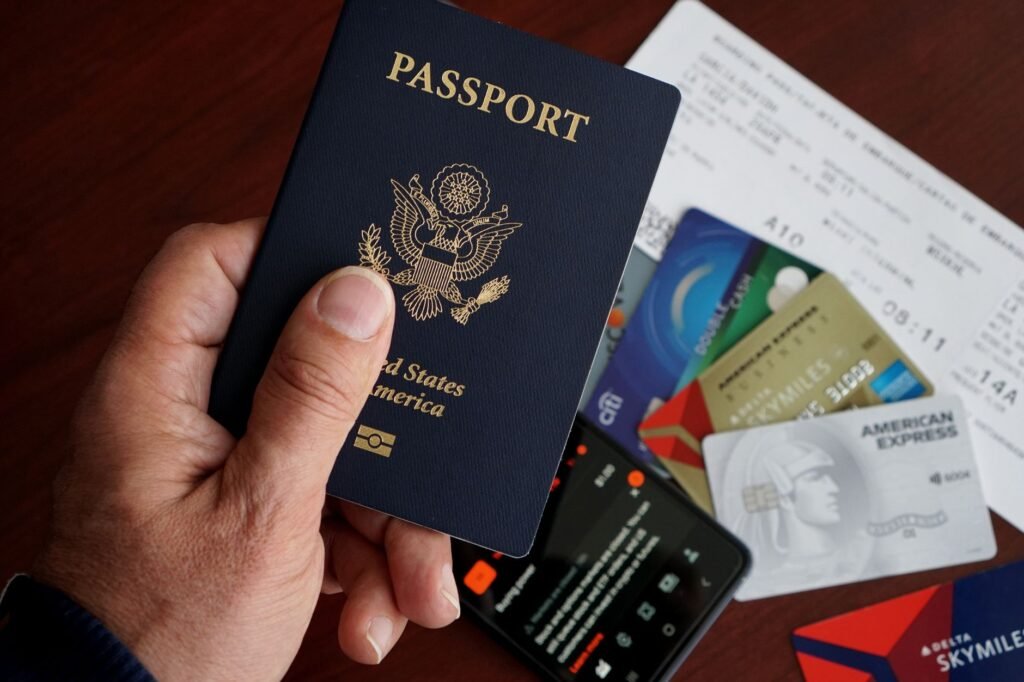
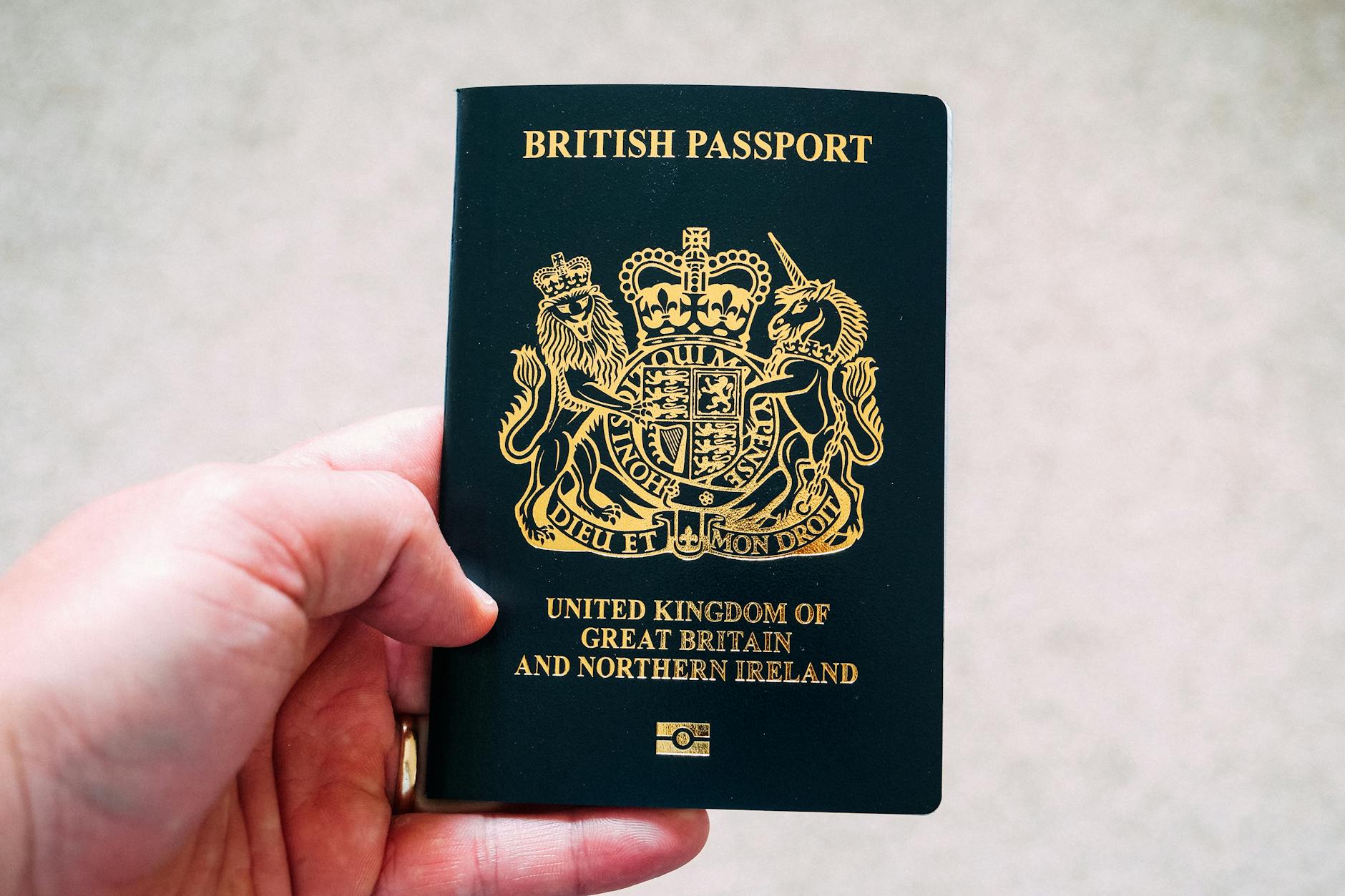
Most Americans planning to move abroad spend months researching visas, housing, and health insurance — and about four days thinking about their finances. That is the wrong order. The financial accounts to open before moving abroad from USA need to be in place before you hand in your notice, sign a lease in another country, or update a single address. Banks close US accounts the moment they see a foreign address on file. States like California and New York will continue billing you for state income tax unless you formally cut ties before you leave. Get this sequence wrong and you will be scrambling for cash from a café in Lisbon with a locked Chase account and an angry letter from the Franchise Tax Board.
This is not a casual checklist. It is a timed action plan organized around three departure windows: 6+ months out, 3–4 months out, and 30–60 days out. Work through it in order.
6+ Months Before Departure: Open the Right Financial Accounts Now
These four moves take the longest to execute. Some have multi-week approval timelines. Do not wait.
1. Charles Schwab International Checking Account
This is the single most important banking move an American expat can make. The Charles Schwab International Checking Account reimburses 100% of worldwide ATM fees — every ATM, every country, every currency — with no foreign transaction fees and conversions at the mid-market rate. That mid-market rate matters: most banks add a 1–3% markup on every foreign currency transaction. On a $50,000 annual spend abroad, that is up to $1,500 a year going straight to your bank.
The catch: approval takes 4–6 weeks, and Schwab requires a US address at the time of application. You cannot open this account from abroad. Open it now, while you still have your US address. Once open, you can update your contact address later. This account is the backbone of your overseas banking setup.
2. Fidelity Cash Management Account
Open this as your backup. Fidelity’s Cash Management Account (CMA) offers similar benefits to Schwab: unlimited ATM fee reimbursements worldwide, no foreign transaction fees, and FDIC insurance up to $1.25 million through their program banks. Fidelity also has a strong track record of maintaining expat accounts, unlike some major retail banks.
Keep both Schwab and Fidelity open simultaneously. If one account is ever flagged, frozen, or suffers a technical issue, the other is your lifeline. Redundancy is not paranoia — it is infrastructure.
3. Wise Account (Multi-Currency)
Wise (formerly TransferWise) is a multi-currency account that gives you local bank details in 10+ countries — a real IBAN in Europe, a sort code in the UK, a routing number in the US — all in one account. Sending money internationally costs near-zero (typically 0.4–1% with no hidden markup). Receiving is often free.
This is not a replacement for Schwab or Fidelity. It is a routing layer. Use it to receive international income, pay local bills, and move money between currencies without getting hammered on exchange rates. It is free to open. Open it now and let it sit — you will want it configured before you land.
4. High-Yield Savings Account (HYSA)
Before you leave the US, build a USD cash buffer of 3–6 months of expenses and park it in a high-yield savings account. Marcus by Goldman Sachs, Ally Bank, and SoFi currently offer 4–5% APY — rates that dwarf what you will find at a brick-and-mortar bank. This is your financial shock absorber. It covers an emergency flight home, a delayed client payment, a visa extension fee, or a dead laptop in Tokyo.
These online-only banks are also among the most expat-friendly: they rarely restrict accounts based on foreign addresses and operate entirely through mobile and web interfaces. Open your HYSA while you have a US address and set up automatic transfers before departure.
3–4 Months Before Departure: Restructure Your Legal and Mailing Footprint
These moves are not about opening bank accounts — they are about establishing the legal and logistical infrastructure that protects every financial account you already have.
5. Establish Domicile in a No-Income-Tax State
This is the most financially impactful move on this entire list for anyone earning over $100,000 a year. California, New York, and Illinois are aggressive about chasing former residents for state income taxes — even after they leave the country. If your last US domicile was California, the Franchise Tax Board can and will argue that you are still a California resident unless you formally establish residency elsewhere before you go.
The solution: change your legal domicile to a state with no income tax — South Dakota, Florida, Texas, Nevada, or Wyoming — before you depart. South Dakota is the most popular choice for expats because it has no state income tax, no estate tax, no residency requirement beyond a physical presence for one day, and a well-established mail forwarding infrastructure specifically built for nomads and expats.
To establish South Dakota domicile: spend one night in the state, get a South Dakota driver’s license, register to vote, and update your address with the IRS. Services like Dakota Post or Traveling Mailbox can provide you with a physical South Dakota address. This is a legal, widely used strategy — not a loophole. But it must happen before you leave the US. Do not try to do this retroactively from abroad.
6. Open a Mail Forwarding Service
You need a real, functional US mailing address for the rest of your financial life — bank statements, IRS correspondence, brokerage confirmations, jury summons, credit card statements, and the occasional physical check from a client who refuses to use ACH. A PO Box is not sufficient for most financial institutions; they require a street address.
Traveling Mailbox, PostScan Mail, and Earth Class Mail all provide virtual mailbox services: they receive your mail, scan it, and make it available in an app. Most also offer forwarding and shredding. If you are establishing South Dakota domicile, look for a service with a South Dakota address specifically. Set this up 3–4 months before departure so your address change notifications reach all institutions while you are still stateside.
30–60 Days Before Departure: Review, Protect, and Set Alerts
The final countdown window is for protecting what you already have, not adding new accounts. These three moves require careful sequencing.

7. Credit Cards — Do NOT Close Them
Closing credit cards before you move abroad is one of the most common and costly mistakes American expats make. Closing accounts reduces your total available credit, which raises your credit utilization ratio, which drops your credit score — sometimes by 50–100 points. That score matters for future US mortgages, car rentals, apartment applications on return, and any future financial product that runs a US credit check.
Instead: keep your best no-foreign-transaction-fee travel cards open and active. The Chase Sapphire Preferred, Capital One Venture X, and American Express Platinum are all designed for international use. Set each one to autopay the minimum balance from your HYSA buffer. Make at least one small purchase every 6–12 months on each card to keep it active. As long as the card has no annual fee or the annual fee is worth the benefits (lounge access, travel credits), keep it.
8. Review Your Brokerage Accounts
Not all US brokerages are built for expats. Here is the current landscape:
- Fidelity: Expat-friendly. Allows existing account holders to continue trading from abroad. Solid mobile app.
- Charles Schwab International: Explicitly designed for US citizens abroad. Combined with the TD Ameritrade merger, now one of the most robust expat brokerage options.
- Vanguard: The tricky one. Vanguard has historically restricted new purchases and fund exchanges once you update your address to a foreign country. If you are a Vanguard account holder, do not update your address to a foreign country until you absolutely must — and even then, consult Vanguard’s expat policy directly before you do.
- Interactive Brokers: The most internationally robust platform for active investors. Operates in 150+ countries, supports multi-currency accounts, and has no restrictions based on country of residence for existing US account holders.
Review your brokerage holdings 30–60 days before departure. If you are primarily a passive index investor at Vanguard, consider whether it makes sense to transfer assets to Fidelity or Schwab before you go. Once you are abroad, these transfers become significantly more complicated.
9. Set Up Your FBAR Alert
If you will have $10,000 or more in aggregate in foreign bank accounts at any point during a calendar year, you are legally required to file a Foreign Bank Account Report (FBAR) — officially FinCEN Form 114 — by April 15 of the following year. This is not optional, and the penalties are severe: $10,000 per account per year for non-willful violations. Willful violations can result in penalties of up to 50% of the account balance per year, plus criminal charges.
The threshold applies to the aggregate balance across all foreign accounts on any single day. If you have a foreign checking account, a foreign savings account, and a foreign brokerage account that collectively exceed $10,000 at any point — even briefly — you must file. Set a recurring calendar reminder for March 1 each year to gather your foreign account statements and file via the FinCEN FBAR portal. This is separate from your federal tax return and filed independently through BSA E-Filing.
The FBAR requirement is also part of the broader pre-departure financial checklist Americans with foreign accounts must understand. Note that FBAR is separate from FATCA (Form 8938) — you may be required to file both depending on your account balances. Consult a US expat tax professional if you are unsure.
The Critical Warning: Do Not Update Your US Bank Address to a Foreign Country Until You Are Ready
Here is what most expat guides do not tell you: the sequence of address updates matters enormously. Bank of America, Wells Fargo, and many credit unions will restrict, freeze, or close your account the moment you report a foreign address. They are not required to warn you first. Many expats discover this after arriving abroad, when a wire transfer fails and customer service tells them their account has been flagged for foreign residency.
The correct sequence:
- Open your Schwab International Checking and Fidelity CMA accounts while you still have a US address. Confirm both are fully active and funded.
- Set up your mail forwarding service and establish your new legal domicile state address.
- Update your new US state address (your mail forwarding address) with your existing banks — not a foreign address.
- After you have left and confirmed your Schwab and Fidelity accounts are working from abroad, you can let your Bank of America or Wells Fargo accounts become inactive or close them on your own terms.
- Never update a traditional retail bank to a foreign address unless you are prepared to lose the account.
The US bank accounts for expats abroad that actually work — Schwab, Fidelity, Wise — are the ones designed for this. Traditional retail banking was built for people who stay put. Plan accordingly.
The 9-Account Checklist at a Glance
| Timeline | Move | Action |
|---|---|---|
| 6+ months out | Charles Schwab International Checking | OPEN |
| 6+ months out | Fidelity Cash Management Account | OPEN |
| 6+ months out | Wise Multi-Currency Account | OPEN |
| 6+ months out | High-Yield Savings Account | OPEN |
| 3–4 months out | No-income-tax state domicile | ESTABLISH |
| 3–4 months out | Mail forwarding service | OPEN |
| 30–60 days out | Travel credit cards | KEEP — do not close |
| 30–60 days out | Brokerage accounts | REVIEW & TRANSFER if needed |
| 30–60 days out | FBAR alert setup | SET CALENDAR REMINDER |
Start With Account #1 Today
If you take nothing else from this guide: open the Charles Schwab International Checking Account today. The 4–6 week approval window means there is no move-fast version of this. Every week you delay is a week of risk. Everything else on this list — the domicile change, the mail forwarding, the FBAR calendar alert — can be done in sequence. But the Schwab account needs to be in motion first.
The financial accounts to open before moving abroad from USA are not complicated, but they are time-sensitive. The Americans who handle their finances well abroad are not the ones who knew the most about banking — they are the ones who started early enough to have options.
Sources: Charles Schwab International | FinCEN — Report Foreign Bank and Financial Accounts