

Choosing the best digital nomad visa for Americans 2026 is not just about which country will let you in — it is about which visa gives you a real surplus after you pay for the life you actually want to live. A $6,667-per-month income requirement is “affordable” if you can live like royalty on that budget. A $750 threshold is irrelevant if every visa office has a six-month waitlist and no English-language support. This guide cuts through the noise and matches each country’s official income bar against verified cost-of-living data so you can make a rational comparison, not a fantasy one.
We cover nine destinations — from Colombia’s accessible entry point to Thailand’s premium long-term resident program — so you can find the tier that fits your actual monthly income, not the income you are hoping to hit by Q3. This is the most complete remote work visa comparison we have run, and the goal is to help you find the best digital nomad visa for Americans 2026 based on your specific income level and lifestyle goals. A quick note before we dive in: tax treatment varies dramatically by country and by your U.S. filing status. The numbers here are directional. Always consult a qualified expat tax professional before you file or make a residency decision.
Why the Income-to-Cost Ratio Is the Only Number That Matters
Visa income requirements exist to prove you will not become a burden on the local economy. But from a nomad’s perspective, the question is not whether you meet the threshold — it is how much headroom you have above the local cost of living after you do. A country with a high income requirement in a cheap city is arguably better than one with a low requirement in an expensive capital. The table below gives you the snapshot; the country-by-country breakdowns below it give you the context.
| Country / Visa | Income Requirement | Avg. Monthly COL | Surplus (est.) | Visa Length |
|---|---|---|---|---|
| Colombia — Digital Nomad Visa | ~$750/mo | $1,200-$1,800 (Medellin) | Depends on income tier | 2 years, renewable |
| Portugal — D7 Visa | ~EUR760 (~$830)/mo | $2,000-$2,800 (Lisbon) | Thin at threshold; comfortable above it | 2 years to permanent residency |
| Spain — Digital Nomad Visa | ~EUR2,850 (~$3,100)/mo | $2,500-$3,500 (Madrid) | Slim in Madrid; better in smaller cities | 1 year + 2-year renewals |
| Costa Rica — Rentista Visa | $2,500/mo | $1,800-$2,500 | Comfortable | 2 years, renewable |
| Mexico — Temporary Resident Visa | ~$1,620/mo | $1,400-$2,200 (CDMX) | Comfortable to generous | 1-4 years |
| Thailand — LTR Visa | $80,000/yr ($6,667/mo) | $2,000-$3,500 (Bangkok) | Very generous — high earners only | 10 years |
| Indonesia — KITAS / B211A | High (varies by sponsor) | $1,200-$2,000 (Bali) | Depends on sponsor arrangement | Up to 2 years |
| Georgia — Visa-free + Permit | $0 income requirement | $800-$1,400 (Tbilisi) | Exceptional at almost any income | Up to 1 year + permit |
| Croatia — Digital Nomad Stay | ~EUR2,539 (~$2,760)/mo | $1,800-$2,600 (Zagreb) | Comfortable above threshold | 1 year, renewable |
Country-by-Country Breakdown: Digital Nomad Visa Income Requirements 2026
1. Colombia: The Budget-Friendly Gateway

Income requirement: ~$750/month (3x Colombia’s minimum wage)
Cost of living: $1,200-$1,800/month in Medellin; cheaper in Cali or the Coffee Region
Visa length: 2 years, renewable
Tax note: No Colombian tax on foreign-sourced income under the digital nomad category
Colombia’s digital nomad visa carries the lowest official income bar of any structured visa on this list — $750 per month. That is not a typo. The practical reality is that most Americans applying will earn multiples of that, which means anyone with a modest freelance income or small remote salary qualifies easily. The application process is handled through the Colombian Foreign Ministry’s online portal and is considered one of the more straightforward in Latin America.
Medellin remains the most popular landing spot: a furnished one-bedroom in El Poblado or Laureles runs $600-$900/month, fast fiber internet is standard, and the coworking ecosystem is mature. The absence of Colombian tax on foreign income is a significant structural benefit — your U.S. income stays subject only to U.S. tax obligations. For Americans earning $3,000-$6,000/month remotely, Colombia is one of the highest-surplus destinations on this entire list.
Best for: Entry-level remote workers, early-stage freelancers, anyone who wants to test the nomad life before committing to a more expensive program.
2. Portugal: D7 Passive Income Visa — The Citizenship Path
Income requirement: EUR760/month (~$830) — based on Portuguese minimum wage
Cost of living: $2,000-$2,800/month in Lisbon; $1,400-$2,000 in Porto or interior cities
Visa length: 2 years, renewable — leads to permanent residency in 5 years, citizenship eligible at 5 years
Tax note: The original NHR (Non-Habitual Resident) regime ended in 2024; a replacement IFICI regime now applies to qualifying high-value professions with a flat 20% rate on eligible income
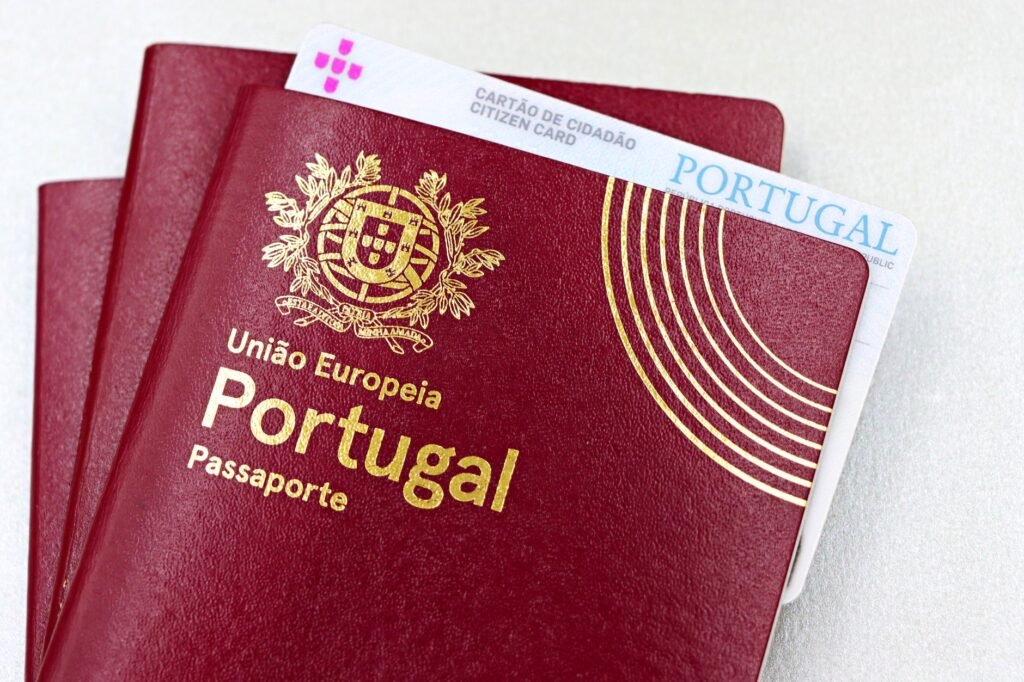
Portugal’s Portugal D7 visa passive income program has one of the lowest income thresholds in Europe at roughly EUR760/month — though applicants must also demonstrate sufficient funds to support themselves (typically 12x the monthly threshold in savings). The real draw is not the entry bar but the exit: five years of legal residency can lead to permanent residency or Portuguese — and therefore EU — citizenship. For Americans pursuing a Plan B passport, this is the clearest, most accessible path on the continent.
Lisbon cost of living has risen substantially since 2021, so the visa threshold and actual livability numbers have diverged. If you are earning the EUR760 minimum, you will struggle in Lisbon. If you are earning EUR2,500+ per month, Portugal — especially the Algarve, Alentejo, or Porto — becomes genuinely comfortable. The D7 visa is intended for passive income recipients (dividends, rental income, pension), but remote employees and freelancers are regularly approved.
Best for: Americans with passive income streams (investments, rental portfolios, pensions) or those who want an EU citizenship pathway within a five-year horizon.
3. Spain: Digital Nomad Visa — High Bar, Big Benefits
Income requirement: ~EUR2,850/month (~$3,100) — 200% of Spain’s national minimum wage as of 2026
Cost of living: $2,500-$3,500/month in Madrid; $2,000-$2,800 in Barcelona; cheaper in Seville, Valencia, or the Canary Islands
Visa length: 1 year initially, then 2-year renewals up to 5 years
Tax note: The “Beckham Law” special expat tax regime applies — 24% flat rate on Spanish-sourced income, foreign income generally exempt, for up to 6 years
Spain updated its Spain digital nomad visa 2026 income threshold in line with the rising national minimum wage, and it now sits at approximately EUR2,850/month — a meaningful increase from the program’s original launch figures. The income bar is real and filters out lower earners by design. That said, the Beckham Law tax regime is one of the most generous in Europe for high-income remote workers: a flat 24% on Spanish-sourced income (vs. marginal rates up to 47%) and foreign income that is generally untouched by the Spanish tax authority for up to six years.
The visa is worth serious consideration if you earn $5,000+ per month and want to live in a country with exceptional food, climate, infrastructure, and cultural richness. If your income hovers close to the threshold, look at the Canary Islands — same visa, dramatically lower cost of living due to a reduced VAT regime and cheaper rents in cities like Las Palmas de Gran Canaria.
Best for: Mid-to-high earners ($5,000+/mo) who want a Western European base with a strong tax incentive structure and are comfortable with the income bar.
4. Costa Rica: Rentista Visa — Stable, Safe, Familiar
Income requirement: $2,500/month provable recurring income
Cost of living: $1,800-$2,500/month depending on location (San Jose vs. beach towns)
Visa length: 2 years, renewable toward permanent residency at 3 years
Tax note: Territorial tax system — foreign income generally not taxed in Costa Rica
Costa Rica’s Rentista visa requires $2,500/month in demonstrable passive or recurring income. The country has been welcoming American expats for decades, which means the infrastructure for English-speaking newcomers is genuinely excellent: bilingual lawyers, U.S.-style healthcare options, Amazon Prime delivery, and an active expat community in the Central Valley and along both coasts.
Cost of living in San Jose and the Central Valley sits comfortably below the income requirement, especially if you are not renting in the most expensive neighborhoods. Tamarindo, Nosara, and the Pacific coast run higher — budget closer to $3,000-$3,500/month for a comfortable lifestyle in those areas. Costa Rica’s territorial tax system means your foreign-sourced remote income is not subject to Costa Rican tax.
Best for: Americans who want a familiar, English-friendly environment with good healthcare, outdoor lifestyle, and a clear path to residency.
5. Mexico: Temporary Resident Visa — The Practical No-Fuss Option
Income requirement: ~$1,620/month in regular income, or ~$27,000 in savings (amounts adjusted periodically by consulate)
Cost of living: $1,400-$2,200/month in Mexico City; $1,200-$1,800 in Oaxaca, Merida, or Guadalajara
Visa length: 1-4 years, renewable
Tax note: If you spend more than 183 days in Mexico, you may become a tax resident — consult a professional
Mexico has no official “digital nomad visa” as a named product — what works in practice is the Visa de Residente Temporal (Temporary Resident Visa), applied for at a Mexican consulate before arrival. The digital nomad visa income requirements for Mexico sit well below what most American remote workers earn, and Mexico City consistently ranks among the top global cities for remote workers: fast internet, outstanding food culture, world-class museums, and walkable neighborhoods like Roma Norte and Condesa.
Virtually anyone with a full-time remote job can qualify at the $1,620/month income threshold. One important watch-out: Mexico has a 183-day tax residency trigger. If you are living in Mexico full-time and crossing that threshold, speak to a cross-border tax specialist before you file your returns in either country.
Best for: Americans who want maximum cultural richness, minimal bureaucracy, close proximity to the U.S., and a manageable income bar to clear.
6. Thailand: Long-Term Resident (LTR) Visa — For High Earners Who Want a Decade of Stability
Income requirement: $80,000/year (~$6,667/month) for the remote-worker category
Cost of living: $2,000-$3,500/month in Bangkok; $1,500-$2,500 in Chiang Mai
Visa length: 10 years (5+5 renewable)
Tax note: Foreign income remitted to Thailand may be taxable depending on when it was earned — rules were updated in 2024; verify current position with a Thai tax professional
Thailand’s LTR visa is a premium product at a premium price. The $80,000 annual income requirement targets high-earning digital professionals, and what you get in return is arguably unmatched: a 10-year visa, access to Thailand’s excellent private healthcare system (often at a fraction of U.S. costs), fast-track immigration lanes, and the ability to own a condo in one of the world’s most cost-efficient countries for high-quality living.
Bangkok offers world-class amenities — five-star hospitals, Michelin-starred restaurants, international schools — at prices well below comparable Western cities. For someone earning $120,000-$200,000+ per year remotely, Thailand delivers an extraordinary surplus and lifestyle upgrade. Note that Thailand’s tax rules on foreign income remittance were updated in late 2023/2024, so verify the current position with a Thai tax advisor before structuring your income flows.
Best for: High-earning remote professionals ($80K+/year) who want decade-long visa stability, elite healthcare access, and a very high standard of living at a fraction of Western costs.
7. Indonesia (Bali): No Dedicated Nomad Visa — But Options Exist
Income requirement: No official nomad visa; KITAS (temporary stay permit) via sponsor required; B211A social/cultural visa available for shorter stays
Cost of living: $1,200-$2,000/month in Bali (varies heavily by neighborhood and lifestyle)
Visa length: B211A: up to 180 days extendable; KITAS: up to 2 years
Tax note: Complex — KITAS holders may trigger Indonesian tax residency; seek professional advice before committing long-term
Bali is the world’s most romanticized remote work destination, and the culture, landscape, food, and surf are genuinely exceptional. The visa situation, however, remains one of the most convoluted on this list. Indonesia has discussed a dedicated nomad visa for years without delivering a clean, accessible product. The B211A social/cultural visa works for stays up to 180 days but is not designed for income-generating work. The KITAS requires a sponsoring company or organization.
For Americans who want Bali long-term, the income bar relative to local costs is not the obstacle — even a modest $3,000/month income provides a comfortable life. The barrier is bureaucratic: finding a legitimate KITAS sponsor, navigating the renewal process, and staying compliant with Indonesian immigration rules. Bali works well as a 3-6 month base on a B211A, less so as a permanent primary residence without significant legal guidance.
Best for: Nomads who want a 3-6 month immersive experience in Southeast Asia and are prepared to manage visa complexity. Not recommended as a primary long-term base without professional immigration support.
8. Georgia: The Zero-Requirement Wild Card
Income requirement: $0 — Americans can stay visa-free for up to 365 days per calendar year
Cost of living: $800-$1,400/month in Tbilisi
Visa length: Up to 1 year visa-free; longer stays now require the new Labour Activity Permit or formal residency
Tax note: Georgia’s 1% flat tax for Individual Entrepreneur (IE) status still exists but now requires a formal application with a business plan and video interview as of March 2026
Georgia — the country, not the state — has been a favorite of location-independent workers since 2020 due to one simple fact: Americans can stay for a full year without a visa and without any income requirement. Tbilisi offers fast internet, excellent Georgian cuisine, a thriving cafe culture, and a cost of living that can be genuinely transformative for someone earning in dollars. A furnished apartment in the Vera or Saburtalo neighborhoods runs $400-$700/month. Total monthly expenses under $1,000 are realistic for a modest lifestyle.
However, 2026 brought a meaningful change. As of March 1, 2026, Georgia formally separated the right to be in the country from the right to work there. Remote workers for foreign clients are in a legal gray zone — working remotely for foreign clients may be exempt from the new Labour Activity Permit requirement, but there is no official written confirmation yet. The safest approach for long-stay remote workers is to obtain the permit ($75-$150) or establish formal IE status. The 1% tax rate remains one of the lowest in the world but now requires a formal application process that did not exist before.
Best for: Budget-conscious nomads, writers, creators, or anyone with early-stage or variable income who wants maximum flexibility and minimal upfront commitment.
9. Croatia: Digital Nomad Temporary Stay — Central Europe’s Underrated Pick
Income requirement: ~EUR2,539/month (~$2,760)
Cost of living: $1,800-$2,600/month in Zagreb; coastal cities like Split and Dubrovnik run higher in peak season
Visa length: 1 year, renewable (with a mandatory 1-year gap between renewals currently)
Tax note: Foreign income exempt from Croatian tax during the nomad stay period
Croatia launched one of the EU’s first digital nomad programs in 2021, and it remains active and reasonably accessible. The income bar of ~EUR2,539/month is meaningful but manageable for anyone with a solid remote salary. Croatia’s core appeal is geography: you are in the EU time zone, a short flight from London or Amsterdam, with the Dalmatian Coast as your backyard — one of the most beautiful coastlines on the continent.
Zagreb, the capital, offers a comfortable central European lifestyle at prices well below Vienna or Prague. The foreign income tax exemption during the nomad stay is clean and well-defined. One genuine drawback: Croatia currently requires a 1-year gap before renewal, which limits its use as a permanent long-term base. Plan it as a focused 1-year chapter, then stack with another destination or apply for a different residence category.
Best for: Americans who want an EU base with coastal access, a defined tax exemption, and a manageable income requirement — used as a planned 1-year chapter rather than an indefinite home.
Best-Fit Matrix: Matching the Best Digital Nomad Visa for Americans 2026 to Your Situation
Not all of these programs compete for the same applicant. Here is how to match your situation to the right destination:
By Income Level
- Under $2,000/month: Georgia (no requirement), Colombia (~$750 bar), Mexico (if you can document $1,620 recurring income)
- $2,000-$4,000/month: Colombia, Mexico, Costa Rica, Croatia, Portugal D7 (if supplemented with savings documentation)
- $4,000-$7,000/month: Spain, Costa Rica, Croatia, Portugal — all become comfortable. Thailand LTR is just within reach at the high end of this range.
- $7,000+/month: All destinations open. Thailand LTR delivers the best lifestyle surplus. Spain’s Beckham Law flat tax becomes very valuable at higher incomes.
By Lifestyle Preference
- Urban energy + food culture: Mexico City, Medellin, Lisbon, Barcelona
- Beach + outdoor lifestyle: Costa Rica, Bali (shorter stays), Croatia’s Dalmatian coast
- Low cost + maximum simplicity: Georgia (Tbilisi), Mexico (Oaxaca or Merida), Colombia (outside El Poblado)
- World-class healthcare: Thailand (Bangkok), Spain (Madrid/Barcelona), Portugal
- European culture + cafe life: Portugal, Spain, Croatia, Georgia
By Path to Residency or Second Passport
- Fastest route to EU citizenship: Portugal D7 — permanent residency at 5 years, citizenship eligible at 5 years
- Latin American citizenship: Colombia (5 years), Mexico (5 years for naturalization), Costa Rica (3 years for permanent residency, 7 for citizenship)
- Long-term stability without citizenship: Thailand LTR (10-year visa; no straightforward citizenship path for most foreigners)
- Pure nomad flexibility / no residency path: Georgia (visa-free year), Bali (B211A short-stay)
The Tax Variable: Why This List Is Incomplete Without a Professional
Every country on this list has a different tax relationship with your U.S.-sourced income, and the U.S. taxes its citizens on worldwide income regardless of where they live. The Foreign Earned Income Exclusion (FEIE) can exclude a significant portion of earned income if you meet the bona fide residence or physical presence test — but investment income, dividends, and passive income remain taxable. Some countries like Georgia and Colombia impose no tax on foreign income. Others like Portugal and Spain have special regimes that reduce your local tax burden but require active application and ongoing compliance.
The bottom line: the digital nomad visa income requirements listed here are immigration numbers. The tax picture is a separate and consequential variable. Before you sign a lease abroad, work with both a U.S. expat tax specialist and a local tax advisor in your target country. The cost of that consultation — typically $500-$2,000 — will pay for itself many times over in avoided penalties and missed exclusions.
Making the Final Call
The best approach to choosing a digital nomad visa is not to rank countries by income requirement alone. Start with your actual verified monthly income — the number you can document with bank statements, pay stubs, or tax returns. Then identify every country where you clear the income bar with at least a 20-30% margin. From that shortlist, filter by lifestyle preference, proximity to family, healthcare access, and whether a path to a second residency or passport matters to you.
For most Americans earning $3,000-$5,000/month remotely, the practical sweet spot in 2026 is Mexico (low bar, high livability, proximity to the U.S.), Colombia (lowest bar with solid infrastructure), or Croatia (EU access, clean nomad program, foreign income exempt). If you are earning above $6,000/month and want a long game — a second passport, a tax-efficient structure, or genuine decade-long stability — Portugal’s D7 and Spain’s nomad visa deserve serious diligence.
None of this replaces a conversation with an immigration attorney for your target country. Visa rules change, income thresholds get updated annually, and consulate processing requirements vary by location. The framework above gives you the directional comparison — the final due diligence is yours to complete.
Want to build the financial foundation that makes a move like this possible? Explore the Exit Planning resources on FundYourExit.com to start structuring income streams that qualify you for the programs above.
Sources: Citizen Remote — Spain Digital Nomad Visa 2026 | Passportivity — Portugal D7 Visa 2026 | Shareuhack — Georgia Work Permit 2026 | Photos via Pexels (MART PRODUCTION, Andrew Neel). Tax thresholds and visa requirements are subject to change; always verify current rules with official government sources and a qualified immigration and tax professional.