
Every dollar you earn outside Paraguay — US dividends, rental income, remote-work revenue, stock gains, retirement distributions — is 100% tax-free under Paraguayan law. That is not a loophole or a gray area. It is the foundational design of Paraguay’s territorial tax system, and it is why Paraguay permanent residency for Americans in 2026 deserves serious attention from anyone running an income that does not depend on a physical location. You apply once, deposit $5,000 in a local bank, and within 60 to 120 days you hold a permanent residency card from one of the few countries on Earth that will never touch your foreign income.
This is not a secret program. High-net-worth individuals and multi-flag planners have been using Paraguay as a tax residency anchor for decades. The surprise is that the vast majority of ordinary Americans — freelancers, online business owners, retirees drawing Social Security and dividends, real estate investors — have never heard of it. That gap is worth closing.
What “Territorial Tax” Actually Means for Your Wallet
The United States taxes its citizens on worldwide income, regardless of where they live. Paraguay does the opposite. Under Paraguay’s territorial tax model, the government only claims a share of income earned inside Paraguay. Everything generated outside its borders — foreign dividends, foreign rental income, foreign business revenue, foreign capital gains — falls entirely outside Paraguayan taxing authority.
Here is what the Paraguayan tax schedule looks like in practice:
| Income Type | Rate (Local) | Rate (Foreign / Offshore) |
|---|---|---|
| Personal income (earned in Paraguay) | 10% flat | 0% |
| Corporate profits (local activities) | 10% | 0% |
| Capital gains (local assets) | 8% | 0% |
| Foreign dividends | — | 0% |
| Foreign rental income | — | 0% |
| Foreign capital gains | — | 0% |
For context: the US federal top marginal income tax rate is 37%. California’s state rate adds another 13.3%. An American living in California earning $300,000 in foreign-sourced investment income could face a combined rate above 50% at home. As a Paraguayan tax resident earning that same income entirely outside Paraguay, the rate is zero. The math speaks for itself — and it is entirely legal on the Paraguayan side. (Note: US citizens remain subject to US federal tax obligations regardless of foreign residency status. This is a Paraguayan legal structure, not US tax advice. Consult a qualified international tax attorney for your specific situation.)
The Two Ways to Qualify: Deposit Route vs. Income Route

Paraguay’s permanent residency program is deliberately accessible. The government designed it to attract foreign capital and retirees, so the bar is lower than you might expect from a country with a serious territorial tax advantage. There are two primary qualification routes:
| Qualification Route | Requirement | Best For |
|---|---|---|
| Bank Deposit Route | Deposit ~$5,000 USD in a Paraguayan bank account | Business owners, investors, anyone with liquid capital |
| Income / Pension Route | Demonstrate ~$686/month in stable income (pension, Social Security, annuity, etc.) | Retirees, Social Security recipients, anyone with fixed income |
The $5,000 deposit does not disappear — it sits in your Paraguayan bank account and remains yours. You are not paying a fee; you are opening a bank account with a minimum balance. The income route is equally straightforward: $686 per month is below the average US Social Security benefit, which means most American retirees qualify on income alone without touching their savings.
Beyond the financial threshold, you will need a clean criminal background check, a valid passport, birth certificate with apostille, and a medical certificate. A local Paraguayan attorney can coordinate the paperwork for $1,000–$3,000 in legal fees. The entire process typically takes 60 to 120 days from first document submission to residency card in hand — making Paraguay one of the fastest permanent residency programs in the world.
The Feature No Other Country Matches: No Minimum Physical Stay
This is the part that makes Paraguay genuinely different from virtually every other residency program in the world. Most countries attach physical presence requirements to their permanent residency — spend at least 183 days per year in the country, or your status lapses. Portugal requires 183 days. Panama requires you to spend “substantial time” in the country. Colombia has presence requirements. Even many Caribbean programs require periodic visits.
Paraguay has no minimum physical stay requirement to maintain permanent residency. You can obtain Paraguayan permanent residency, return to the United States, move to Spain, spend six months in Thailand, and your Paraguay residency status remains intact. You do not need to live there to keep it.
This single feature is what has made Paraguay the anchor of choice in multi-flag strategies for decades. “Flag theory” — the practice of legally separating your country of citizenship, tax residency, domicile, and banking — requires a tax residency flag that does not demand your physical presence. Paraguay fills that role better than almost anywhere else.
Flag Theory: Get the Residency, Live Wherever You Want

The practical application for most Americans considering Paraguay is not “I want to move to Asunción.” It is: “I want a legal tax residency that creates a favorable structure for my foreign-sourced income, and I want the flexibility to live wherever I choose.”
Think of Paraguay the way some people think of South Dakota in a US domestic context. South Dakota has no state income tax, favorable trust and LLC laws, and many Americans establish legal domicile there while physically living elsewhere. Paraguay functions similarly on the international stage — a legal home base with excellent financial architecture that does not require you to actually be there. You establish your Paraguay tax residency, open your Paraguayan bank account, get your cedula (resident ID), and then live in Medellín, Lisbon, Chiang Mai, or wherever makes sense for your life.
The key difference from South Dakota, of course, is that Paraguay is a sovereign nation with its own tax treaty framework, banking system, and territorial tax code — which is why the planning involved is more complex and why professional legal guidance matters. But the core concept is the same: use the legal structure of the most favorable jurisdiction, regardless of where you physically spend your days.
The Honest Case Against Paraguay: What You Need to Know

Paraguay is not going to win a lifestyle competition against Colombia, Mexico, Portugal, or Thailand. If you are choosing a country to actually live in and optimizing for vibrancy, infrastructure, food culture, beaches, or international air connections, Paraguay belongs lower on that list. Here is an honest accounting of the downsides:
Climate. Asunción is hot and humid for a large portion of the year. Summers regularly hit 40°C (104°F) with high humidity. If you are heat-sensitive, you will want to budget for good air conditioning — or simply not be there in January and February.
Infrastructure. Paraguay is a developing country with inconsistent infrastructure outside of Asunción’s wealthier neighborhoods. Power outages, water quality issues, and road quality in rural areas are real. The healthcare system is functional but not at the level of Panama City or Bogotá for specialized care.
Landlocked geography. There are no beaches. The country borders Bolivia, Brazil, and Argentina. The main natural attraction is the Chaco region and the Río Paraguay. If waterfront living matters to you, this is a significant limitation.
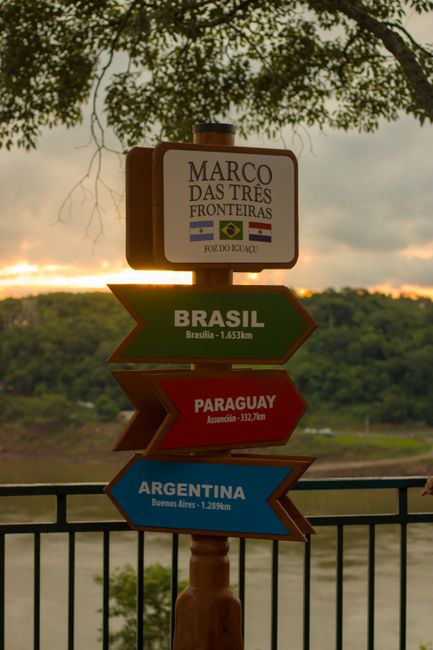
Safety. Asunción’s safer neighborhoods — Carmelitas, Villa Morra, Recoleta — are genuinely manageable, on par with mid-tier Latin American cities. Rural areas and border zones (particularly the triple-frontier region) have elevated crime and smuggling-related risks. Standard urban precautions apply in the capital.
None of these downsides change the financial calculus — but they do explain why Paraguay’s residency program is so accessible. The country competes on financial structure, not lifestyle amenities, and that is exactly the right use case for it.
Cost of Living in Asunción: What $1,500/Month Actually Buys

For expats who do want to spend time in Paraguay — whether to establish genuine tax residency or simply to experience the country — Asunción is one of the more affordable capital cities in South America. The local currency is the Paraguayan guaraní, but US dollars are widely accepted in business and real estate contexts, and ATMs dispense local currency at favorable rates.
| Expense Category | Monthly Cost (USD, Est.) |
|---|---|
| 1-bedroom apartment (Asunción, good neighborhood) | $300 – $500 |
| Groceries (cooking at home) | $150 – $250 |
| Eating out (mix of local and international) | $150 – $250 |
| Transportation (Uber + occasional taxi) | $50 – $100 |
| Utilities (electric, water, internet) | $100 – $150 |
| Health insurance (expat plan) | $80 – $150 |
| Entertainment / miscellaneous | $100 – $200 |
| Total comfortable lifestyle | $930 – $1,600/month |
A two-bedroom apartment in Villa Morra — one of Asunción’s better residential neighborhoods — typically runs $500–$800/month unfurnished. Premium furnished apartments with pools and gyms in the Carmelitas district sit at $700–$1,200/month. By any comparison to US coastal cities, the cost structure is dramatically lower.
Path to Citizenship: Three Years to a Paraguayan Passport

Permanent residency in Paraguay is not just a tax tool — it is also the first step toward naturalization. After three years as a permanent resident, you become eligible to apply for Paraguayan citizenship. Three years is a notably short window compared to most naturalization timelines globally. Portugal requires five years of legal residency. Brazil requires four. Panama requires five. Mexico requires five.
A Paraguayan passport grants visa-free or visa-on-arrival access to over 140 countries, including the entire Schengen Area. For Americans looking to build a second citizenship as part of a long-term international strategy, the three-year path combined with no physical presence requirement for residency creates an unusually accessible route. You can clock the three years of residency status without being physically present for most of it, then apply for naturalization.
The naturalization process itself does typically require demonstrated ties to Paraguay — language ability, some actual time in-country, and a genuine connection to the country can all be factors. This is where working with a Paraguayan attorney who specializes in naturalization matters, not just residency applications.
Paraguay vs. Panama: The Residency Comparison Most Expat Blogs Skip

Panama is the most widely marketed expat residency destination in Latin America, and for good reason — it has solid infrastructure, a dollarized economy, decent healthcare, and the well-known Pensionado program. But comparing Paraguay and Panama directly reveals why Paraguay wins on pure financial structure:
| Factor | Paraguay | Panama |
|---|---|---|
| Tax system | Territorial (foreign income = 0%) | Territorial (foreign income = 0%) |
| Residency deposit / income requirement | $5,000 deposit OR $686/month income | $5,000/month income (Pensionado: $1,000/month) |
| Minimum physical stay | None | Yes (“substantial time” required) |
| Processing time (permanent residency) | 60–120 days | 6–18+ months (varies by program) |
| Path to citizenship | 3 years | 5 years |
| Cost of living | Lower (Asunción $1,000–$1,500/month) | Higher (Panama City $2,000–$3,000/month) |
| Lifestyle / infrastructure | Developing; less polished | More developed; US-style amenities |
Panama wins on lifestyle and infrastructure. Paraguay wins on speed, accessibility, cost, and the complete absence of physical presence requirements. For someone who wants to establish a legal tax residency without relocating, Paraguay is the stronger technical play. For someone who genuinely wants to live abroad in a comfortable, cosmopolitan Latin American city, Panama or Colombia may be the better fit — though neither removes the residency’s minimum stay requirement the way Paraguay does.
Who This Strategy Actually Makes Sense For

Paraguay’s territorial tax residency is not the right answer for everyone. It is most powerful for Americans who:
Earn substantial foreign-sourced income — dividends from foreign stocks, rental income on overseas property, revenue from location-independent businesses, or passive income streams that do not require physical presence in the US.
Are already internationally mobile — digital nomads, retirees who spend winters abroad, or anyone who does not have a single fixed residence. If you are already not fully rooted in one place, adding a Paraguay residency to your structure costs very little in practical terms.
Are exploring multi-flag strategies — if you have already separated your business from your personal residence, or you are thinking about separating your banking from your domicile, Paraguay fits naturally as the “tax flag” in a broader structure.
Are considering renouncing US citizenship at some point — Paraguay residency can be part of a multi-year strategy that includes building toward a second citizenship before making any irreversible decisions about US status.
It is not ideal for someone earning primarily US-sourced W-2 income with no plans to leave, or for someone who needs the full lifestyle amenities of a developed country. In those cases, the structural benefits do not outweigh the complexity of maintaining an international residency.
The Bottom Line: Paraguay Permanent Residency for Americans in 2026

Paraguay has been part of sophisticated international tax planning for decades. The reason 99% of Americans have never considered it is not because it does not work — it is because the expat industry largely covers destinations with marketing budgets, beach resorts, and Instagram appeal. Paraguay has none of those. What it has is a territorial tax code, a $5,000 entry bar, a 60-to-120-day processing window, no physical presence requirement, and a three-year citizenship path.
For the right person — someone with foreign income, international mobility, and a clear-eyed view of what they are building — Paraguay permanent residency for Americans in 2026 represents one of the most accessible and legally sound tax structures available anywhere. It is not glamorous. It is effective.
This post is for informational purposes only and does not constitute legal, tax, or financial advice. US citizens have ongoing federal tax obligations regardless of foreign residency status. Consult a qualified international tax attorney and a licensed financial advisor before making any residency or tax planning decisions.