If you’ve ever wired money overseas — to fund a foreign bank account, pay for a property, or move savings as an expat — you’ve already lost thousands of dollars you didn’t know were taken. The cheapest way to transfer money abroad as an American has nothing to do with which bank you use. In fact, your bank is almost certainly the most expensive option on the table, and the way it charges you is designed to be invisible.
This is not a small rounding error. On a $100,000 wire transfer, the average U.S. bank pockets $3,000 to $5,000 through a mechanism called the exchange rate markup. On a $200,000 foreign home purchase, that number climbs to $6,000–$10,000. That’s more than many Americans save in an entire year — handed over to a financial institution that never disclosed it as a fee.
Here’s everything they don’t tell you, and exactly what to do instead.
The Exchange Rate Markup: The Fee That Isn’t Called a Fee
When you initiate an international wire transfer at Bank of America, Chase, or Wells Fargo, you’ll see a wire fee — typically $25–$50 for outgoing international transfers. That fee is real, but it’s not where the bank makes its money. It’s a decoy.
The real cost is buried inside the exchange rate your bank quotes you. Every major currency pair in the world has a mid-market rate — also called the interbank rate or the real exchange rate. This is the midpoint between what buyers will pay and what sellers will accept on global currency markets. It’s the rate Google shows when you type “USD to EUR.” It’s the rate that Reuters and Bloomberg publish. It’s the actual, fair market value of one currency versus another.
Your bank will never give you the mid-market rate. Instead, it adds a markup — typically 3% to 5% above the mid-market rate — and presents it as their official exchange rate. The difference between their rate and the real rate goes directly into the bank’s pocket. No line item. No disclosure. Just gone.
Run the math on a $100,000 wire:
• At a 3% markup: you lose $3,000
• At a 4% markup: you lose $4,000
• At a 5% markup: you lose $5,000
The recipient of your wire doesn’t receive $100,000. They receive $95,000 to $97,000. The rest evaporated inside a currency conversion that was never presented to you as a fee.
How to Check the Real Exchange Rate Right Now

Before your next transfer, take 30 seconds to look up the real rate. Type your currency pair into Google — for example, “1 USD to EUR” or “1 USD to MXN.” The number Google shows you is the mid-market rate. Bookmark XE.com as a cross-reference.
Now call your bank and ask what rate they’ll give you for the same transfer. The gap between those two numbers is what they’re charging you — even if they never call it a fee. On most major currencies, that gap is 3%–5%. On exotic currencies, it can be 6%–8%.
SWIFT wire hidden costs add another layer on top of the exchange markup. Your bank may also deduct correspondent bank fees — charges from intermediary banks that process the transaction along the SWIFT network. These run $15–$35 per transfer and are rarely disclosed upfront. By the time a $100,000 wire clears on the other end, the combination of markup and SWIFT wire hidden costs can easily total $3,500 to $5,300.
Wise vs Bank Transfer: What a Real Comparison Looks Like
Here’s what a $100,000 USD-to-EUR transfer actually looks like across different providers, using representative markups based on published rates (always verify current rates before transferring):
| Provider | Exchange Rate Type | Approx. Markup | Fee on $100K | Recipient Receives |
|---|---|---|---|---|
| Bank of America | Bank retail rate | ~4–5% | $4,000–$5,000+ | ~$95,000–$96,000 |
| Chase | Bank retail rate | ~3.5–5% | $3,500–$5,000+ | ~$95,000–$96,500 |
| Wells Fargo | Bank retail rate | ~4–5% | $4,000–$5,000+ | ~$95,000–$96,000 |
| Wise | Mid-market rate | 0% | ~$300–$550 | ~$99,450–$99,700 |
| OFX | Near mid-market | ~0.4–0.6% | $0 fee ($50K+) | ~$99,400–$99,600 |
| Remitly | Near mid-market | ~0.5–1% | $0–$3.99 | ~$99,000–$99,500 |
The Wise vs bank transfer comparison isn’t close. Where your bank extracts $4,000–$5,000 from a $100,000 transfer, Wise charges roughly $300–$550 in transparent, upfront fees — and passes you the actual mid-market rate. That’s a difference of $3,500 to $4,700 on a single transaction.
The Best Tools for Americans Transferring Money Abroad

There is no single best option for every situation. Here’s how to match the tool to the transfer:
Wise — Best for Most Transfers Under $50K
Wise (formerly TransferWise) is the benchmark for transparent international transfers. It uses the mid-market rate with no markup — you pay a small, clearly displayed fee (typically 0.3%–0.7% of the transfer amount, depending on the currency corridor). For a $20,000 transfer, that’s $60–$140. For the same transfer at a major U.S. bank, you’d lose $600–$1,000 to a foreign exchange markup you never consented to.
Wise also offers a multi-currency account and debit card that lets you hold balances in 40+ currencies and convert at the mid-market rate on demand. For expats managing money across multiple countries, this alone is worth the signup.
OFX — Best for Large Transfers ($50K and Up)
For large transfers — funding a foreign property purchase, moving a retirement nest egg, or repatriating business revenue — OFX is consistently the stronger choice. OFX charges zero transfer fees on amounts over $10,000 and offers access to a dedicated currency dealer who can negotiate the rate and set up forward contracts to lock in today’s rate for a transfer you plan to make in the future.
In the Remitly OFX money transfer review landscape, OFX consistently wins on large-dollar transfers where the fractional rate difference compounds into thousands of dollars saved. On a $200,000 property purchase, even a 0.2% rate improvement over Wise equals $400 saved — and OFX’s negotiated rates on large transfers can beat Wise by 0.3%–0.5%.
Remitly — Best for Sending to Family in Developing Countries
If you’re sending money to family in Mexico, the Philippines, India, Colombia, or other developing-nation corridors, Remitly beats Wise on speed and corridor-specific rates. Remitly offers an Express option that delivers in minutes via mobile wallet or cash pickup, and an Economy option (1–3 business days) with even better rates. Fees are typically $0–$3.99. The foreign exchange markup expats face on these corridors through traditional banks is often 5%+ — Remitly cuts that to nearly nothing.
The Crypto Route: USDC on Solana for Near-Zero Transfer Costs
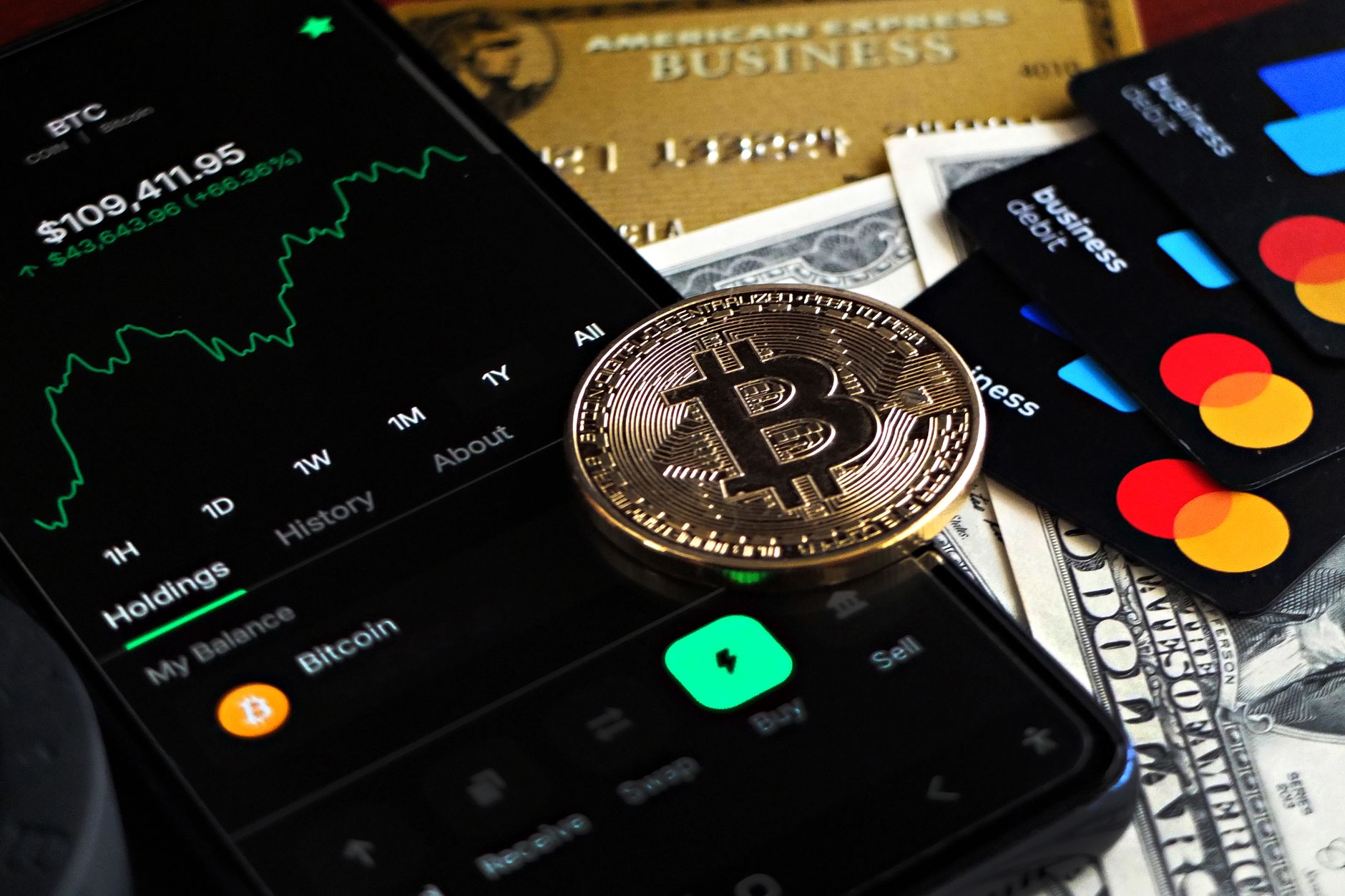
If you’re comfortable with crypto, this is the most cost-efficient international transfer method available today. USDC (USD Coin) is a dollar-pegged stablecoin — 1 USDC always equals $1. Sending USDC on the Solana blockchain costs less than $0.01 per transaction and settles in under 5 seconds, regardless of the transfer amount.
Here’s the basic flow:
1. Buy USDC on a U.S. exchange (Coinbase, Kraken) using your bank account — no conversion markup since USDC is pegged to USD
2. Send USDC to the recipient’s Solana wallet address — transaction fee under $0.01
3. Recipient sells USDC for local currency on a local exchange
The only real cost is the on/off ramp — buying and selling USDC on exchanges — which typically runs 0.1%–0.5% combined. On a $100,000 transfer, you might pay $200–$500 total. Compare that to $4,000–$5,000 at your bank.
This route requires both parties to be comfortable holding and transacting crypto, even briefly. It isn’t right for everyone. But for the crypto-savvy expat moving large sums regularly, it’s the closest thing to a free international wire that currently exists.
The Schwab Debit Card: Zero ATM Fees Anywhere on Earth
Wire transfers aren’t the only way banks extract a foreign exchange markup from Americans abroad. ATM withdrawals overseas typically carry a 1%–3% foreign transaction fee plus a $5 ATM withdrawal fee — every single time. If you’re living abroad and pulling cash from ATMs regularly, this adds up to hundreds of dollars per year.
The fix is the Charles Schwab High Yield Investor Checking account. Schwab reimburses 100% of ATM fees worldwide — every fee, from every ATM, every month — and uses the Visa mid-market exchange rate with zero foreign transaction fee. This is the gold-standard expat bank account, and it’s free to open. Many long-term expats use Schwab for daily cash needs and Wise or OFX for larger wire transfers, covering every angle of their international money movement.
FBAR: The Compliance Rule Every Expat Must Know

Before you move large sums to foreign bank accounts, you need to know about FBAR — the Report of Foreign Bank and Financial Accounts. Under the Bank Secrecy Act, any U.S. person whose foreign financial accounts exceed an aggregate value of $10,000 at any point during the calendar year must file FinCEN Form 114 with the U.S. Treasury by April 15 each year (with an automatic extension to October 15).
Failure to file carries penalties of up to $10,000 per non-willful violation and up to $100,000 (or 50% of the account balance) per willful violation. This applies to any American with a foreign checking account, savings account, brokerage account, or even a foreign PayPal account that crosses the $10,000 threshold at any point during the year.
FBAR is separate from FATCA (Foreign Account Tax Compliance Act), which requires disclosure on Form 8938 attached to your tax return if foreign assets exceed higher thresholds. If you’re moving significant money abroad, a one-hour consultation with an expat tax accountant will save you far more than it costs. The penalty regime is severe enough that it’s not worth improvising.
The Real Dollar Comparison: What Your $100K Actually Buys
Let’s make this concrete. You’re sending $100,000 USD to a foreign bank account — maybe a down payment on a property in Portugal, a business account in Mexico, or your own expat bank account in Thailand.
Via your U.S. bank (Chase, Bank of America, or Wells Fargo):
• Exchange rate markup: 4–5% above mid-market
• Wire fee: $25–$50
• SWIFT correspondent fees: $15–$35 (often deducted mid-transfer)
• Recipient receives: approximately $95,000–$96,500
• You lost: $3,500–$5,000
Via Wise:
• Exchange rate: mid-market (zero markup)
• Fee: ~0.3%–0.55% (transparently displayed before you confirm)
• No correspondent fees
• Recipient receives: approximately $99,450–$99,700
• You lost: $300–$550
That’s a difference of $3,000–$4,500 on a single $100,000 transfer. If you’re doing this once a year as an expat, that’s the cost of a round-trip flight to Europe. If you’re purchasing a $300,000 foreign property, you’re looking at $9,000–$15,000 in avoidable losses — enough to fully furnish a house.
Stop Paying a Hidden Tax on Every Dollar You Move Abroad
The cheapest way to transfer money abroad as an American isn’t a secret. It’s just not something your bank is going to volunteer. These tools are regulated, they’re safe, and they’re used by millions of expats and international businesses every day. The only thing standing between you and keeping those thousands was knowing this existed.
Your action plan:
• Wise — most transfers, transparent mid-market rate, ~0.5% total cost
• OFX — large transfers $50K+, no fee, negotiated rates, dedicated dealer
• Remitly — sending to family in developing countries, fast and cheap
• USDC on Solana — crypto-comfortable users, near-zero cost, instant settlement
• Schwab debit card — ATM withdrawals abroad, zero fees, mid-market rate
• Check XE.com or Google before every transfer to verify the real mid-market rate
• File FBAR if you hold more than $10,000 in foreign accounts at any point during the year
Every dollar you save on a transfer is a dollar that stays in your plan. The math isn’t complicated. Once you know how the markup works, going back to your bank for an international wire is simply not an option you can justify.