

Here’s what $2,700 a month actually buys a family of 6 in Chiang Mai, Thailand: a three-bedroom house with a yard in one of the city’s most livable neighborhoods, four kids who spend their afternoons at waterfalls instead of soccer practice carpool lines, and a savings rate that would’ve been mathematically impossible back in Ohio. We’ve been doing this family budget living abroad in Thailand on $3000 a month — actually under it — for over a year now. This post is the full accounting. Every line item, no rounding up, no glossing over the months it got hard.
Why We Left and Why Thailand
We weren’t burned out in the way lifestyle bloggers describe burnout — dramatic, cinematic, a single breaking moment. It was more like the math stopped working. Two incomes, a mortgage, four kids in activities, private school tuition creeping toward $4,000 a month just for the kids — and we were still living paycheck to paycheck in a suburb of Columbus. My wife ran the numbers one Sunday afternoon and slid the laptop across the table. If we moved, we could save more in a single year than we’d saved in the previous five combined.
Thailand came up because we already knew a family who’d done it — a couple from our church who’d been in Chiang Mai for three years and couldn’t stop talking about the Chiang Mai family cost of living 2026 versus the US. We did six months of research. We visited for three weeks with all four kids before committing. Then we sold or stored everything we owned and booked one-way tickets.
The Full Family Budget Living Abroad in Thailand on $3000 a Month (Our Numbers)
This is the real number. Not a “best case scenario” budget, not what we spend when we’re being especially disciplined. This is our average, pulled from twelve months of tracking in a shared Google Sheet. Some months we come in under. Some months (see: the rainy season AC situation below) we blow past it.
| Category | Monthly Cost |
|---|---|
| Housing — 3-bed/2-bath house with yard, Nimmanhaemin area | $650 |
| Electricity + water + internet | $120 |
| Food — home cooking, local markets | $400 |
| Eating out (1–2x/week at local spots) | $150 |
| School — homeschool curriculum (Time4Learning × 4 kids) | $240 |
| Transportation — scooter rental ×2 + Grab occasionally | $130 |
| Health insurance — SafetyWing family plan | $180 |
| Healthcare out of pocket — dentist, prescriptions, clinic | $80 |
| Activities + entertainment | $120 |
| Phone plans — 2 adults, local SIMs | $25 |
| Subscriptions — Netflix, Spotify, tools | $40 |
| Miscellaneous + buffer | $200 |
| Visa/admin (averaged monthly) | $65 |
| TOTAL — baseline | ~$2,400 |
| TOTAL — with occasional extras | ~$2,700 |
A few things worth unpacking here.
Housing: $650 for a House With a Yard
The house that gets the most questions when we show photos on Instagram is the one we’re renting right now. Three bedrooms, two bathrooms, a proper yard the kids play in every day, covered parking for both scooters, and a landlord who fixes things within 24 hours. The Nimmanhaemin area of Chiang Mai — the neighborhood with the coffee shops and the expat grocery stores and the Saturday market — and we’re paying $650 USD a month. Our mortgage back in Ohio was $1,650 for a house half this size.
Food: $550 Total (and We’re Not Eating Plain Rice)
The $400 for home cooking covers a family of six eating well. We shop at the local Warorot Market for produce — a week’s worth of vegetables and fruit costs maybe $12 — and the kids have developed opinions about mangosteen and rambutans that they didn’t have in Columbus. The $150 for eating out gets us roughly two restaurant meals a week. A full table meal for all six at a local Thai spot runs $8–14 total. Not per person. Total. The running joke in our house is that we could eat out every single day for what we used to spend on one date night back home.

School: $240 for Four Kids
This is the line item that surprises people most. We homeschool all four kids using Time4Learning, which runs about $60/month per child. We picked it because it’s self-paced, the curriculum aligns with US standards, and — critically — my wife and I aren’t the ones doing the teaching. The kids log in, complete their lessons, and we review and discuss in the evenings. The homeschool abroad costs Thailand has enabled are real: we had no interest in paying Chiang Mai’s international school fees, which run $8,000–$15,000 per year per child. The expat family monthly expenses Southeast Asia families face often balloon out of control when international school enters the picture. We opted out of that entire cost structure.
Beyond the curriculum, homeschooling in Thailand means our kids are learning in the actual country. They’re picking up Thai from neighbors and market vendors. They understand currency conversion intuitively because they use it daily. We count that as part of the education.
Health Insurance + Healthcare: $260 Combined
SafetyWing’s Nomad Insurance family plan covers the six of us for $180/month. It’s not comprehensive coverage — it’s travel medical insurance with a deductible, not the full-replacement US health insurance model — but for a family living in a country with excellent, affordable private hospitals, it covers what matters: emergencies, hospitalizations, serious illness. The $80/month out of pocket covers clinic visits when the kids get ear infections or strep, dental cleanings, and the occasional prescription. A dentist visit here with X-rays runs $15–25 USD. A GP clinic visit with prescription costs $10–18. Healthcare is the most pleasant financial surprise of living abroad for us.
The 3 Things That Almost Broke the Budget
I’d be selling you something if I told you the monthly budget was the whole story. There were three moments where the finances got genuinely stressful, and you need to know about all three before you decide whether this life is for you.
1. The Emergency Flight Home ($3,500)
Eight months in, my wife’s father had a serious health event. Within 36 hours we needed two adult round-trip tickets from Chiang Mai to Columbus, Ohio, purchased at full last-minute price. $3,500, gone. We had it in savings — specifically because of how much we’d saved by moving here — but it was a gut-punch to watch a month and a half of our entire living expenses evaporate in one booking. This is the honest reality of living on the other side of the world from your family. Flights home are expensive. Emergency flights home are devastating. We now keep a dedicated $5,000 “fly home” fund that we don’t touch for anything else.
2. First-Month Setup Costs ($2,800)
The monthly budget we’ve shown you is a steady-state number. Month one was not steady-state. Two months’ security deposit on the house ($1,300), kitchen equipment (we brought nothing), beds and mattresses for six people, basic furniture, a rice cooker, a fan for every room, a mop, a drying rack — when you arrive in a foreign country with six people and your shipping container hasn’t arrived yet, you spend money fast. Total first-month setup costs above the regular budget: $2,800. We knew this was coming and had set aside $4,000 for it, but it still stings to watch a lump sum disappear in the first 30 days. Budget for it. Budget more than you think you need.
3. Rainy Season Electric Bills (3 Months at $180 Instead of $80)
Nobody warned us about this. During Chiang Mai’s hot season transitioning into rainy season — roughly April through June — the air conditioners run constantly. Not occasionally. Constantly. Our electricity bill went from $80/month to $180/month for three straight months. An extra $300 total, which sounds modest until you realize it happened simultaneously with the kids all getting stomach bugs, which meant extra clinic visits, which meant the healthcare line item also doubled. Some months just gang up on you. The answer is simple, if unpleasant: ceiling fans everywhere, strategic AC use only in bedrooms at night, and building a buffer into the monthly budget. That $200 miscellaneous line exists specifically for months like those.
What This Same Lifestyle Costs in the US
For anyone still running the mental comparison, here’s the direct apples-to-apples for a family of six living a comparable lifestyle in suburban Midwest America:
| Category | US Monthly Cost |
|---|---|
| 4-bedroom house — suburban Midwest (mortgage/rent) | $2,400 |
| Private school × 4 kids | $4,000 |
| Food (grocery + dining out, family of 6) | $1,200 |
| Health insurance (employer + family premium) | $800 |
| TOTAL | ~$8,400/month |
Against our $2,700/month in Chiang Mai, that’s a monthly difference of $5,700. Annualized: $68,400. Per year. That’s not a rounding error. That’s a college fund, a rental property down payment, or the ability to stop working before 50. This is why managing your expat family monthly expenses Southeast Asia-style makes sense for families willing to make the trade-off.
That $68,400/year gap is also why, when people tell us we’re brave for doing this, we gently push back. Staying was the financially reckless choice. For us, at least.
What You Give Up (The Honest Version)
Anyone who tells you this life has no downsides is either lying or hasn’t been here long enough. Here’s what we actually miss and what you should factor in before booking your one-way tickets.
- Proximity to family. This is the real one. FaceTime keeps relationships alive but it doesn’t let your parents watch your kids grow up in person. The guilt is real and it doesn’t fully go away.
- Amazon Prime reliability. We can order things online here, but the selection is different and the delivery is not two days. Some specialty items for the kids — specific brands of clothing, certain school supplies — take weeks or we bring them back in luggage from visits home.
- Certain foods. My wife spent three months missing a specific brand of salsa. We’ve adapted our cooking dramatically, which is mostly a good thing, but there are specific cravings that local markets just don’t scratch.
- English-language entertainment variety. Netflix Thailand has a different catalog than Netflix US. Disney+ content varies. We’ve worked around this but it’s a real thing, especially for the kids.
- Familiar healthcare system. The hospitals here are genuinely excellent — Bangkok Hospital Chiang Mai is world-class — but navigating a healthcare system in a different language, even with excellent English-speaking staff, requires extra effort and adds a layer of stress when a child is sick.
What You Gain
The trade doesn’t feel one-sided. Here’s what we’ve gained that we didn’t fully anticipate before we came.
- Time. No commute. No back-to-back school drop-offs followed by an hour on the highway. Our days have genuine open space in them. We didn’t realize how much of our parenting capacity in the US was consumed by logistics until those logistics disappeared.
- Nature, actually accessible. We’re 45 minutes from national parks with waterfalls the kids swim in. Doi Inthanon — the highest peak in Thailand — is a day trip. The kids are outside constantly.
- An expat community that parents together. The community of expat families in Chiang Mai is active, generous, and genuinely weird in the best way. We have closer friendships with people we’ve known for 14 months here than with neighbors we lived next to for four years in Ohio.
- Kids who are growing up differently. Our 11-year-old haggles at the night market in Thai. Our 8-year-old has eaten insects voluntarily. All four of them understand, viscerally, that most of the world does not live the way American suburbs do — and that’s not a sad thing, it’s just true. We think that matters.
- $68,400 a year. Every year. Which means options. Which means we stop making every financial decision from fear.
Is $2,700 a Month Realistic for Your Family?
The family budget living abroad in Thailand on $3000 a month model works for us because of specific choices: we homeschool (no $10K/year international school tuition), we cook most meals at home, we rent scooters instead of owning a car, and we chose Chiang Mai over Phuket or Bangkok, which run meaningfully higher. Change one of those variables and the budget shifts.
Families who want an international school, a car, frequent flights to Bangkok, or a more Western lifestyle in a city center should budget $4,000–$5,500/month for a family of six. Still less than the Midwest math above. Still one of the cheapest countries for families 2026 by any honest accounting.
What I’d tell any family seriously looking at moving to Thailand with kids budget planning: the monthly number is almost never the hard part. The hard part is the setup costs, the emergency contingency, and the psychological transition. Build your budget for all three, not just the steady state. And build in a $5,000 fly-home fund from day one. You’ll either never touch it or be very glad you have it.
The numbers in this post are real. The month we’re describing is our life, not a highlight reel. If you want to see the actual Google Sheet, I’m happy to share a read-only version in the comments — just ask. And if you’re further along in planning your move, our FundYourExit resource library has the visa timeline, the SafetyWing review we wish we’d had, and the first-month setup checklist that would have saved us about $400 in duplicate purchases.
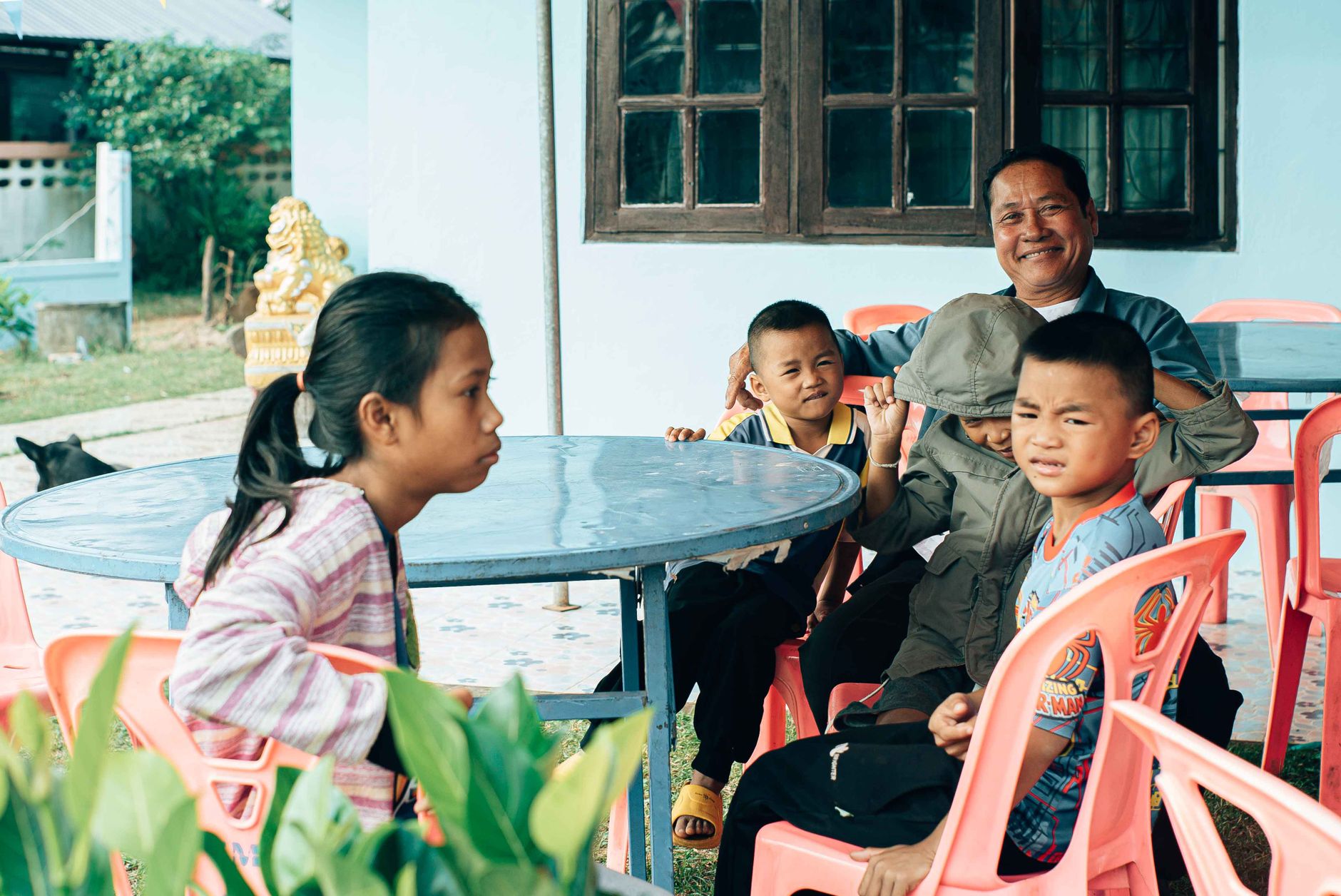
Photo credits: Pexels (family outdoor meal, Mukdahan, Thailand); Pexels (Chiang Mai street food market).