You already know the number. $3,814. That’s the median monthly rent for a one-bedroom apartment in Brooklyn right now — 2026 data, straight from the NYC rental market. What does $3,814 get you? Four walls, likely shared with neighbors on every side. No parking. No gym. Almost certainly no pool. No housekeeper. And here’s the gut punch: that’s just the rent. Before food, before the MetroCard, before health insurance, before a single dinner out, you’ve already torched $3,814. This is exactly what US rent money buys abroad expat living 2026 is all about — because the math doesn’t lie, and neither does the frustration of watching your paycheck vanish into a landlord’s pocket every single month.
What if that same $3,800 didn’t just cover a box in Brooklyn — but funded an entirely different life? A roomier apartment. A housekeeper. A gym with a rooftop pool. Health insurance. Weekend trips. And money left over to actually save. Below, we break down exactly what $3,800/month buys you in six countries where the dollar stretches so far it almost snaps. This isn’t fantasy. These are real numbers from real expat communities. Welcome to geoarbitrage, NYC rent edition.

First, Let’s Be Honest About What $3,814 Actually Costs in Brooklyn
Let’s add it up. Median 1BR rent: $3,814. Groceries for one person: $400–$600/month. MTA unlimited: $132. Health insurance (if your employer doesn’t cover it): $400–$600. A few dinners out and a couple of concerts: $300. That’s $5,200–$5,800/month before you buy a single item of clothing, take a weekend trip, or save a dollar toward retirement. If you’re reading this while scrolling Zillow in quiet desperation, know that you are not bad at money. You are paying New York prices — which are, by any objective measure, insane.
Now let’s talk about what that $3,800 gets you elsewhere. Same budget. Radically different life.
1. Medellín, Colombia (El Poblado): A Penthouse Life for Brooklyn Money

In El Poblado — Medellín’s most sought-after neighborhood, filled with restaurants, coffee shops, and international expats — $3,800 is not a budget. It’s a lifestyle package. Here’s what it actually covers: a modern 3-bedroom penthouse apartment with a rooftop pool (around $1,200–$1,500/month), $1,500/month in groceries and dining at excellent local and international restaurants, a full-time housekeeper three days per week (~$200), Uber everywhere because the city’s ride-share scene is robust and cheap, private health insurance (~$100), and you still have $500–$800 left over at the end of the month. Every. Single. Month.
Medellín has transformed dramatically over the past 15 years. It’s now a thriving expat hub with fast internet, a growing tech scene, eternal spring weather (nicknamed the “City of Eternal Spring” for good reason), and a cost of living that makes Brooklyn look like a financial crime. The New York cost of living vs abroad comparison doesn’t get more vivid than this.
2. Chiang Mai, Thailand: Bank $1,800 a Month and Still Live Royally
Chiang Mai has been the world’s favorite digital nomad city for a decade, and for good reason — the math is almost embarrassing. A beautiful 2-bedroom condo with gym and pool runs around $700/month. Food for two people? $600, including restaurant meals. A motorbike rental: $80. Private health insurance: $150. A co-working space with fast fiber internet: $100. Weekend trips to jungle temples, mountain viewpoints, and Thai islands: budget $200. Add it up and you’re at $1,830/month for a genuinely comfortable, active, well-fed life.
That means on a $3,800 Brooklyn budget, you’re banking $1,800–$2,000 every single month in Chiang Mai. A single person who lives frugally can thrive here on $1,100. This is geoarbitrage in its purest form: same income, same discipline, completely different financial outcome. If you’ve been wondering what US rent money buys abroad expat living 2026 in Southeast Asia looks like, this is it.
3. Lisbon, Portugal: European Capital Living for Two-Thirds the Brooklyn Price
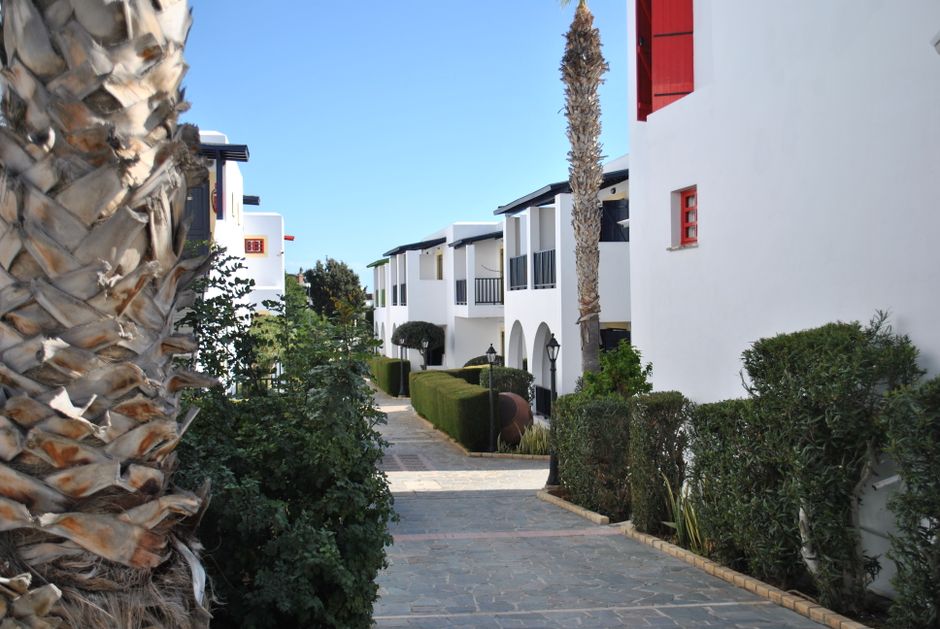
If leaving the Western world entirely feels like a leap too far, Lisbon offers a middle path — and it’s a stunning one. For $3,800/month you can rent an upscale one-bedroom in Chiado or Bairro Alto, two of the most desirable central neighborhoods in one of Europe’s most beautiful capitals, for around $1,600/month. That leaves $2,200 for everything else: excellent food ($500), a monthly transit pass ($45), private health insurance ($120), and a generous culture-and-dining budget ($400). You still save $1,100 every month.
Lisbon is sunny (300+ days per year), extremely walkable, English is widely spoken, and it’s one of the safest capital cities in the world. The food scene is world-class. The beaches are 30 minutes away. And unlike Brooklyn, your $1,600 apartment actually comes with charm, history, and probably a view. This is a Brooklyn rent alternative expat story with a European accent.
4. Tirana, Albania: The Most Underrated Move on This List
Most Americans couldn’t point to Tirana on a map. That’s exactly why it made this list. Albania is the fastest-growing expat destination in the Balkans, and its capital has undergone a remarkable transformation — modern infrastructure, a vibrant cafe culture, excellent Mediterranean food, and prices that will make your jaw drop. A spacious 2-bedroom modern apartment in the city center: $550/month. All food, including restaurants: $300. Utilities: $80. Local transport: $50. Health insurance: $80. Entertainment and socializing: $200. Total: $1,260/month.
On your $3,800 Brooklyn budget, you are left with $2,540 every single month to save, invest, or aggressively pay down US student debt. In a year, that’s $30,480 in surplus. Albania is EU-adjacent, visa-friendly for Americans, and the Albanian Riviera is one of the most beautiful (and criminally underpriced) coastlines in the Mediterranean. The geoarbitrage NYC rent math here is almost offensive.
5. Asunción, Paraguay: South America’s Best-Kept Financial Secret
Paraguay doesn’t get the press that Colombia or Mexico does, but it should — especially if you’re serious about building wealth while living abroad. Asunción is a modern, car-friendly city with a low cost of living and one of the most straightforward residency processes in the hemisphere. On $3,800/month, here’s your life: upscale 2-bedroom apartment in a safe neighborhood ($600), groceries and restaurants ($400), car plus insurance ($300), private health insurance ($100), entertainment ($200). Total: around $1,600/month.
That leaves $2,200 left over every month — $26,400 a year. Paraguay also has one of the most favorable tax regimes in Latin America for residents, a flat territorial tax system, and a growing community of location-independent professionals who have discovered what US rent money buys abroad. This isn’t for everyone, but for the right person, Asunción is a life-changing financial decision.
6. Playa del Carmen, Mexico: Beach Life, 45 Minutes from a Direct Flight Home

For the person who wants to actually live on a beach — not just visit one — Playa del Carmen is the move. A beachside 2-bedroom apartment runs $900–$1,200/month depending on proximity to the coast. Food and dining: $400. Car or transportation: $200. Private health insurance: $100. Entertainment, beach clubs, and nightlife: $300. Total: $1,900–$2,200/month, meaning you save $600–$900 every month while living 200 meters from the Caribbean Sea.
The practical advantages here are enormous for Americans still rooted to the US in some way: Cancún airport is 45 minutes away with daily direct flights to New York, Chicago, Miami, and beyond. Time zone is close to Eastern (CST). Spanish is helpful but the expat community is massive and English is widely spoken. The infrastructure for remote work — fiber internet, co-working spaces, reliable power — is solid. And when your family asks where you live, you get to say “the Caribbean.”
The Full Comparison: What US Rent Money Buys Abroad — Expat Living 2026
Here’s the full comparison, laid out without commentary. The numbers speak for themselves.
| Destination | Monthly Rent | Total Monthly Cost | Monthly Surplus vs. Brooklyn |
|---|---|---|---|
| Brooklyn, NY | $3,814 | $5,800–$6,500+ | — (deficit) |
| Medellín, Colombia | $1,200–$1,500 | $2,800–$3,200 | $600–$1,000+ |
| Chiang Mai, Thailand | $700 | $1,700–$2,000 | $1,800–$2,100 |
| Lisbon, Portugal | $1,600 | $2,700–$3,000 | $800–$1,100 |
| Tirana, Albania | $550 | $1,260–$1,500 | $2,300–$2,554 |
| Asunción, Paraguay | $600 | $1,600–$1,800 | $2,000–$2,200 |
| Playa del Carmen, Mexico | $900–$1,200 | $2,000–$2,600 | $1,200–$1,800 |
So What’s Actually Stopping You?
Let’s be real, because the numbers don’t answer everything. There are legitimate reasons this isn’t easy. Family — aging parents, siblings, the gravitational pull of people you love — is real and it matters. A job that requires physical presence, a career ladder you’re not ready to step off, a relationship that’s rooted to a place — these are real constraints, not excuses. Moving abroad isn’t the right answer for everyone, and anyone who tells you otherwise is selling something.
But let’s also name the thing that isn’t a real barrier: inertia. The sense that this is what life costs, that $3,800 for a one-bedroom is just the price of living in a city, that there’s no other option. That’s not a constraint. That’s a story. And the data in the table above tells a different story entirely.
You don’t have to move permanently. Some people do a six-month trial. Some negotiate a remote arrangement and spend winters in Medellín or Lisbon. Some make the full leap and never look back. The point isn’t that Brooklyn is bad or that America is broken. The point is that what US rent money buys abroad expat living 2026 — the gap between New York cost of living vs abroad is now so large — so measurable, so documented, so replicated by thousands of people who’ve already made the move — that continuing to pay it without at least questioning it is a financial decision, whether you’re making it consciously or not.
$3,800 a month is not a small amount of money. Almost anywhere else on earth, it is a genuinely excellent life. In Brooklyn, it is one apartment, no parking, and the sound of your neighbor’s dog through the wall. You’ve done the math. Now ask yourself what you’re actually choosing — and whether you’d choose the same thing if you chose it deliberately.
This article is for informational purposes only and does not constitute financial, legal, tax, or immigration advice. Cost-of-living figures are approximate and vary by neighborhood, lifestyle, and individual circumstances. Always conduct your own research before making any relocation decision.