If you’ve spent any time in expat forums, you’ve seen this debate play out a hundred times. Panama or Colombia? Both countries sit near the top of every “best places to move abroad” list for Americans, and both have real merit. But the Panama vs Colombia cost of living 2026 American expat comparison is not a tie — and the winner depends entirely on who you are and what you’re optimizing for. This post runs the numbers honestly, covers the structural differences that actually matter (taxes, currency, residency), and gives you a real verdict based on $2,000/month.

Panama vs Colombia at $2,000/Month: The Side-by-Side Budget
Let’s start with the number that matters. Here’s what $2,000/month actually buys in each city, using real 2026 rental data from El Cangrejo (Panama City) and Laureles (Medellín) — two practical, expat-accessible neighborhoods that are not the cheapest or the most expensive options in either city.
| Expense | Panama City (El Cangrejo) | Medellín (Laureles) |
|---|---|---|
| Rent — 1BR furnished | $800–$1,000 | $550–$700 |
| Utilities (electric, water, garbage) | $180 (AC is not optional) | $60 (mild climate, no AC) |
| Groceries | $250 | $180 |
| Eating out | $150 | $120 |
| Transport (Uber + Metro/Bus) | $80 | $45 |
| Health insurance (SafetyWing) | $45 | $45 |
| Phone (local SIM) | $15 | $10 |
| Misc | $100 | $100 |
| Monthly Total | ~$1,720–$1,920 | ~$1,110–$1,260 |
| Budget remaining at $2,000 | $80–$280 (tight) | $740–$890 (comfortable) |
The gap is real and it is large. On a $2,000/month budget, Panama City is workable but leaves little margin. Medellín leaves you $700–$900 ahead every single month — money you can save, invest, or spend on travel. For Americans pursuing geoarbitrage, that delta compounds fast.
One line in that table deserves special attention: utilities. Panama City sits at sea level in the tropics. The temperature hovers between 85°F and 92°F year-round with humidity that makes 90°F feel like standing inside a mouth. Air conditioning is not a luxury — it is survival. Your electric bill will run $150–$200/month without exception. Medellín sits at 5,000 feet elevation in the Andes. The year-round temperature is approximately 70°F/21°C. The city is called the “City of Eternal Spring” for a reason. You will never turn on an AC unit. That single climate difference saves $120+/month before you look at anything else.
The Tax Picture: Panama Territorial Tax vs Colombia Worldwide Income
This is the comparison most budget breakdowns skip, and it is arguably more important than rent. The Panama territorial tax vs Colombia tax difference is structural, not marginal.
Panama operates on a territorial tax system. If your income is earned outside of Panama — a US remote job, US rental income, a US-based business, Social Security — Panama does not tax it. Period. You can establish Panama residency, live there full-time, and pay zero Panamanian income tax on your foreign earnings. There is also no capital gains tax on foreign-sourced gains and no inheritance tax.
Colombia taxes residents on their worldwide income once they cross 183 days in-country in any 365-day period. Colombian income tax rates run from 0% to 39%, and residency for tax purposes triggers reporting obligations on your global income. For a remote worker earning $60,000–$100,000+ in US income, this is not an academic concern — it is a material cost. Colombia has a tax treaty with the US, but you should budget for professional tax advice if you plan to spend more than six months there.
The nuance: Colombia’s digital nomad visa (Máxima Actividad) is explicitly designed for people who want to stay under 183 days. If you cycle in and out and never trigger Colombian tax residency, the worldwide income issue does not apply. But if you want to settle long-term — really live there — Panama has the structural tax advantage.
Panama City vs Medellín Expat Budget 2026: The Key Differences
Currency and Exchange Rate Risk
Panama uses the US dollar as its official currency. There is no exchange rate risk, no currency volatility, no watching the peso swing 10% in a week. For Americans, this is the most frictionless financial environment in Latin America. Your bank account balance means the same thing in Panama City as it does in Phoenix.
Colombia uses the Colombian peso (COP). The exchange rate has ranged from roughly 3,800 to 4,400 COP per USD over the past two years, representing meaningful volatility. When the peso weakens against the dollar, your US income buys more in Medellín — your $2,000 stretches further. When it strengthens, your cost of living in USD terms rises. The COP’s volatility is worth understanding before you commit, and we cover it in depth in a dedicated post on currency risk for expats.
Residency: Panama Pensionado vs Colombia Digital Nomad Visa
The Panama residency vs Colombia digital nomad visa comparison favors different people for different reasons.
Panama’s Pensionado Visa requires just $1,000/month in lifetime pension income — the lowest threshold of any major retirement visa in Latin America. It grants permanent residency on day one, with no provisional period, no minimum stay requirements (just one visit every two years to maintain status), and access to legally mandated discounts: 25% off utility bills, 25% off domestic flights, 20% off medical consultations, 15% off hospital bills, 50% off entertainment. For Americans on Social Security or a pension, this is one of the most favorable residency programs in the world.
Colombia’s Digital Nomad Visa (officially the M visa for digital nomads) requires demonstrating income of approximately $750/month from a foreign source, is valid for two years, and allows you to live in Colombia without triggering tax residency — provided you stay under 183 days in any 365-day window. It does not give you permanent residency, but it is a low-friction entry point for remote workers who want to spend extended time in Colombia without a long-term commitment.
Safety: A Realistic Assessment
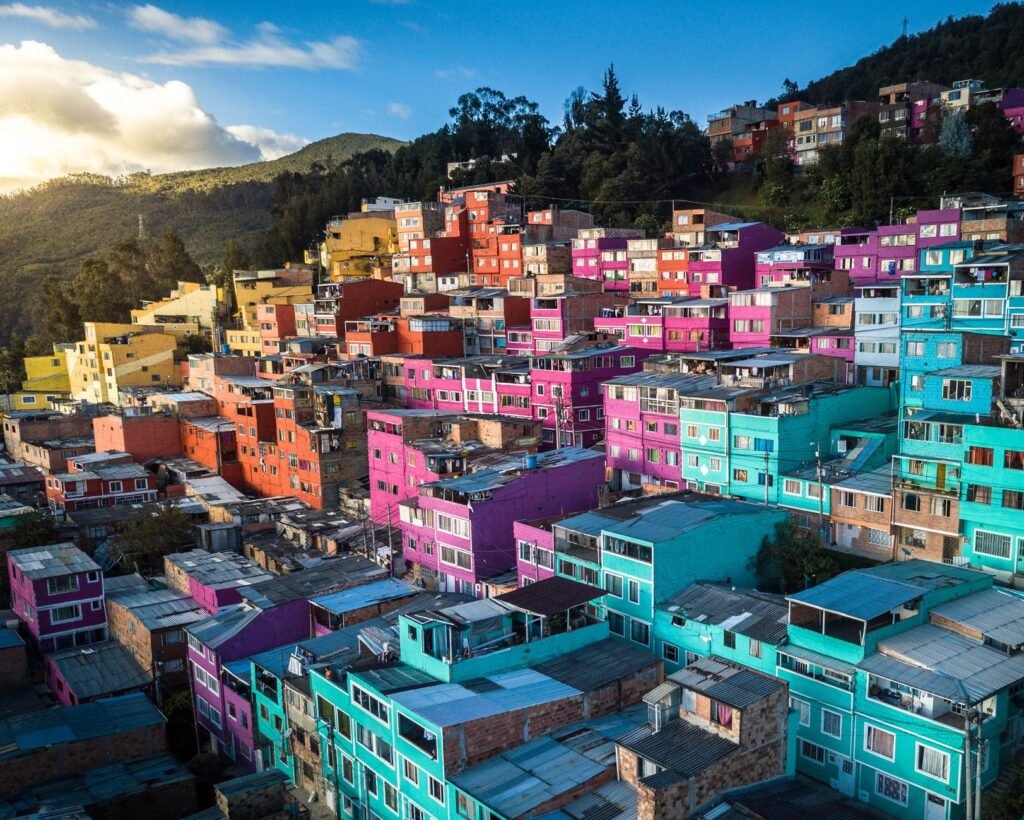
Medellín’s transformation since the 1990s is one of the more remarkable urban turnarounds of the past 30 years. The city has won multiple international urban planning awards, built world-class metro and cable-car infrastructure, and developed a genuine food, coffee, and arts scene. Neighborhoods like Laureles, El Poblado, and Envigado are as safe as comparable neighborhoods in most US cities — normal urban awareness applies, but day-to-day life does not feel precarious. Pickpocketing is the primary risk for most expats; violent crime targeting foreigners in these neighborhoods is rare.
Panama City is generally safe in expat-concentrated neighborhoods (El Cangrejo, Bella Vista, Marbella, Punta Pacifica). It is a regional financial hub with a large permanent expat population and corresponding infrastructure. Standard precautions apply.
Healthcare
Both cities have legitimately excellent private healthcare at a fraction of US costs. Panama City is home to Hospital Punta Pacífica, affiliated with Johns Hopkins Medicine International — one of the most recognized healthcare partnerships in Latin America. General consultations run $40–$80; specialist visits $60–$120.
Medellín has Hospital Pablo Tobón Uribe and Clínica El Rosario, consistently ranked among the top hospitals in Latin America. A general doctor visit costs $25–$55 out of pocket; dental cleanings run $15–$50. The best country for Americans to retire in 2026 from a pure healthcare-per-dollar standpoint may well be Colombia — the cost-to-quality ratio in Medellín’s private clinics is hard to beat.
Lifestyle and Culture
This is where the cities diverge most sharply in feel, not just in numbers.
Panama City is more Americanized — English is widely spoken in business and expat circles, familiar US grocery chains and restaurants are present, and the city operates on a corporate, international-finance-hub energy. It is a logical base for retirees who want familiar infrastructure with tropical weather. Easy access to island escapes (San Blas archipelago, Bocas del Toro) is a genuine lifestyle asset.
Medellín is younger, more dynamic, and more Colombian. The coffee culture is embedded in daily life, the restaurant scene is improving rapidly, the weekend nature trips (Guatapé, Jardín, Santa Fe de Antioquia) are outstanding, and the city has a social energy that Panama City simply does not match. For remote workers under 50 who want to actually engage with where they live — not just relocate to a cheaper version of America — Medellín is the more compelling city.

Head-to-Head Comparison: Panama City vs Medellín for American Expats
| Factor | Panama City | Medellín |
|---|---|---|
| Currency | USD (no exchange risk) | COP (volatile, currently favorable) |
| Tax on foreign income | None (territorial system) | Worldwide after 183 days residency |
| Climate | Hot & humid year-round, 88°F avg | 70°F year-round, no AC needed |
| AC cost | $150–$200/month (unavoidable) | $0 (not needed) |
| Residency path | Pensionado: $1,000/mo pension, permanent day 1 | Digital nomad visa: $750/mo income, 2 years |
| Residency permanence | Permanent immediately | Temporary (renewable) |
| Pensionado discounts | Yes — 25% utilities, 20% medical, 50% entertainment | No equivalent program |
| Healthcare quality | Excellent (Johns Hopkins-affiliated hospital) | Excellent (Pablo Tobón Uribe, El Rosario) |
| Healthcare cost | $40–$80 GP consult | $25–$55 GP consult |
| Safety (expat neighborhoods) | Safe in El Cangrejo, Bella Vista | Safe in Laureles, El Poblado, Envigado |
| English availability | Widely spoken in business | Limited outside expat areas |
| Lifestyle energy | Corporate, Americanized, international hub | Dynamic, cultural, coffee-centric, younger |
| Island access | Excellent (San Blas, Bocas del Toro) | No coast; mountain towns and Cartagena by air |
| Monthly surplus at $2,000 | $80–$280 | $740–$890 |
| Best for | Retirees, fixed income, USD preference | Remote workers, geoarbitrage, cultural immersion |
The Honest Verdict: Who Should Choose Panama vs Who Should Choose Colombia
There is no universally correct answer here. There is the correct answer for your situation. Here is a direct breakdown of the expat cost comparison Latin America decision framework, without hedging:
Choose Panama if:
- You have a qualifying pension or Social Security of $1,000+/month and want the Pensionado benefits — the discounts alone can reduce your cost of living by 15–25%
- You earn US income and want the cleanest possible tax situation without a complex international tax strategy — Panama’s territorial system makes this simple
- You want to hold, earn, and spend US dollars with zero currency conversion friction
- You prefer a more familiar, Americanized environment with English widely available
- You want to use the country as a regional base with easy flight connections and access to Caribbean islands
- You are retired or close to it and prioritize comfort and healthcare infrastructure over cultural immersion
Choose Colombia (Medellín) if:
- You earn US income remotely and want to maximize savings — the $700–$900/month surplus at $2,000 compared to Panama is real money that compounds over years of expat life
- You are under 50 and want a city with genuine cultural energy, not just a comfortable expat bubble
- You are in aggressive savings mode and want geoarbitrage to actually move the needle on your net worth
- You are on the Colombia digital nomad visa and staying under 183 days — the worldwide income tax question becomes irrelevant
- You want world-class healthcare at the lowest possible out-of-pocket cost
- You value the “City of Eternal Spring” climate — 70°F every day of the year, no AC bill, outdoor living that Panama’s humidity makes impossible
The One Number That Settles the Panama vs Colombia Cost of Living 2026 American Expat Debate
At $2,000/month, the Panama vs Colombia cost of living 2026 American expat math is straightforward: Panama runs $1,720–$1,920 with a thin buffer; Medellín runs $1,110–$1,260 with $740–$890 left over every month. Over 12 months, that surplus difference — roughly $9,000–$10,000 per year — is an emergency fund, an investment contribution, or seed capital for whatever comes next.
If you are already retired with a fixed pension and you want the legal discounts, zero currency risk, and a dollarized economy that removes financial complexity from your life, Panama’s Pensionado program is one of the best deals in the Western Hemisphere. If you are a remote worker still building wealth and the tax situation is not your primary concern for the next two years, Medellín gives you dramatically more financial breathing room at the same income level.
Neither country is wrong. But they are not equivalent — and knowing which one matches your actual situation is what the best country for Americans to retire in 2026 decision really comes down to.
Want to go deeper? Read our full breakdown of Colombian peso volatility and how it affects your real cost of living, or compare how Panama stacks up against Mexico’s most popular expat cities. If you’re serious about the Pensionado visa, our step-by-step guide covers every document you need to file in 2026.